
10 Day Kazakhstan and Kyrgyzstan Road Trip Itinerary
Disclaimer: I only recommend products I absolutely love, and all opinions expressed here are my own. This post contains affiliate links at no additional cost to you, but I may earn a small commission. Please consider using the link to support my blog! You can read my full privacy policy here.
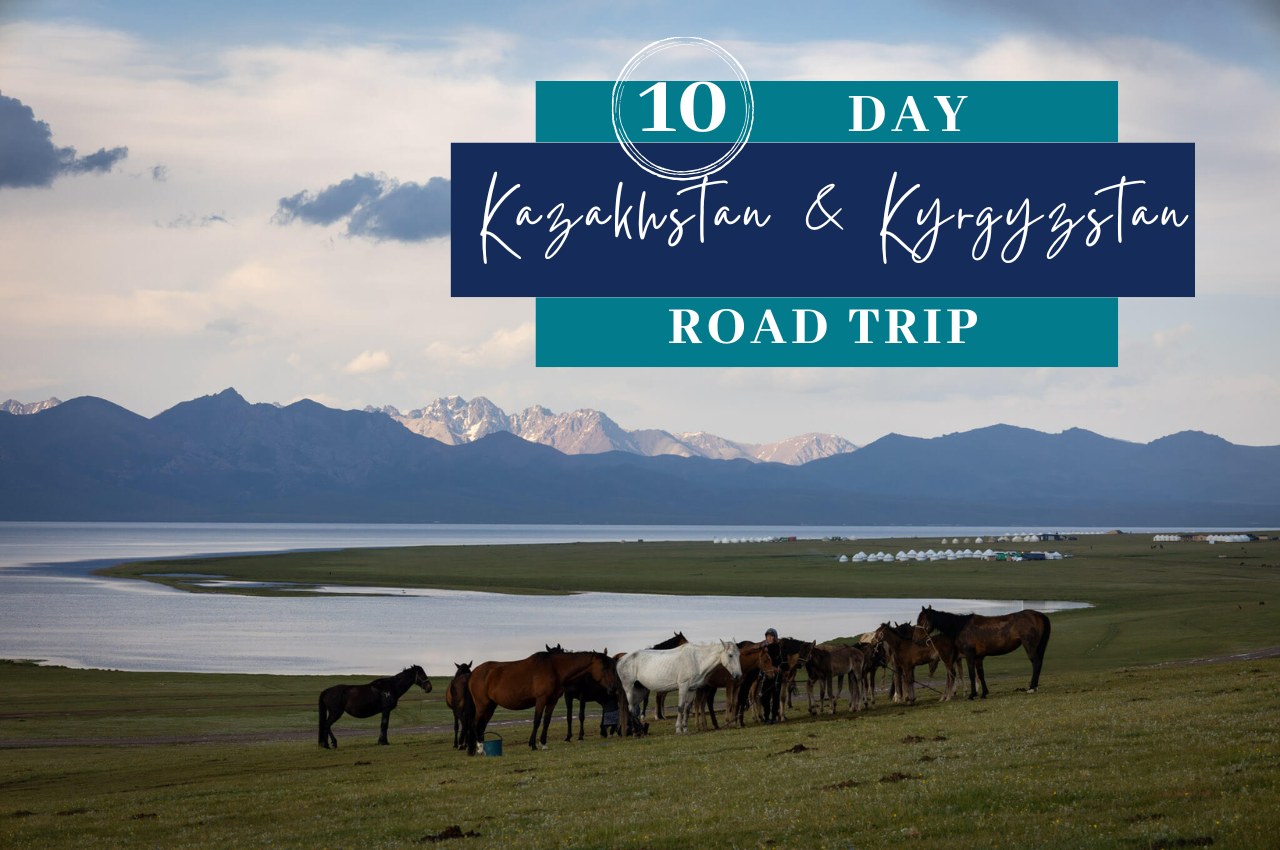
Why You Should Visit the Kazakhstan and Kyrgyzstan
If you're craving dramatic mountain scenery without the crowds of the Alps, Iceland, or Banff, let me introduce you to two of the most underrated countries I've ever visited: Kazakhstan and Kyrgyzstan.
I’ve been obsessed with horses since I was little, and there’s nothing more iconic in history than the horse-riding nomads from the Central Asian steppe. But that wasn’t all we found in Kazakhstan and Kyrgyzstan. Turquoise alpine lakes, colorful canyons, wild horses roaming free, snow-capped mountains stretching to the horizon, authentic nomadic culture, Soviet style architecture mixed with modern glass buildings, and some of the friendliest people we've met anywhere in the world.
This is a wild adventure on dirt roads to hidden viewpoints, horse rides to glacial lakes more beautiful than anything you’ve seen on Instagram, and an authenticity that’s increasingly hard to come by in an ever commercializing world. Your face will be pressed to the car window the entire drive, and no, you won’t be mad about it.
If you're looking for somewhere that still feels undiscovered, this Kazakhstan and Kyrgyzstan road trip itinerary is for you. But act fast—the infrastructure is building and I think this is going to be one of those places I can brag about in a few years with “I went there before it was cool.”
What You Need to Know Before You Go on a Road Trip to Kazakhstan and Kyrgyzstan
General
This is absolutely a road trip destination. While both countries have beautiful cities, the real magic is found in the mountains, national parks, and tiny villages scattered across the countryside. Expect long driving days. Google Maps often underestimates travel times, especially once you leave paved highways. Of which there are surprisingly few, though that is changing. According to a local, the road between Karakol and Bokonbayvo will be complete in about a year (so maybe in 2028 the drive times will be more accurate!).
Cell service becomes unreliable outside major cities, so download offline maps before leaving and pin every destination you'll need ahead of time. If you're planning to drive yourself, this step is essential. Or if you don’t want to panic because you can’t read Cyrillic, hire a tour company to drive you (more on that below!).
Money
Kazakhstan primarily uses the Kazakh Tenge (KZT) while Kyrgyzstan uses the Kyrgyz Som (KGS). Cash is still king once you leave the larger cities. For both countries, you’ll need about $150 USD converted to KZT and the same amount for KGS. Bring your debit card and withdraw from the ATM or convert USD at the airport or an exchange place along the way! Kazakhstan also heavily uses Kaspi QR payments, which locals love and looks extremely convenient, but you won’t have access to use. Carry enough cash for restaurants, roadside stops (cough cough roadside bathrooms), entrance fees, horse rides, and small shops.
Language
English is limited outside hotels and tourist attractions. In the bigger cities, most people speak Russian and Kazakh/Kyrgyz which according to our guide are technically the same language with a few regional differences. But he can understand someone when they’re speaking Kyrgyz, and they can understand him when he speaks Kazakh. One of the main reasons we booked a private tour with a guide was to have someone who could translate for us with my food allergies. Ours translated my needs with every meal and ensured I could safely eat throughout the trip, which removed a huge amount of stress.
Google Translate's offline language packs for Russian, Kazakh, and Kyrgyz are also worth downloading before you arrive, just in case.
Safety
Both Kazakhstan and Kyrgyzstan felt incredibly safe during our trip. The biggest hazards were the rough mountain roads, honestly. Road conditions can vary dramatically. One minute you're on smooth pavement, the next you're bouncing along dirt roads for an hour toward a canyon or alpine lake. If you're hiking, carry plenty of water, wear sturdy hiking shoes, and remember that mountain weather changes quickly.
Tips for Travelers with Anxiety in Kazakhstan and Kyrgyzstan
Prepare, prepare, prepare. Download entertainment, offline maps, and offline translations before you leave major cities. Wi-Fi and cell service are often spotty and super slow.
Bring a comfortable eye mask. Many accommodations don't have blackout curtains, and sunrise comes early, like 4:30 AM in Almaty early.
Pack hand soap/hand sanitizer and a small roll of toilet paper for roadside bathroom stops. Also mentally prepare yourself for a squat toilet. They’re not my favorite, but a few times they were unavoidable 😅
If you have food allergies or strict dietary restriction, I highly recommend hiring a local guide/tour company. Iron Horse Nomads was incredible and we literally couldn’t have done the trip without them.
How to Get Around Kazakhstan and Kyrgyzstan
The easiest way to experience both countries is with a guided road trip or private driver.
Could you drive yourself? Absolutely.
Would I recommend it for most visitors? Probably not.
Many of the best places require hours on dirt roads, navigation without service, signage all in Russian, and crossing an international border. Having a local guide made everything significantly easier. Which brings me to…
Iron Horse Nomads
Whether you take my advice to hire a driver or say YOLO and rent a car by yourself, you need to work with Iron Horse Nomads. They offer both car rental services and private guided tour options. Timur was instrumental in booking our hotels and communicating my allergies to them while Sanzhar, our driver/guide was our translator and the master navigator of rough roads.
For a 10 day trip with mid-range hotels, the total cost was roughly $4055 USD, which included the car and our driver and our hotels.
Our flights from South Korea to Almaty were $1359 USD total for economy, but we ended up bidding on upgrades for first class (more on that in my Air Astana Business Class Review).
When to Plan Your Kazakhstan and Kyrgyzstan Road Trip Itinerary
Spring (May–June)
We went in late June, which was perfect for wildflowers and flowing waterfalls. Once outside of Almaty & Bishkek and in the mountains, the temperatures were perfect, mid 70s and sunny. Higher elevation hiking trails are open if long treks are your thing too.
Summer (July–August)
The warmest months are ideal for alpine hiking and horseback riding, although desert regions like Altyn Emel National Park become extremely hot. I mean, I thought I was going to die in Altyn Emel in June, so I can’t imagine what it’s like any later in the summer. Probably would not recommend.
Fall (September–October)
One of the best seasons for photography, cooler temperatures, and colorful mountain landscapes. If witnessing traditional eagle hunting is on your bucket list, visit during hunting season from October through February.
Winter (November–March)
Perfect for skiing near Karakol and Shymbulak, winter landscapes, and snow-covered mountain scenery. Keep in mind some mountain roads become difficult or inaccessible depending on snowfall, with yurt camps packing up to wait for spring before reopening again.
What to Pack on Your Kazakhstan and Kyrgyzstan Road Trip Itinerary
Not gonna lie, we totally packed wrong for this trip. It was hard to figure out exactly what the weather would be like because not every city was available on the Apple weather app. Plus, some of the places were more than 10 days out when we were packing. So I’ll tell you what we did wrong and what you should actually do if you are going in June.
Almaty & Bishkek are going to be HOT HOT HOT. Shorts & a tanktop and you’re still sweating because its in the high 80s/low 90s outside. Altyn Emel will be the same. Once you pass there and head into the mountains, it will be sunny and 75, but the sun will still feel hot from the altitude. Leggings & t shirts or shorts & t shirts will be your friend here. You’ll also need hiking shoes (my Hoka running shoes did not cut it on many of these steep and rocky trails), a hat to shade against the sun, and flip flops/slides if you want to visit any thermal springs.
The only time you need sweatpants and a sweatshirt is when you’re at Song Kul. So don’t be like Andrew and insist you need at least 3 sweatshirts (I am giving him the side eye as I write this).
If you are a light sleeper, an eye mask is a must (I forgot mine in South Korea, RIP to me). Additionally, many hotels don’t have more than hand soap, so if you’re a conditioner and lotion girlie like me, pack everything you typically in and out of the shower. With how much time you’ll spend on the road, I recommend these motion sickness bands. They were a lifesaver and I didn’t have to take dramamine constantly!
Where to Go on Your Kazakhstan and Kyrgyzstan Road Trip Itinerary
Here’s a quick overview of everywhere you’ll go on your 10 day Central Asia Itinerary:
Almaty
Altyn Emel
Charyn Canyon
Saty
Kolsai
Kaindy
Karakol
Bokonbayvo
Song Kul
Bishkek
And oof, that’s a lot to pack into 10 days, so brace yourself for long drives but incredible scenery that is absolutely worth it.
10 Day Kazakhstan and Kyrgyzstan Road Trip Itinerary
We made this trip part of a longer 3 week trip to Asia, stopping first in South Korea for a few days to adjust to the timezone (Kazakhstan and Kyrgyzstan are 12 hours different from Mountain Time in the US ☠️). The airport is Seoul has so many nonstop connections to remote destinations in Central Asia, and also a new nonstop flight from SLC! You can read more about our South Korea trip in my 15 Best Things to Do In Seoul post and why stopovers are my new favorite way to travel.
Day 1: Arrive in Almaty, Kazakhstan
After spending several incredible days exploring South Korea, we hopped on our flight to Almaty, Kazakhstan for the beginning of the Central Asian portion of our adventure.
We landed around 2:00 PM and met Timor and Sanzhar at the airport to discuss our itinerary and answer any last minute questions before heading straight into the city to check into our hotel. If this is your first time visiting Kazakhstan, don't expect the city to look like what you might have pictured. Before our trip, I imagined endless Soviet apartment blocks and little else. While there are certainly remnants of Kazakhstan's Soviet past, Almaty surprised me with its leafy streets, modern glass buildings, wide boulevards, and the dramatic Tian Shan Mountains rising in the distance. It has that authentic grittiness I love about Budapest while still feeling fresh and multicultural.
Where We Stayed: Renion Park Hotel
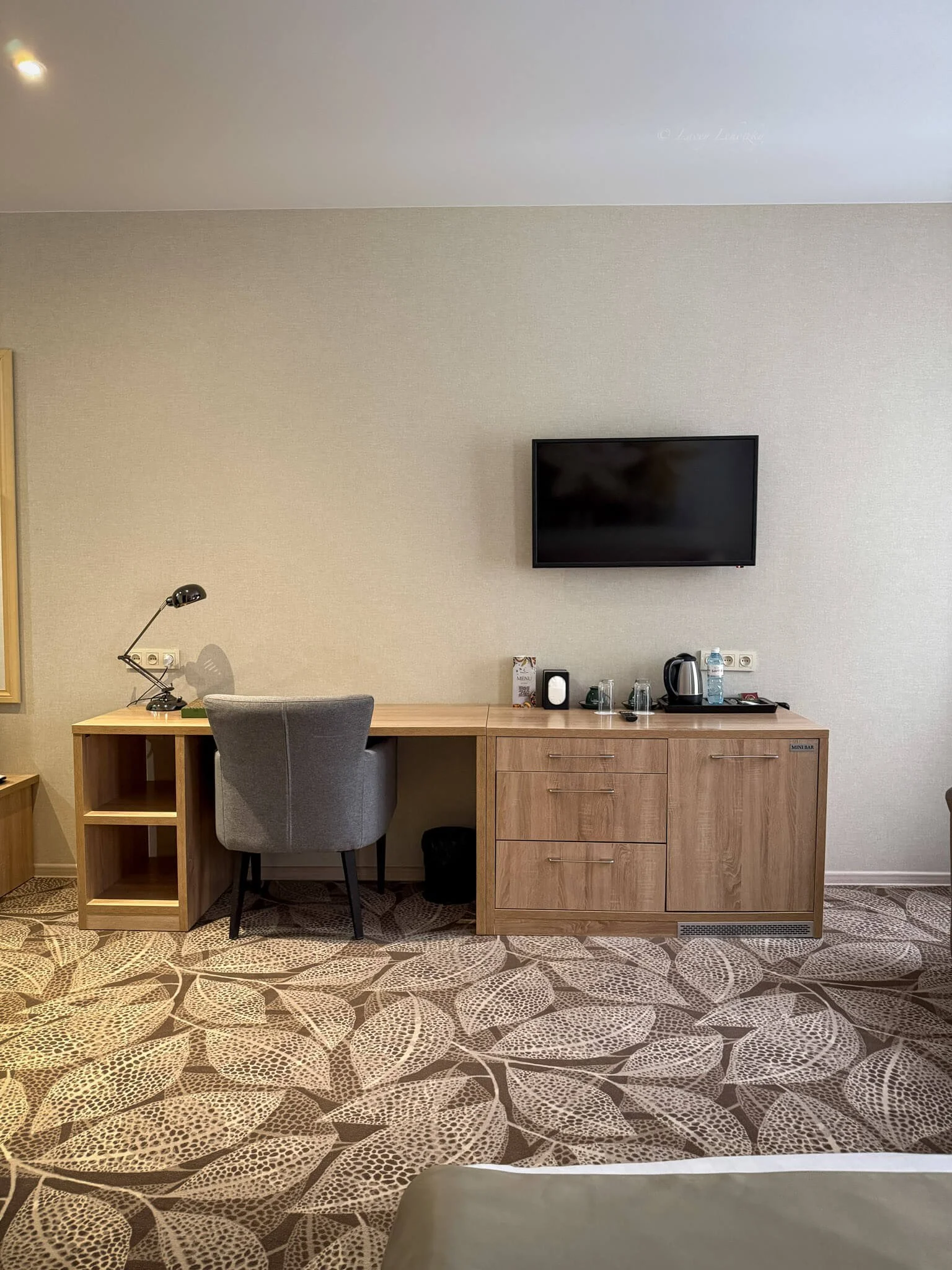
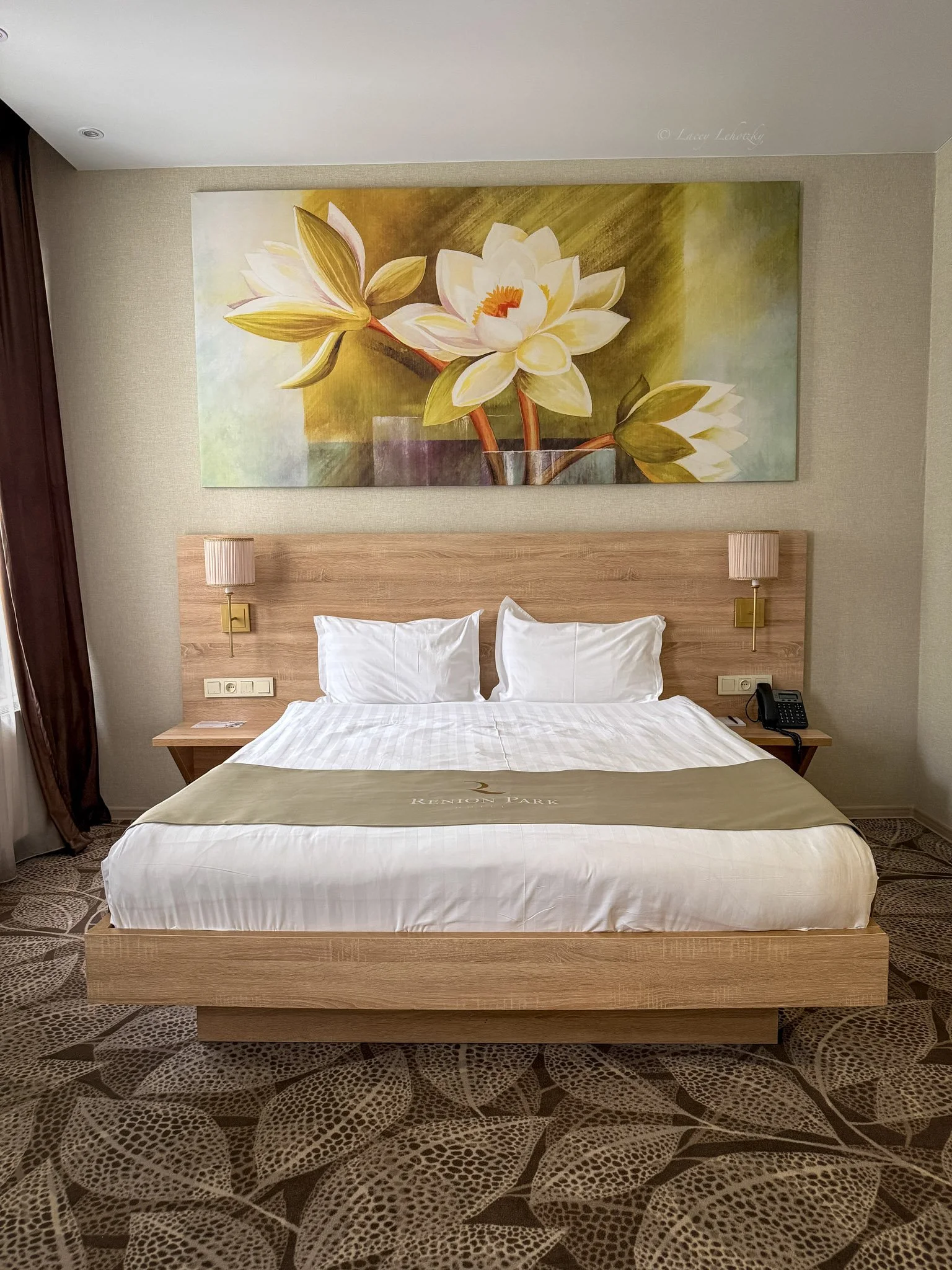
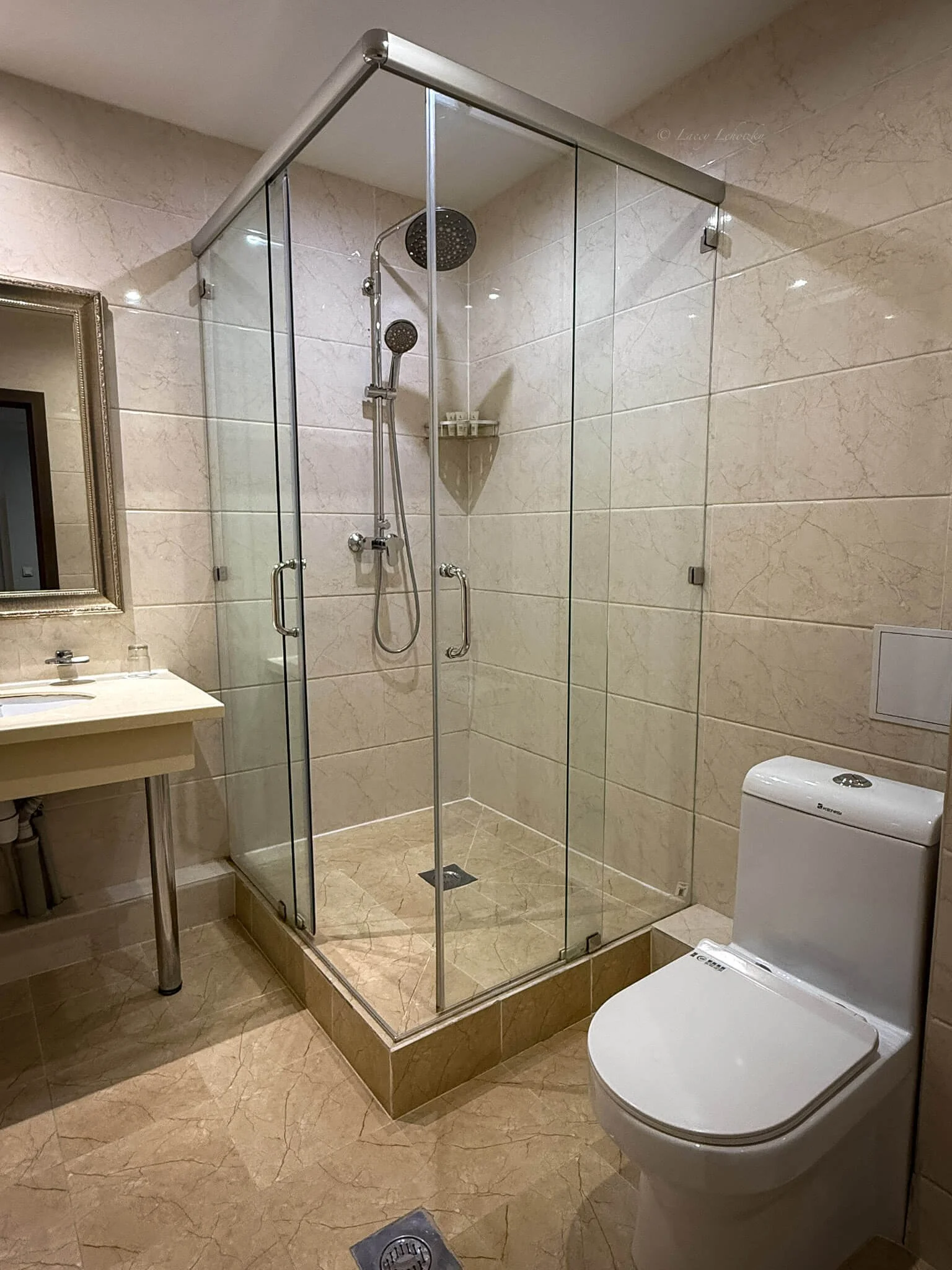
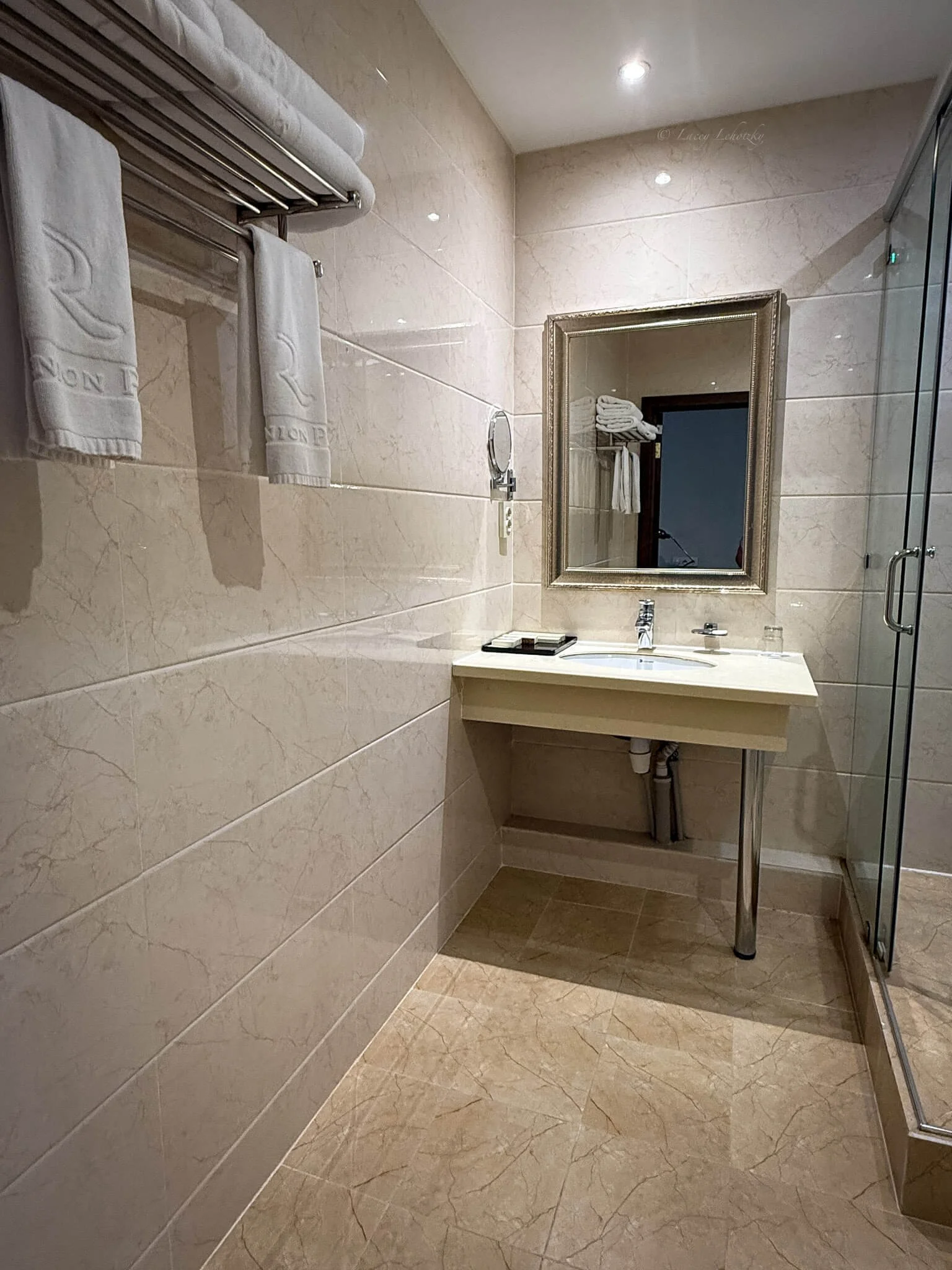
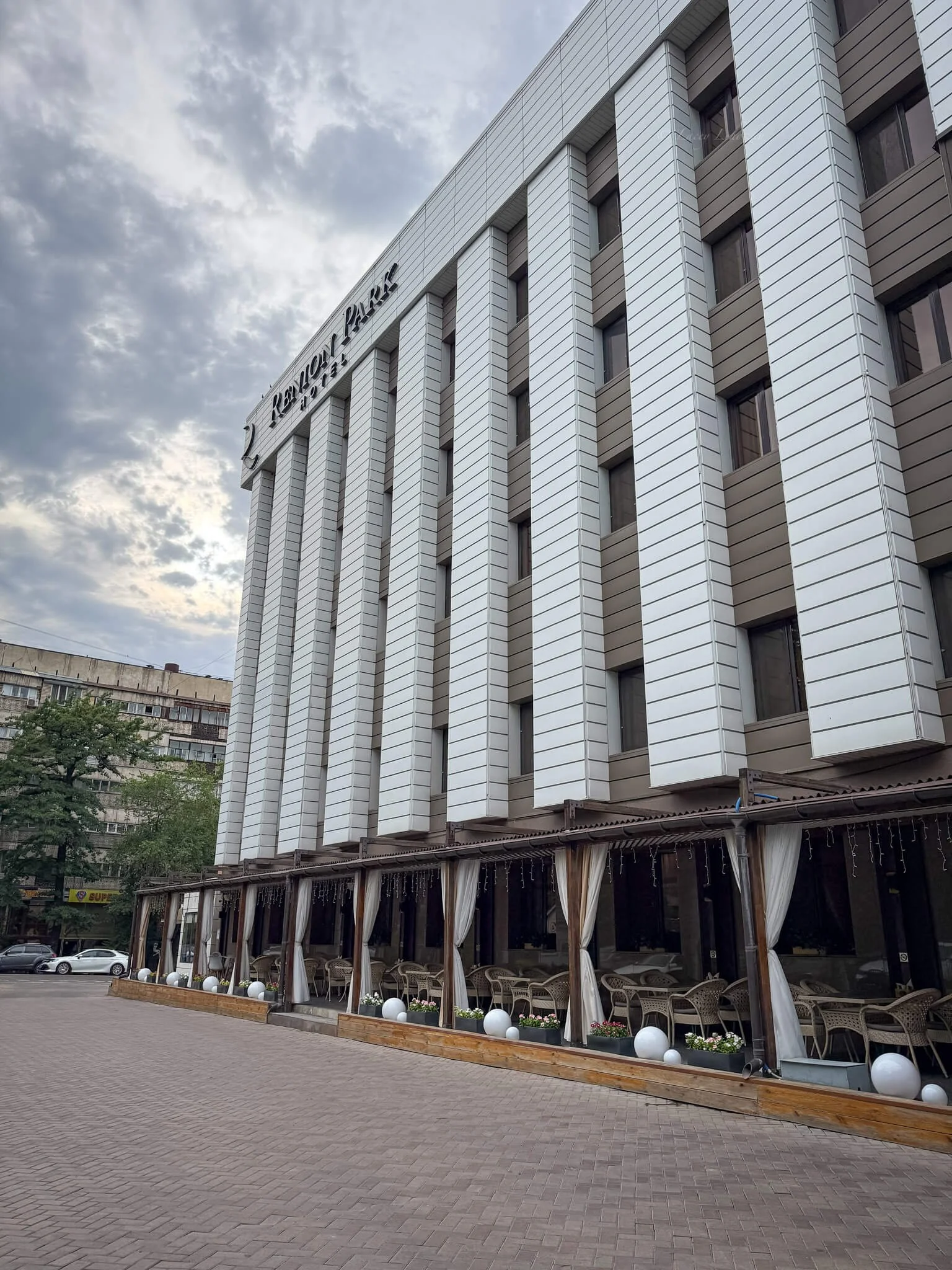
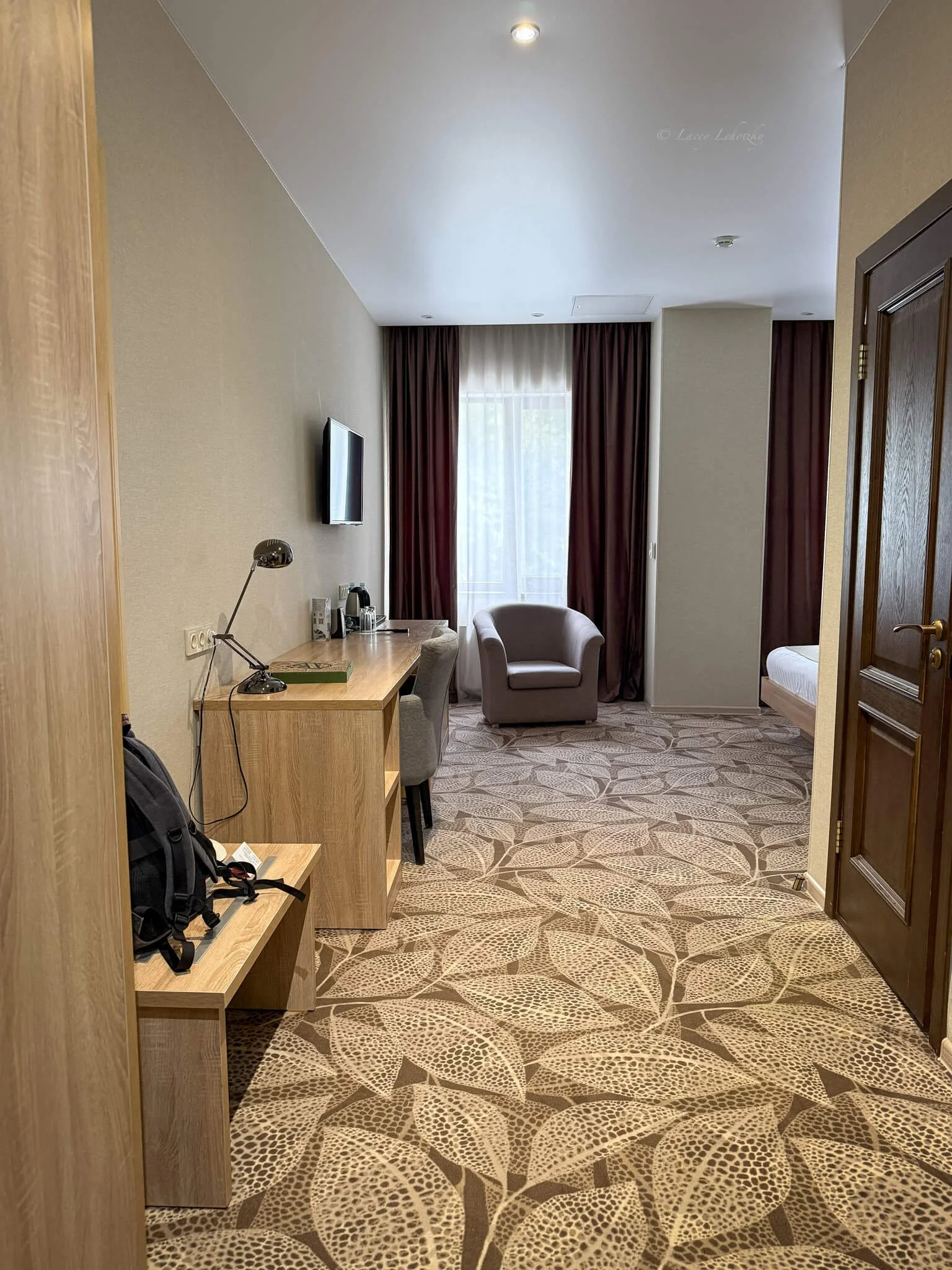
For our first two nights, we stayed at Renion Park Hotel, and overall I thought it was a great base for exploring Almaty.
Our room was spacious, the bed was comfortable (for reference we sleep on a Purple mattress at home), and thankfully there was air conditioning—a luxury you'll definitely appreciate if you're visiting during the summer. Even though the hotel sits in the middle of the city, it was surprisingly quiet at night, and we slept really well (especially after making a quick stop to buy extra pillows...more on that in a minute!).
The breakfast buffet offered one of the larger selections we had during the trip, with plenty of hot and cold options to start the day.
The only downside was a water issue during our stay, likely caused by construction outside the hotel. Before brushing your teeth or hopping in the shower, I'd recommend quickly checking that the water is running normally.
Overall, though, I'd happily stay here again.
Explore Green Bazaar
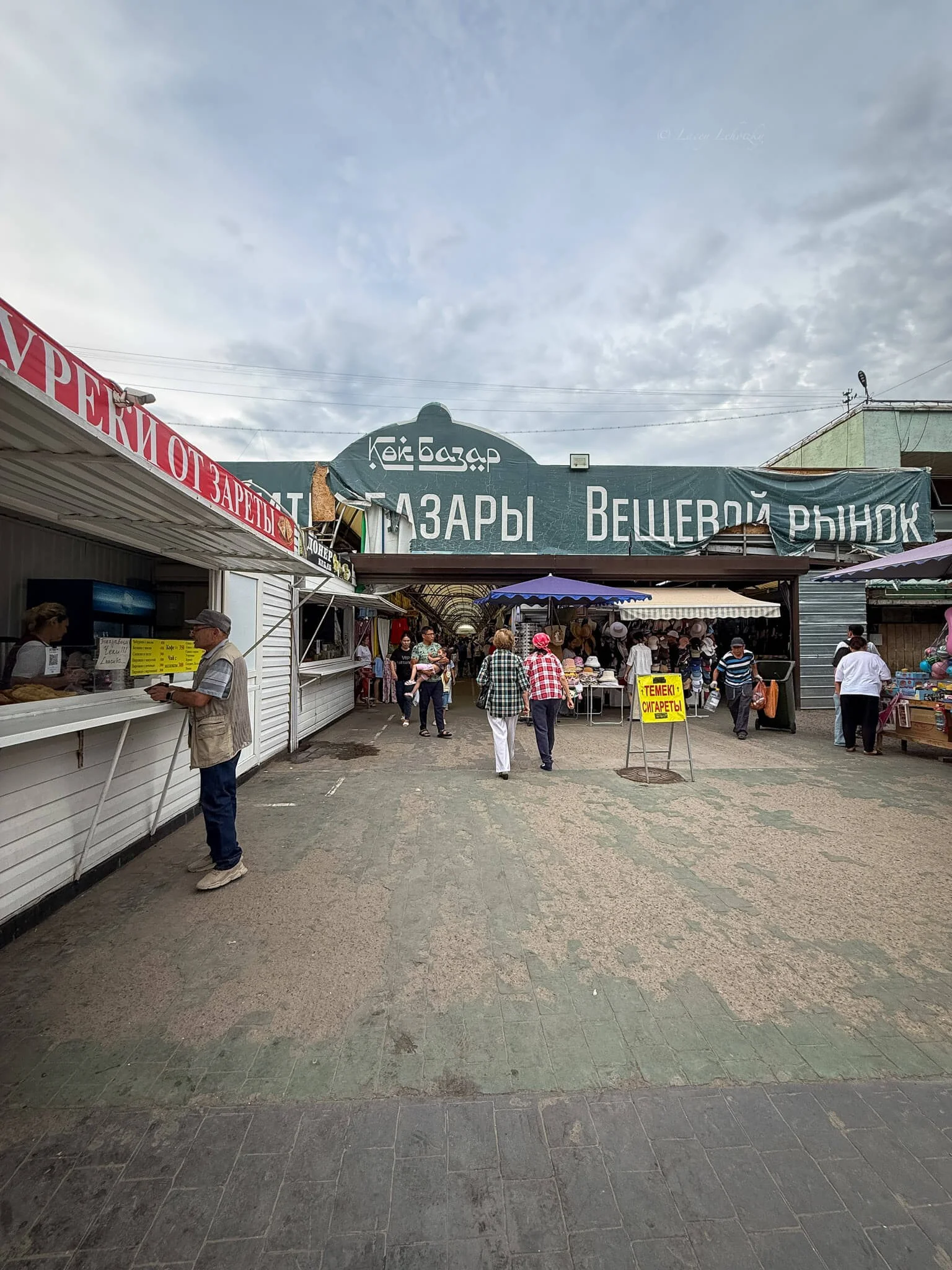
Our first stop was Green Bazaar, one of Almaty's oldest and busiest markets. If you enjoy wandering local markets when you travel, this is a fun introduction to the city. Vendors sell everything imaginable, from fresh produce, spices, dried fruit, and traditional sweets to clothing, household goods, and souvenirs.
Ironically, we didn't buy anything particularly "Kazakh." Instead...we bought pillows. Because Andrew and I are both princesses when it comes to pillows and our sleep. After all our travels around the world, we’ve come to realize most hotels only provide two. Four, if you’re lucky. And in remote Central Asia? We weren’t taking our chances. So we bought four for ourselves, and it ended up being one of our best purchases of the trip. And yes, we carried those pillows with us for the next ten days with all the rest of our bags 😂
Panfilov Park & Zenkov Cathedral
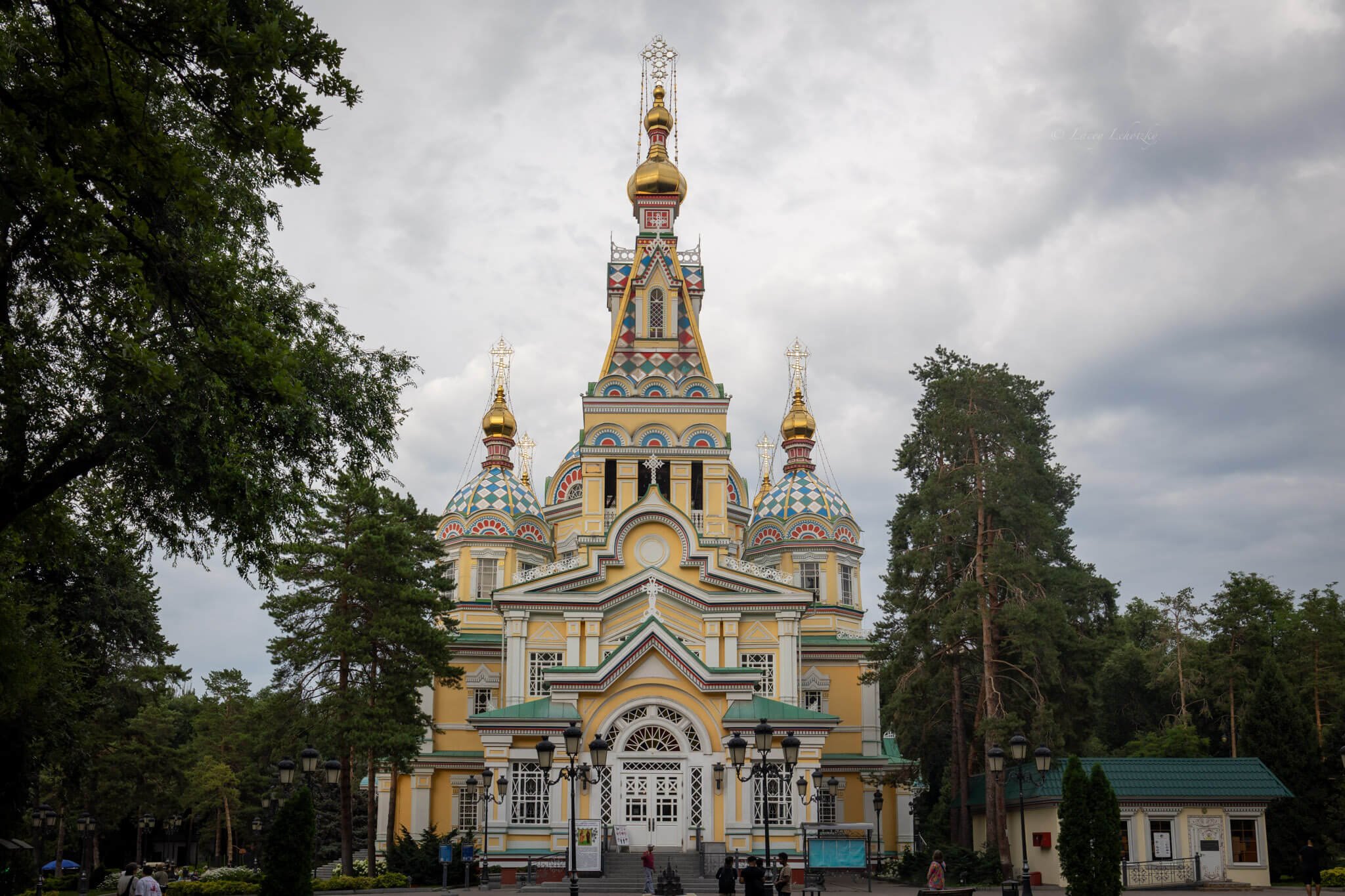
From the bazaar, we wandered through Panfilov Park, one of Almaty's most famous green spaces. The park is home to several important memorials, including the Eternal Flame honoring soldiers who lost their lives during World War II and monuments commemorating those who served in Afghanistan. Even if you're not a huge history buff, it's worth taking a few minutes to walk through and appreciate the significance these memorials hold for locals.
At the edge of the park sits Zenkov Cathedral, one of the city's most recognizable landmarks. Originally built in the early 1900s almost entirely without nails, the brightly colored wooden cathedral has survived multiple earthquakes over the decades. While later restoration work introduced modern materials, it's still an impressive piece of architecture and one of the most beautiful buildings we saw in Almaty.
Traditional Kazakh Cuisine
That evening, we sat down for our first traditional Kazakh meal. One thing you'll quickly notice throughout Kazakhstan and Kyrgyzstan is how red meat heavy the cuisine tends to be. Because of my alpha-gal allergy, I was incredibly grateful to have a guide translating ingredients and helping restaurants accommodate my dietary restrictions. If you have food allergies or sensitivities, I genuinely think traveling with a local guide is worth every penny for the peace of mind alone. But just in case, I had my Epi-pens and Benadryl ready to go!
Day 2: Shymbulak, Mountain Views, & Birds of Prey
After spending our first afternoon exploring Almaty, it was time to head into the mountains. Within 30 minutes, you can be out of the city and into nature, which reminds me so much of Salt Lake City. Trade busy streets and Soviet architecture for towering peaks, alpine meadows, and ski resorts nestled high in the Tian Shan Mountains. If you're only spending one full day in Almaty, this is exactly how I'd spend it.
Medeu & the Shymbulak Cable Car
Our first stop was the famous Medeu ice skating complex, the world's highest outdoor speed skating rink. But honestly, if you're visiting during the summer, I'd skip it. It's an interesting place historically, but unless you're there in the winter to actually skate, there isn't much to do. We spent a few minutes walking around before heading to what I think is the real highlight of the area—the Shymbulak cable car. The cable car climbs high above the valley, revealing sweeping views of the surrounding mountains with every passing tower. Even before you reach the top, you'll probably find yourself glued to the windows trying to take photos.
Cost to take the cable car all the way to the top was $25 USD per person.
Hiking to Mount Chimbulachka South Peak
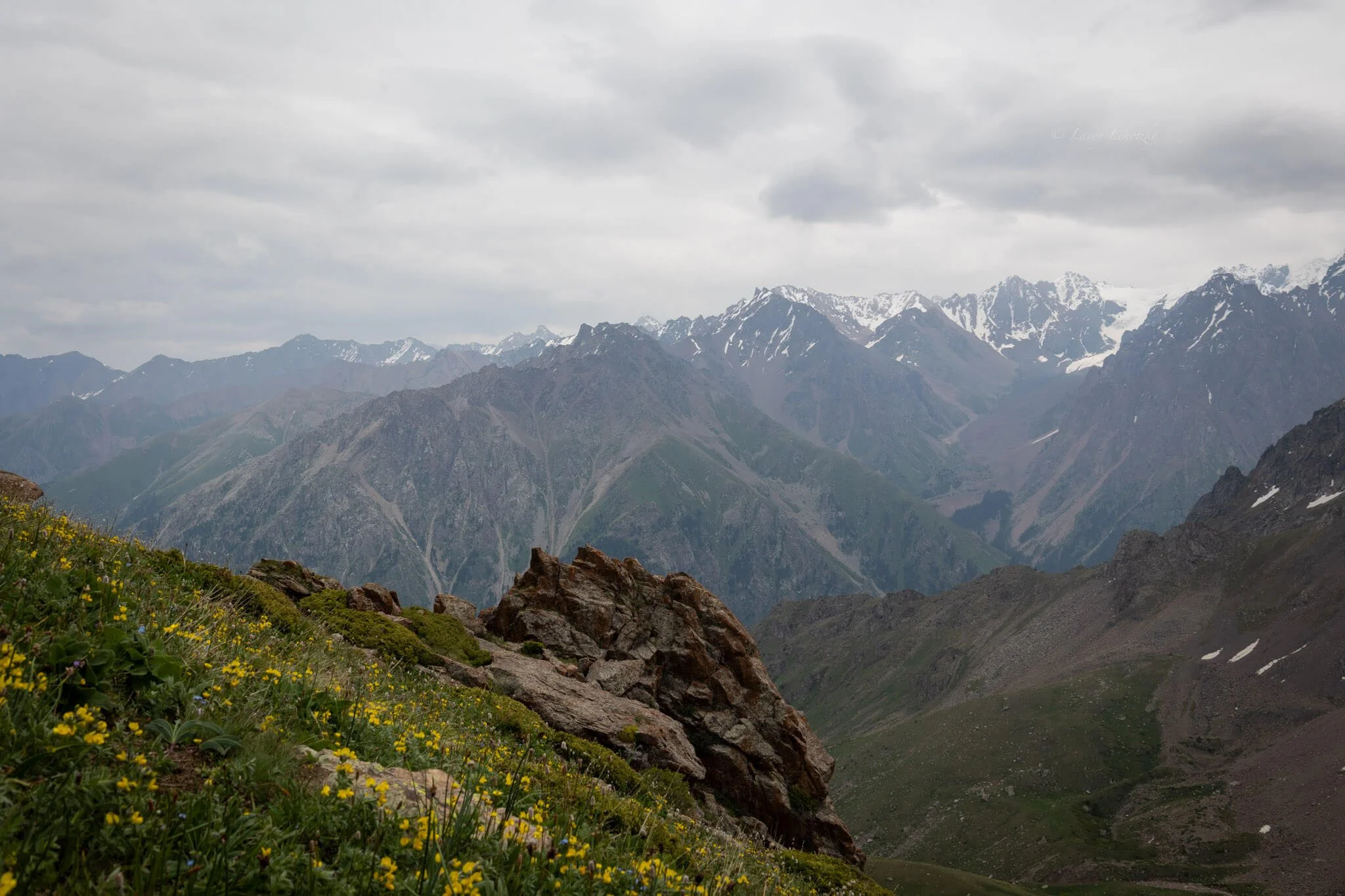
Once we reached Shymbulak Resort, we continued hiking toward Mount Chimbulachka South Peak. This ended up being one of my favorite hikes of the Kazakhstan portion of our trip. The trail isn't particularly technical, but don't underestimate it. It's definitely a workout, especially at elevation. Fortunately, every time I started wondering whether I needed another break, I'd turn around and be rewarded with another breathtaking panorama of the mountains.
Since we visited in June, the mountainsides were covered in colorful wildflowers, making the already incredible scenery even more beautiful. If you enjoy hiking, you have to do this short but steep trail. Just bring more water than you think you'll need, wear sturdy hiking shoes, and give yourself plenty of time to enjoy the views instead of racing to the top.
Lunch at The Green Station
After our hike, we stopped at The Green Station for lunch. One thing I quickly came to appreciate throughout Kazakhstan was how accommodating many restaurants were with my food allergies. Finding gluten-free pasta here felt like such a treat after spending the morning on the mountain, and it was one of the better meals we had in Almaty.
The Bird Show (Do Not Skip This!)
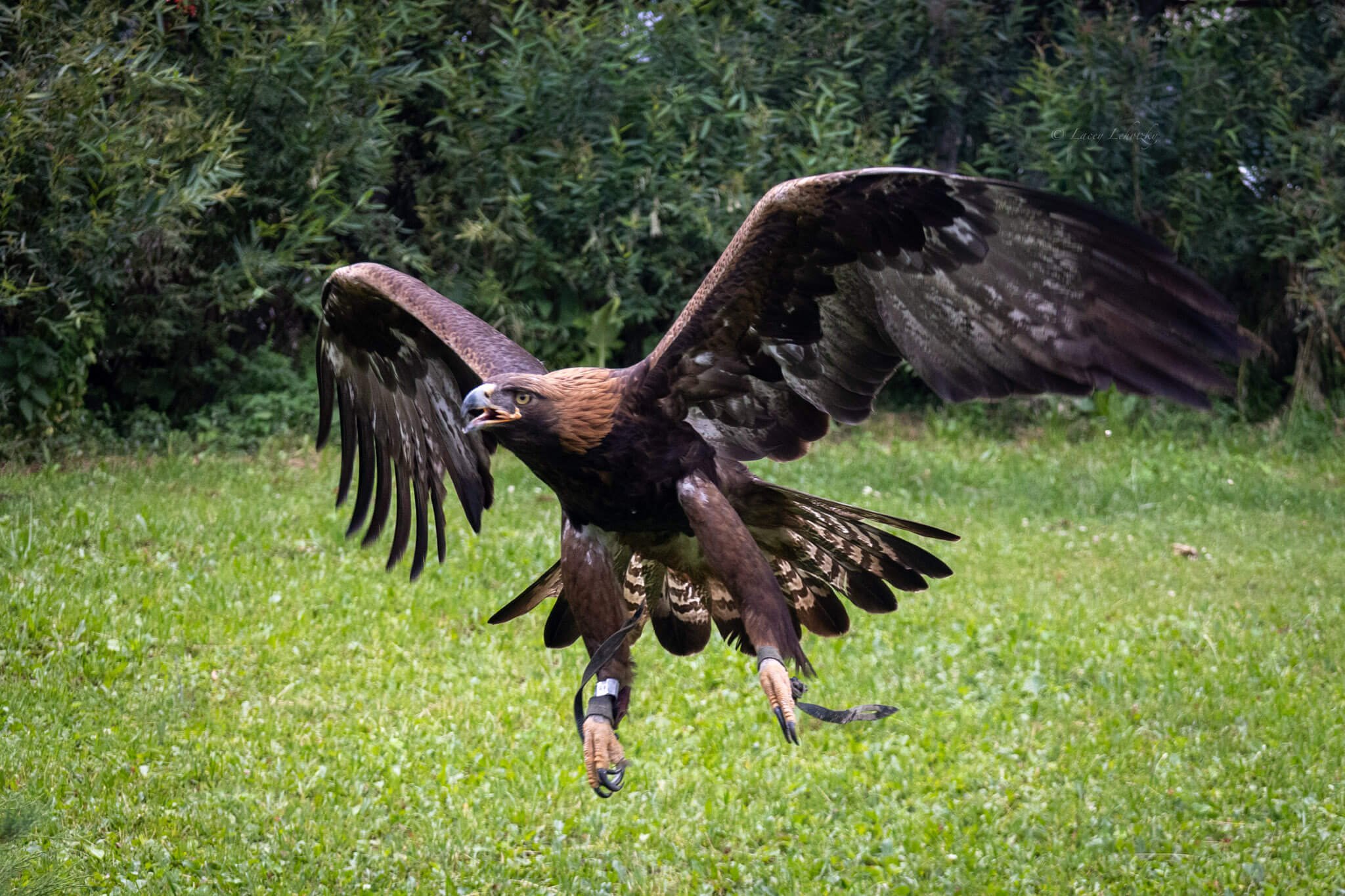
I’d seen some falconry in Almaty on Instagram before our trip, and after the horses, this was the thing I looked forward to the most. And it did not disappoint! The show lasts around forty minutes and costs roughly 5000 Tenge per person. You'll see everything from hawks and owls to eagles and even vultures as the trainers demonstrate the different stages of training and explain the unique personalities and hunting techniques of each bird.
Our presenter, Paul, was absolutely hilarious and somehow managed to make the show both educational and entertaining. One piece of advice: keep your camera ready the entire time because it’s so fast paced and fun. The birds fly right over the audience, and if the trainers ask for volunteers, absolutely raise your hand. It's one of those travel experiences you'll be talking about long after you get home.
The "Hot Springs"
Technically, there are two “thermal pools” in the mountains. One, close to the ice skating rink, and another by the bird show. Honestly, I would skip both of them. Despite being advertised as a hot spring, it's really just a handful of small hot tubs placed in a scenic area. On the weekend, it was absolutely packed with families and children. The traffic to get to the one by the bird show was absolutely insane. While the short walk by the river was stunning, it was not worth the chaos and time investment.
Tips for Visiting Shymbulak
If possible, plan your Almaty sightseeing for weekdays instead of Saturdays or Sundays. Traffic heading into the mountains was surprisingly heavy, and popular attractions became much busier over the weekend. We easily spent over an hour sitting in traffic returning to the city, and I'd imagine it's even worse during peak summer travel. Overall, though, this was an incredible day and the perfect introduction to Kazakhstan's mountain landscapes. Between the cable car, the hike, and the unforgettable bird show, it set the tone for the rest of our Central Asian adventure.
Day 3: Altyn Emel National Park & the Colorful Mountains of Kazakhstan
Today was the day we officially left the city behind and headed into one of Kazakhstan's most unique landscapes: Altyn Emel National Park. If you've never heard of it before, don't worry—I hadn't either because I told Andrew to plan the trip with Timur and I would simply show up and be mostly surprised.
Located several hours northeast of Almaty, Altyn Emel is one of Kazakhstan's largest national parks and is famous for its colorful mountains, volcanic rock formations, and vast desert scenery. It couldn't have looked more different from the alpine mountains we'd been hiking the day before, and that's one of the things that amazed me most about Kazakhstan. Every day felt like we were entering an entirely different country.
Drive into Altyn Emel National Park
Be prepared: this is a long driving day. Once you free yourself from the clutches of Almaty traffic, you hit open paved roads until your hotel. From there, though, you’ll need to transfer to another vehicle (or ensure yours is ready for some TRUE off roading). The roads are rough, dusty, long, and much slower than Google Maps would have you believe. While it wasn’t an African Back Massage (IYKYK), it's definitely not a drive you want to rush. That said, the scenery along the way is beautiful. Wide open plains stretch toward distant mountains, and you'll quickly realize just how enormous Kazakhstan really is.
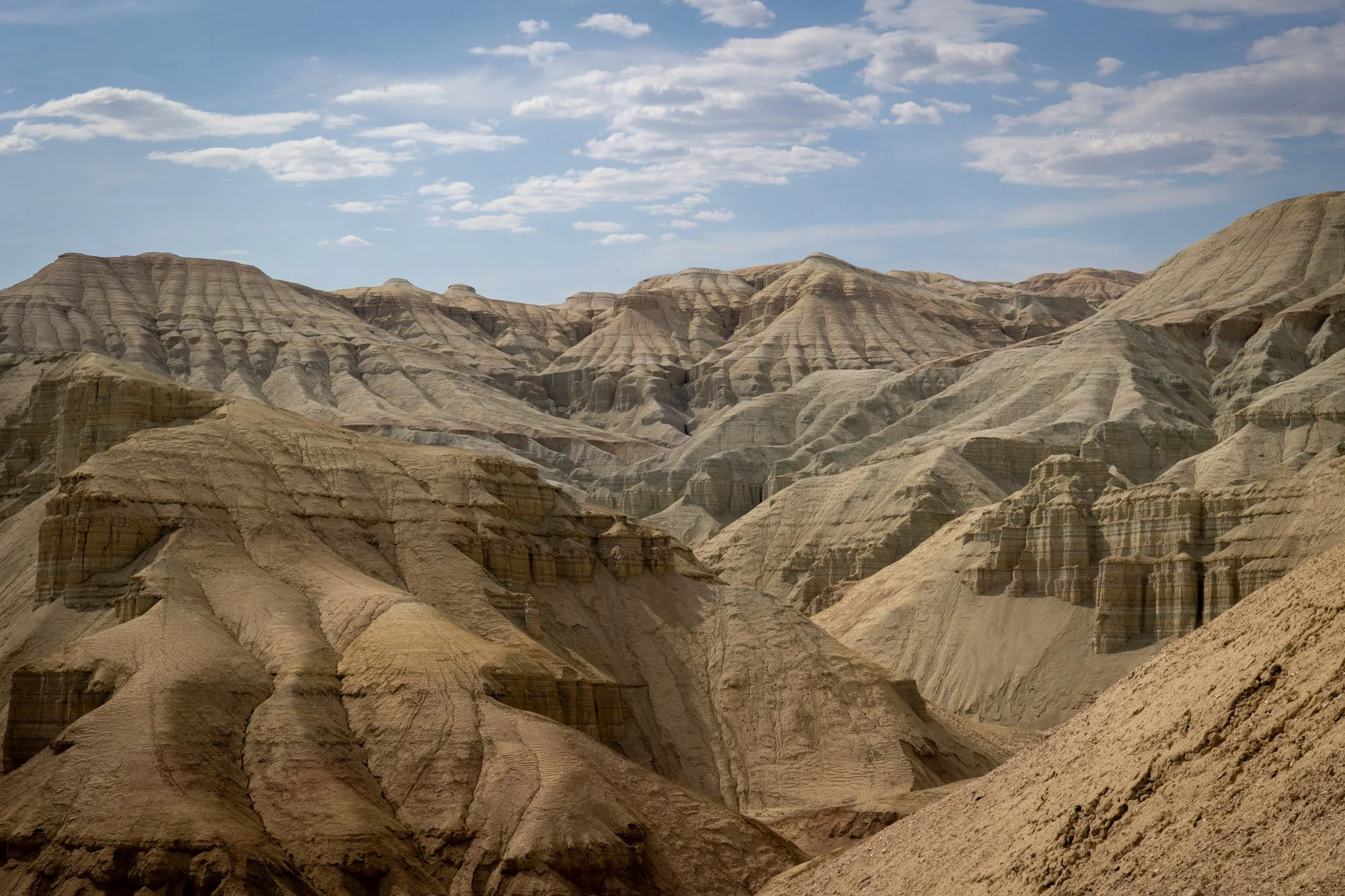
Aktau Mountains
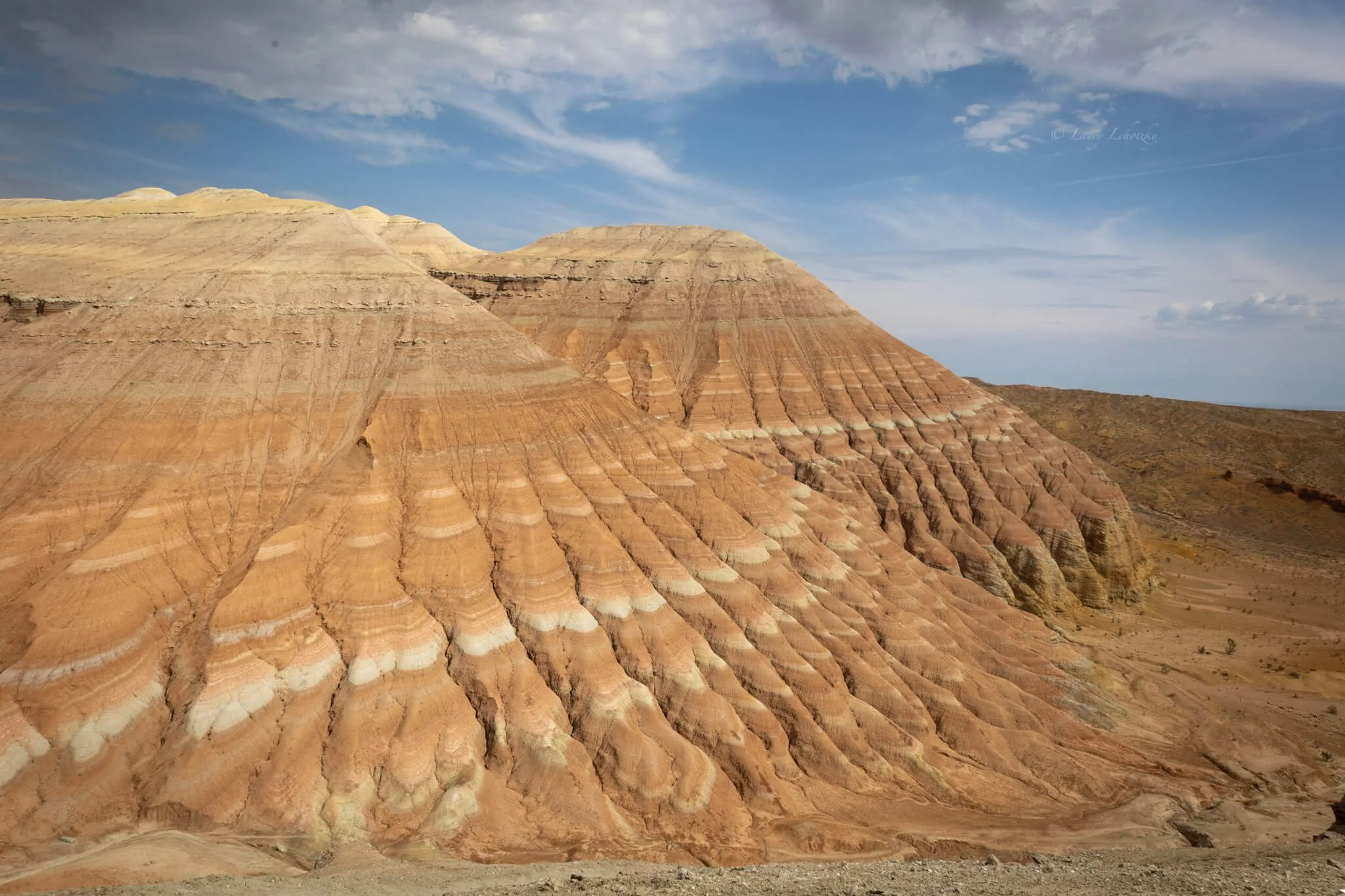
Our first major stop was the Aktau Mountains, and WOW. Millions of years ago, this area was the floor of an ancient ocean. Over time, different mineral deposits created layers of white, red, orange, yellow, and green rock, leaving behind one of the most colorful landscapes I've ever seen. Photos honestly don't do it justice. From the parking area, you can hike toward several viewpoints, but if you want the best panoramic views, prepare for a steep climb at the end. The final section is brutally hot in the summer, with very little shade anywhere along the trail.
Bring far more water than you think you'll need, wear breathable clothing, and don't underestimate the heat. We visited in June, and even then it was scorching. The effort is absolutely worth it, though. Standing at the top overlooking the striped mountains felt like walking onto another planet (even as I thought I was going to die from heatstroke lol).
Katutau Mountains
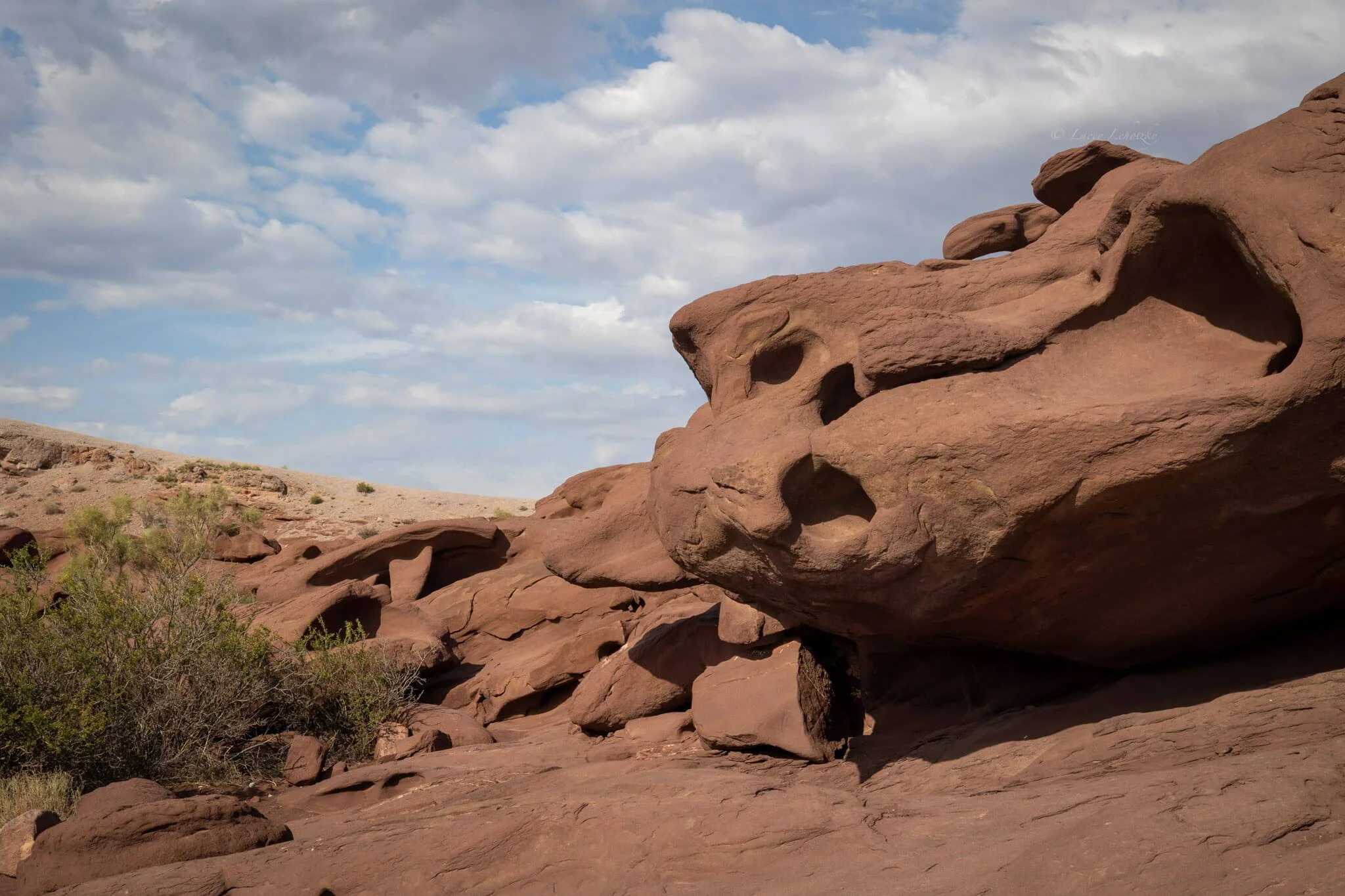
Next, we continued deeper into the park to the Katutau Mountains. Unlike the soft, layered formations of Aktau, Katutau was created by ancient volcanic activity. Massive red and black lava formations rise from the desert floor, creating an entirely different landscape despite being only a short drive away. One thing I really appreciated here was that you don't need to hike very far (I was still #dying and the second off road car didn’t have very strong AC). Some of the best photo opportunities are only a short walk from where you park, making this an excellent stop even if you aren't interested in another long climb after Aktau. Between the two locations, I honestly couldn't choose a favorite. They each feel completely unique and are absolutely worth visiting if you're already making the drive into Altyn Emel National Park.
Where We Stayed: Comfort Altyn-Emel Hotel (Bashy Village)
That evening, we stayed at Comfort Altyn-Emel Hotel in Bashy Village (and I completely forgot to get photos of this place, so sorry).
The hotel is brand new, and it definitely shows…but not necessarily in the way you'd expect. I’d say it was maybe 80% done. The property still appears to be under construction, so while everything looked modern from the outside, many of the finishing touches and amenities hadn't quite caught up yet.
Our room was clean and comfortable enough for a night's stay, but there wasn't any air conditioning installed yet (although it looked like it was planned), which made the room hot af trying to sleep. The beds were on the firmer side and a bit creaky, and we only had two pillows—good thing we'd picked up extras at Green Bazaar! Also, there wasn't any soap provided in the bathroom outside of hand soap, and it kind of seemed like they expected you to use that for everything? So I'd recommend packing a small bottle of your own just in case.
The on-site restaurant, however, was surprisingly good. They accommodated my food allergies without any issues, and after a long day bouncing around the national park, having dinner right at the hotel was incredibly convenient.
Overall, I'd describe it as a promising hotel that's still finding its footing. As construction finishes and more amenities are added, I think it'll become a much stronger option for visitors exploring Altyn Emel National Park. Unfortunately, there’s just not much else out there…yet.
Is Altyn Emel National Park Worth Visiting?
I think the answer depends on where you've traveled before.
If you've never explored desert landscapes, Altyn Emel is absolutely worth adding to your itinerary. The colorful mountains are unlike anything most people have seen, and they showcase a side of Kazakhstan that surprises almost everyone. However, if you've spent a lot of time in places like southern Utah, Arizona, or Chile's Atacama Desert, you may find yourself comparing the scenery.
Personally, I still thought Aktau and Katutau were well worth visiting because they're so different from each other, but if you have limited time in Kazakhstan, I'd prioritize spending an extra day around Kolsai and Kaindy Lakes before extending your stay here. Still, as our first taste of Kazakhstan's remote wilderness, Altyn Emel was a fascinating place to explore and showcased Kazakhstan’s diversity.
Day 4: Charyn Canyon, Black Canyon, & Kolsai Lake
The landscapes changed so dramatically throughout the day that it almost felt like we were driving through multiple countries. We started the morning surrounded by towering canyon walls, stopped at a vibrant emerald river winding through another canyon, and finished the evening riding horses along one of the most beautiful alpine lakes I've ever seen. I’m telling you now, this is going to become the next popular destination once more travel influencers start going!
Charyn Canyon
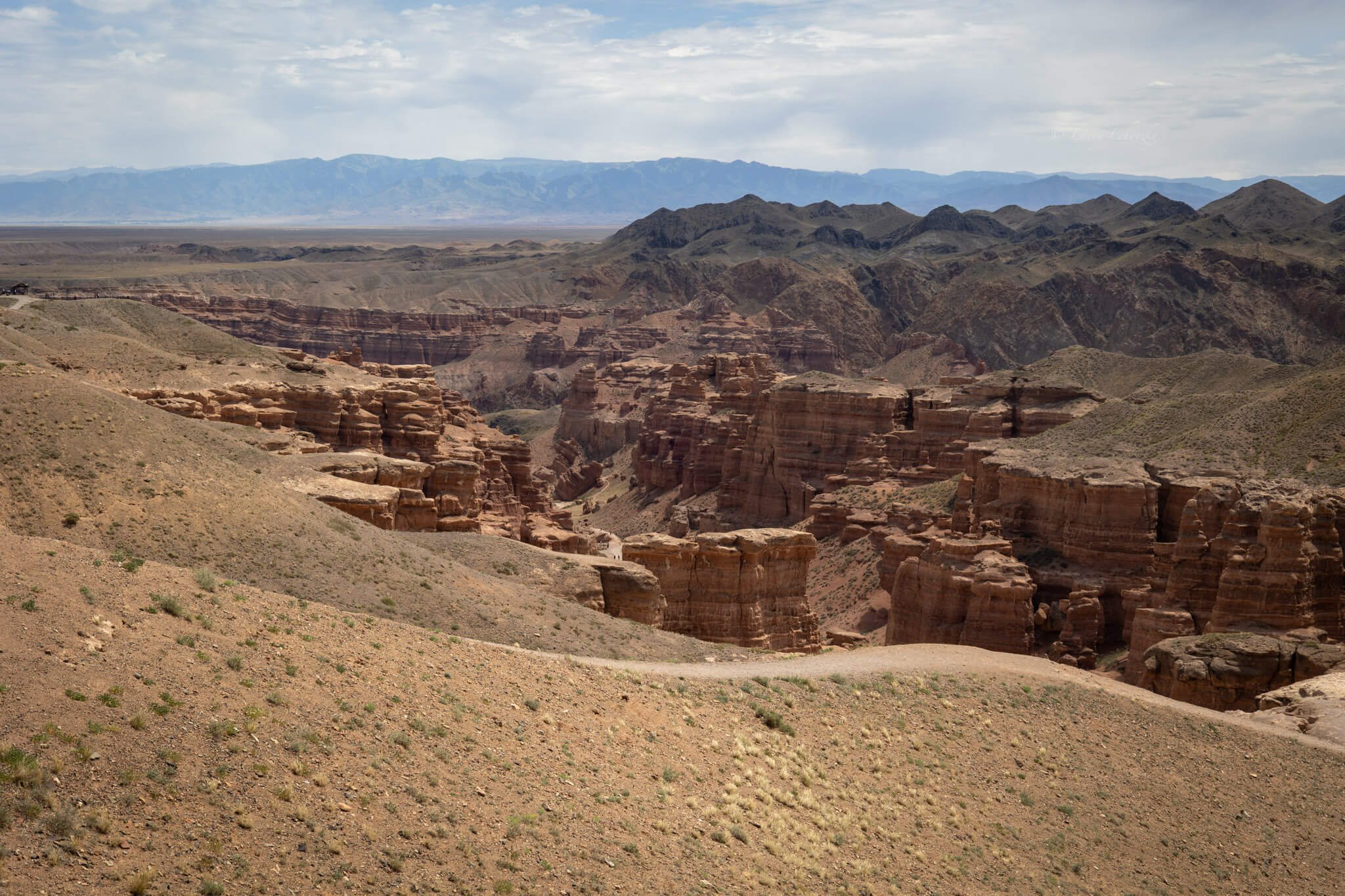
Our first stop was Charyn Canyon, often called Kazakhstan's Grand Canyon.
While it isn't nearly as massive as the one in Arizona, the towering orange cliffs and dramatic rock formations make it one of the country's most iconic natural landmarks. There are a few different ways to experience the canyon depending on how much time and energy you have. You can simply walk along the rim for incredible panoramic views, or you can hike all the way down to the river through the Valley of Castles. If the thought of hiking back uphill in the summer heat doesn't sound appealing, there's even a shuttle that will drive you between the visitor center and the river for a small fee.
Since we knew we had a packed day ahead and wanted to spend as much time as possible at Kolsai Lake, we decided to stay along the rim instead of hiking all the way down. But even without the longer hike, the views were absolutely worth the stop.
Black Canyon
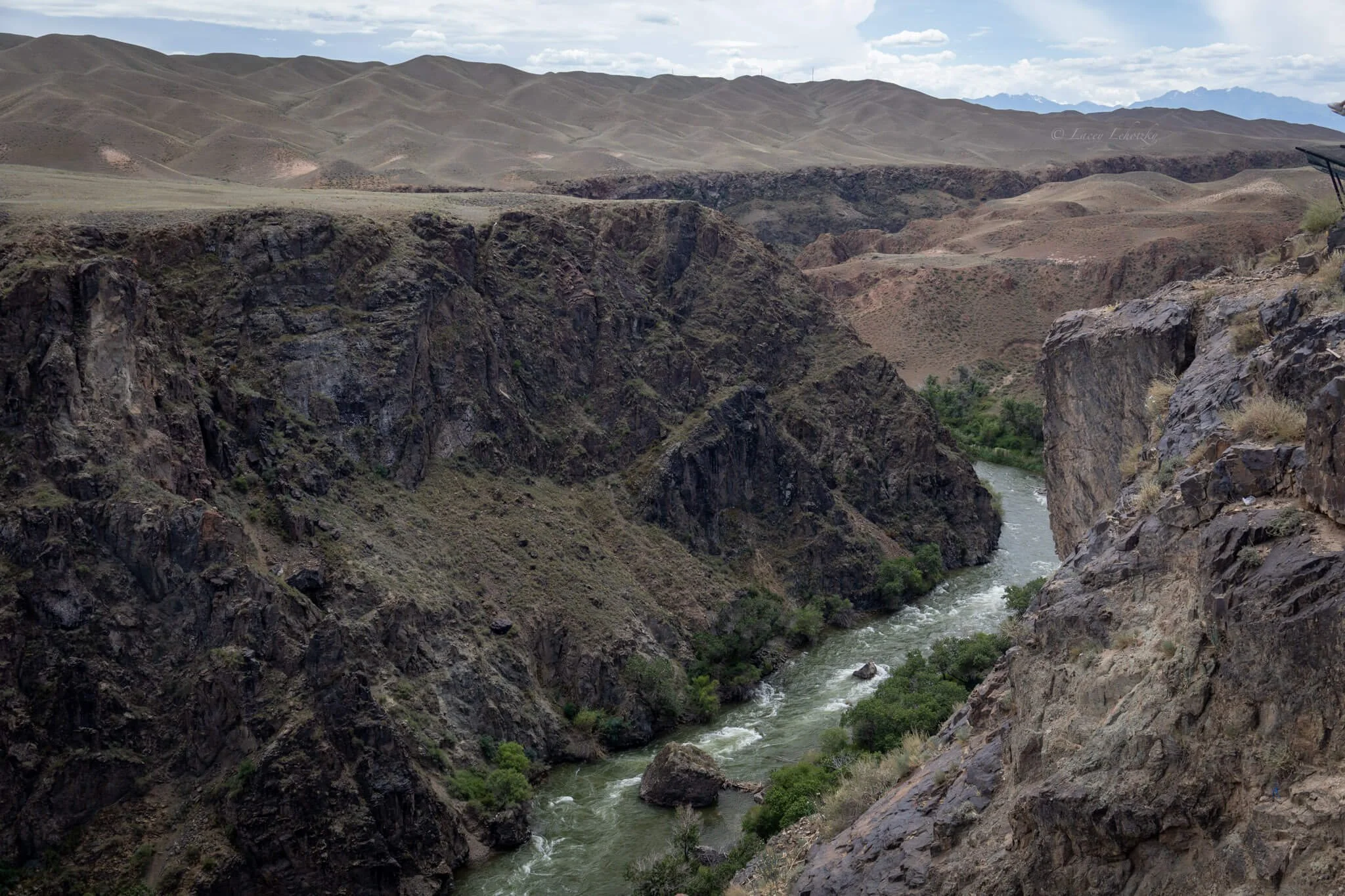
Our next stop was one I hadn't really heard anyone talk about before our trip: Black Canyon.
It's located right along the drive toward the lakes and only takes a few minutes to visit, making it an easy addition to your itinerary. The deep canyon walls frame a beautiful green river below, creating a completely different look from Charyn Canyon earlier that morning. The area is still being developed, with restaurants and walking paths gradually being added, but even now it's well worth pulling over for a few photos.
Kolsai Lake
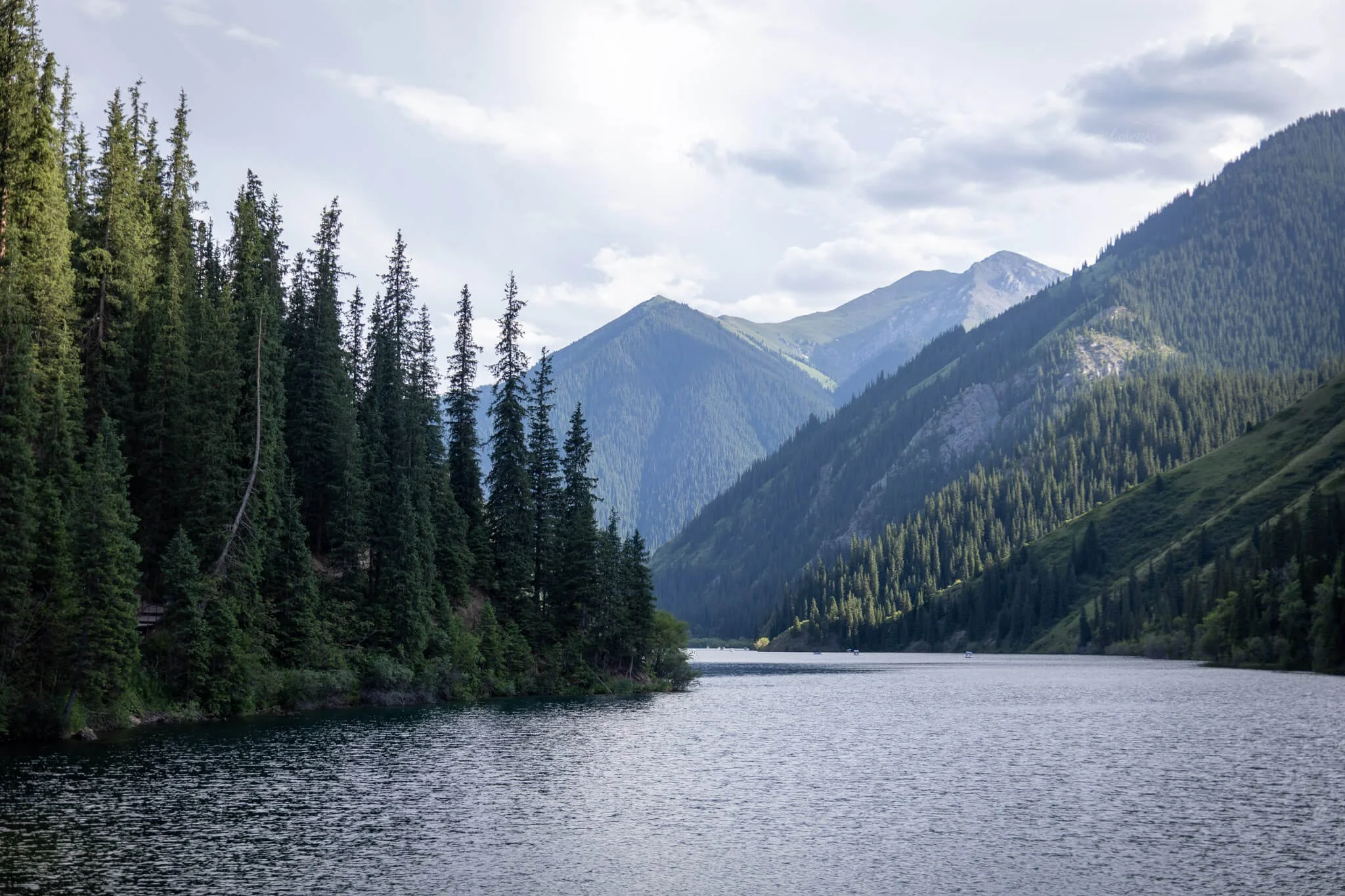
Kolsai Lake was absolutely the highlight of the day and one of the whole ones of our trip. Well, technically we only saw the first one, as there are actually 3 lakes connected by hiking trails and a small river. Most visitors spend their time around the first lake, while hikers can continue roughly six kilometers to the second lake before eventually reaching the third. You can also horseback ride to the second lake to shave off some time.
If we had another full day here, I would've loved to hike farther into the mountains. But because we were short on time, we took a quick trip to the end of the first lake on horseback. Our ride took us along the shoreline, winding through forests with incredible views across the turquoise water toward the surrounding mountains. We stopped at the end of the ride to take photos, and I genuinely don't think there could have been a more picturesque way to experience the landscape.
However, the trail was ROUGH, and I am an experienced rider. If you’ve never ridden before, I would hike instead of ride. The horses will just follow each other, but the constant up and down and narrow, rocky trail made traversing the terrain difficult, even when I knew how to move to help the horse.
If horseback riding isn't your thing, you can also rent paddle boats or simply walk along the shoreline. No matter how you explore it, Kolsai Lake is absolutely breathtaking. By the time we got there, it was late afternoon, with the softer light around sunset that made the entire lake glow.
Cost to ride the horses to the end of the first lake was 45000 KZT for two people, and you need cash.
Where We Stayed: COZYREST Hotel (Saty)
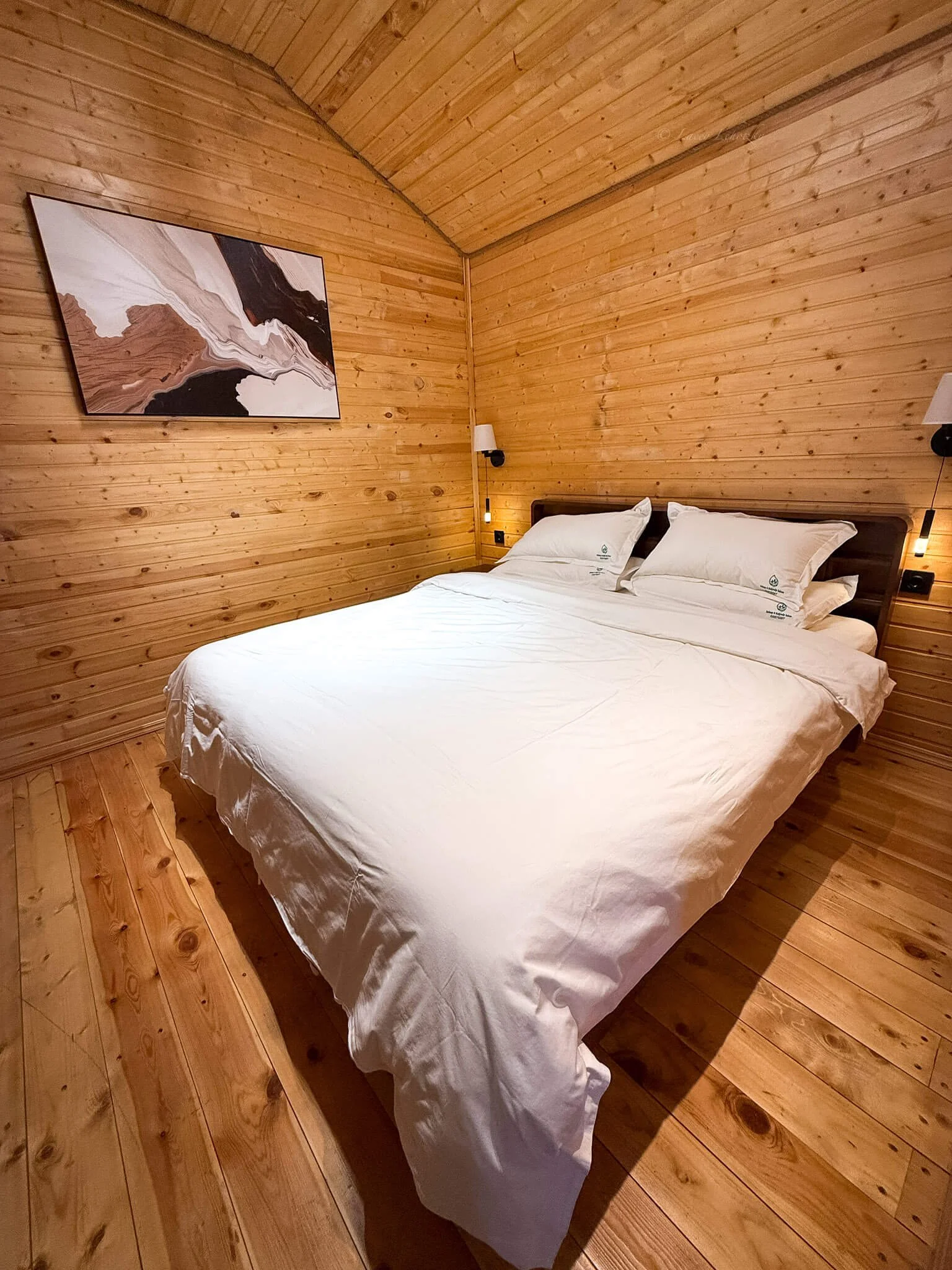
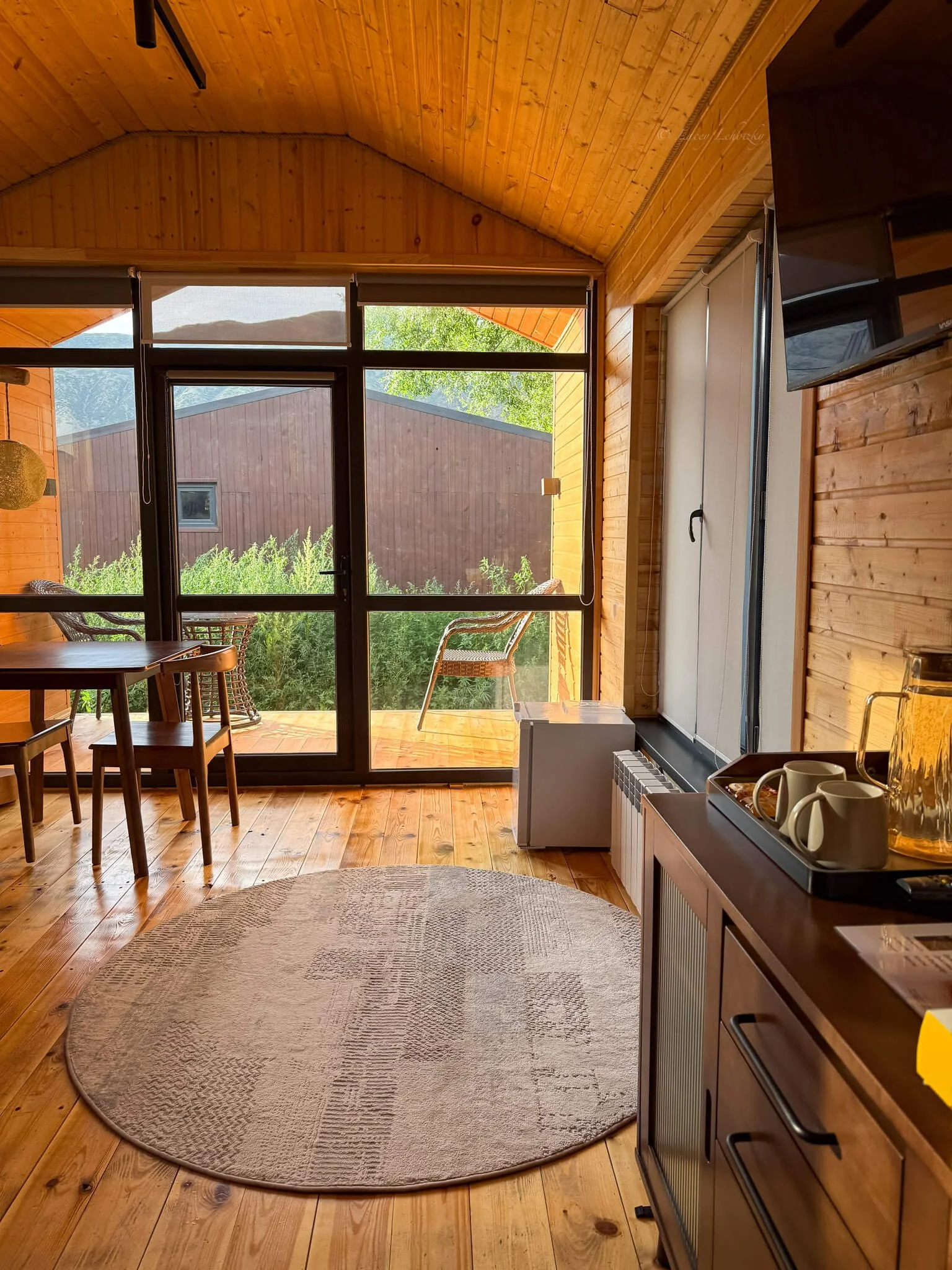
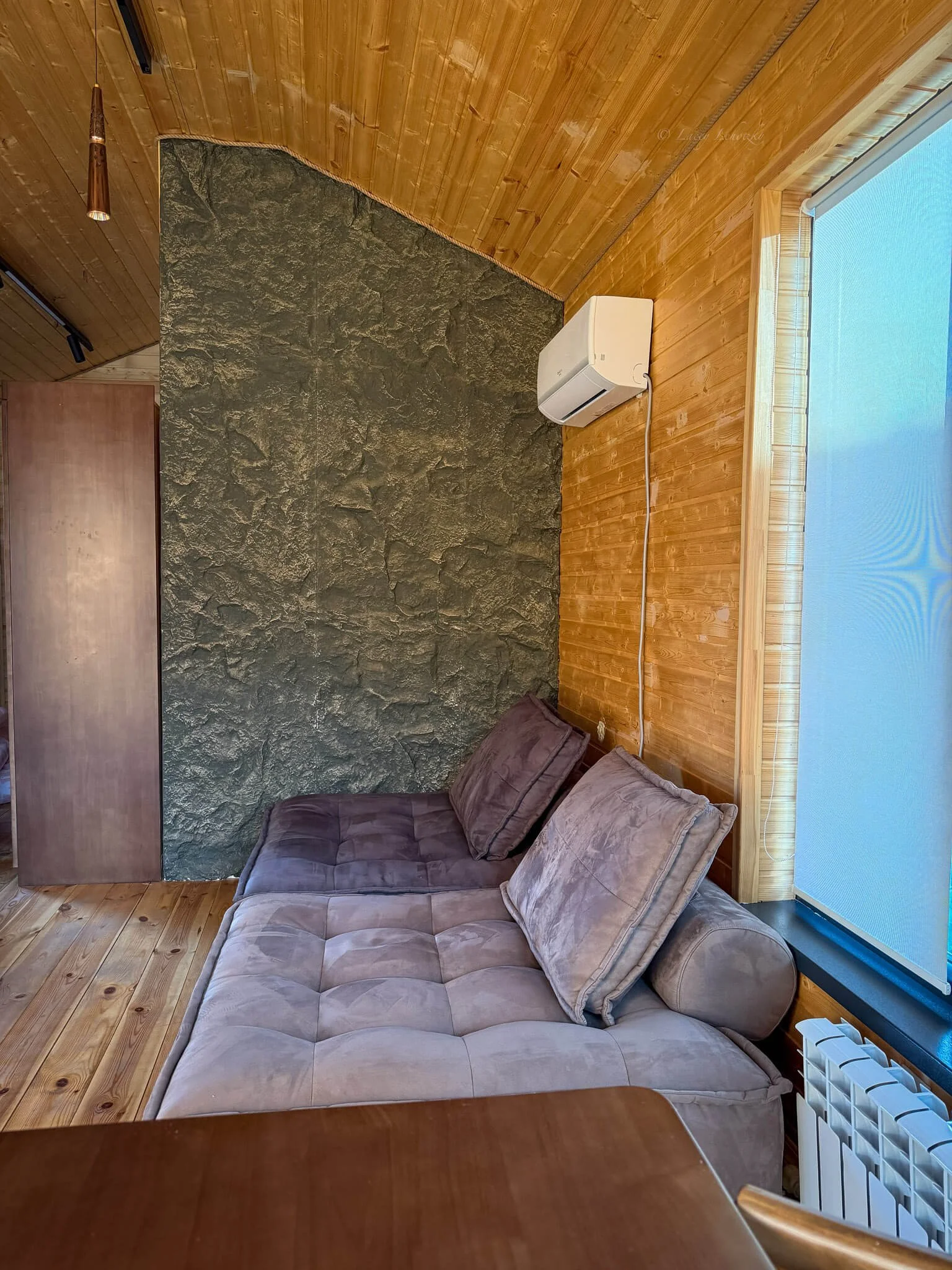
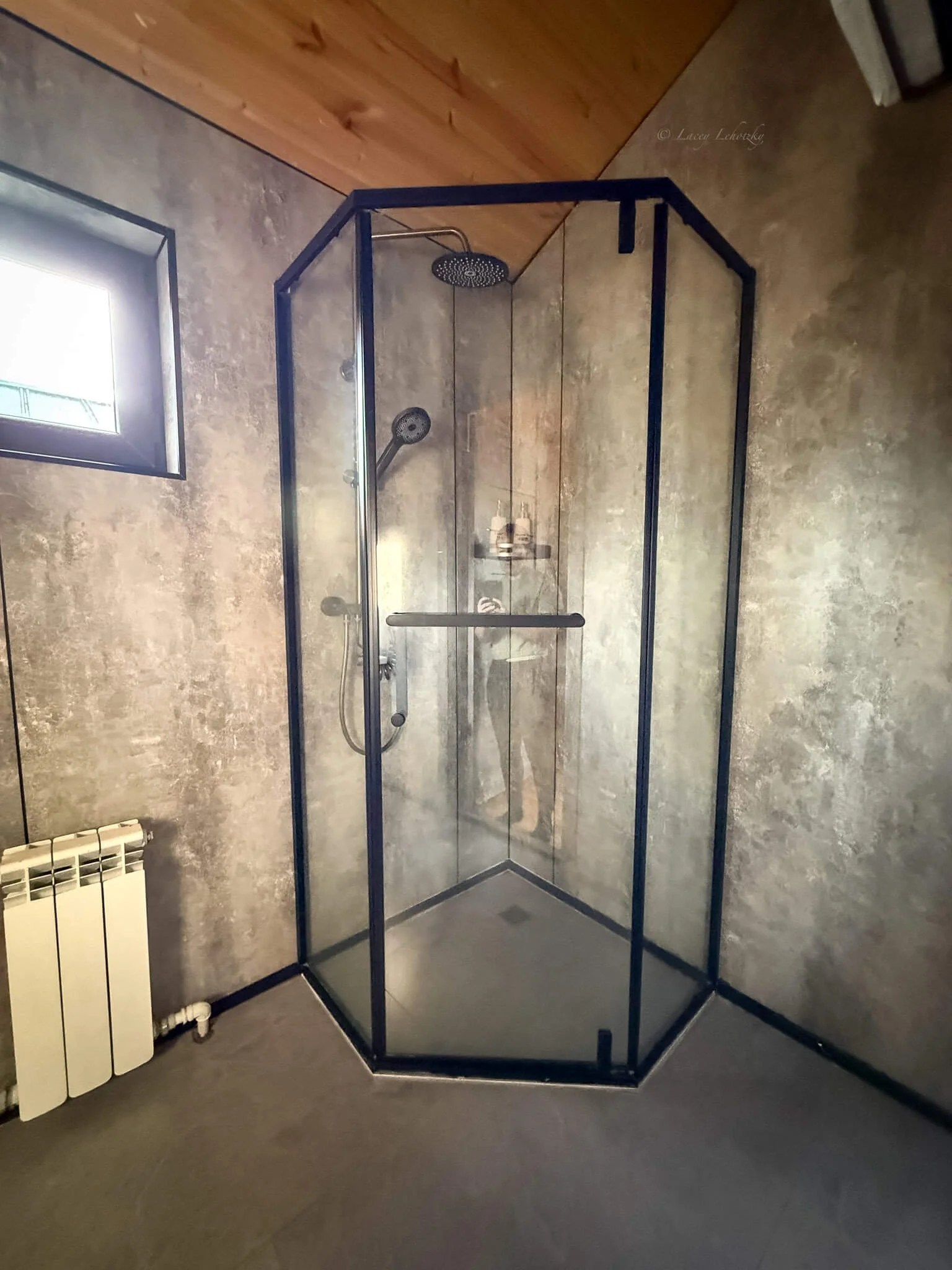
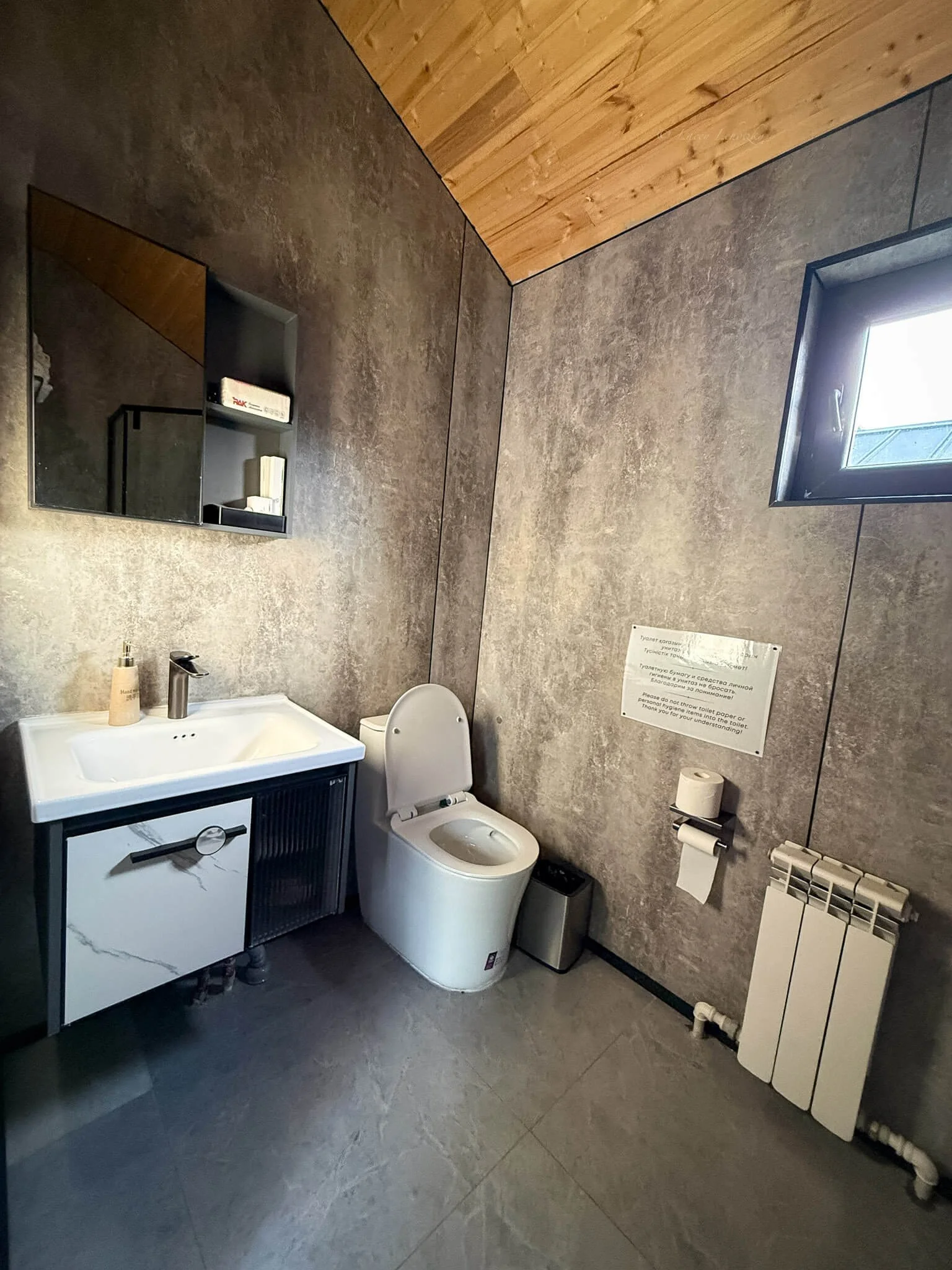
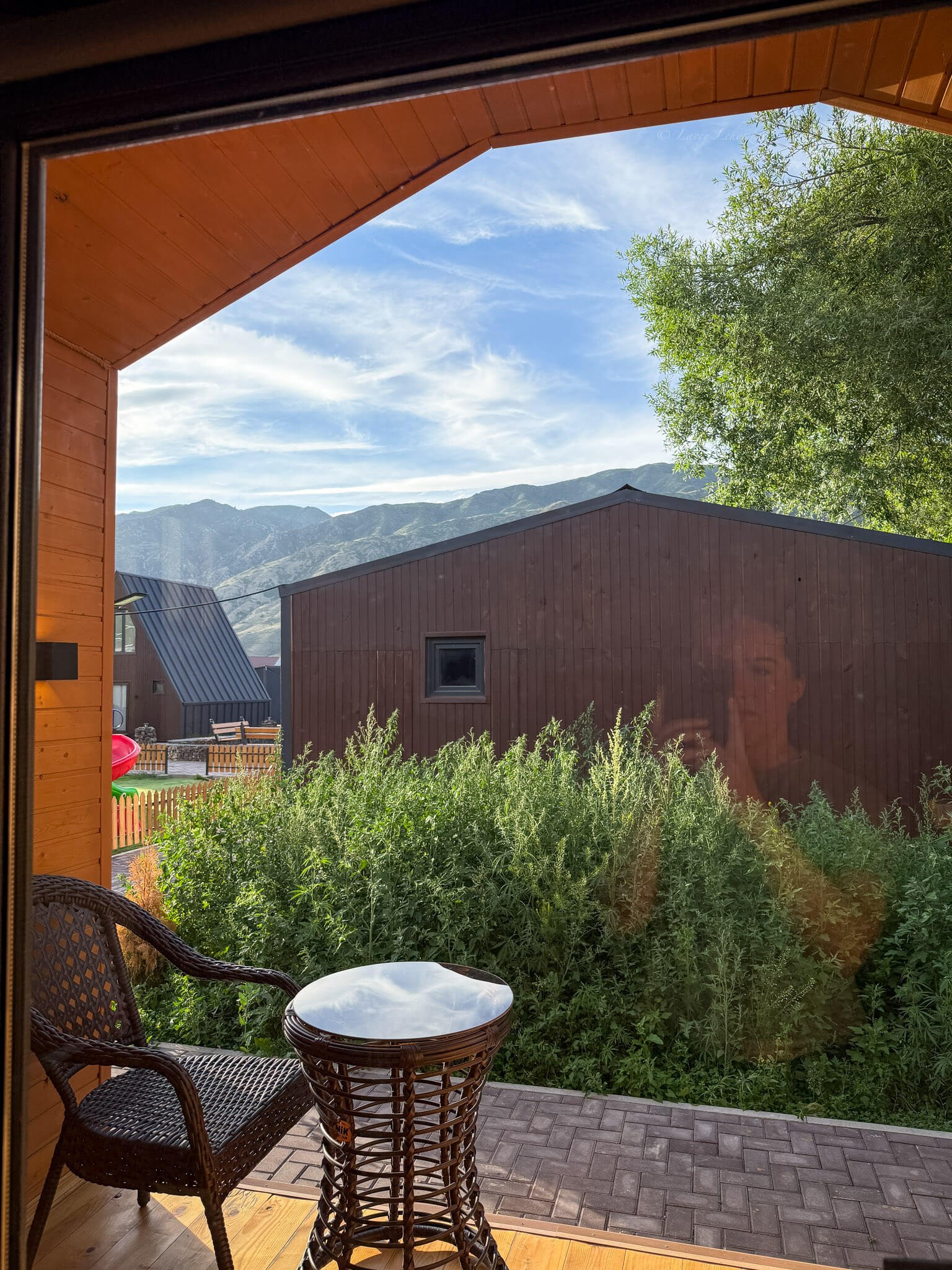
That evening, we checked into COZYREST Hotel in the village of Saty. Without question, this was my favorite hotel of the entire trip.
The rooms are individual luxury-style cabins tucked against the mountains, giving you plenty of privacy while still feeling cozy and welcoming. After a night with a firmer bed and fewer amenities, walking into a room with air conditioning, a wonderfully soft bed, blackout curtains, and—best of all—lots of pillows felt like absolute luxury.
The owner also speaks English, which made communication incredibly easy. Dinner at the restaurant was delicious, there was even a small bar available, and they had no problem accommodating my food allergies.
If I could change one thing about our itinerary, it would be staying here longer. Between Kolsai Lake, Kaindy Lake, and all of the surrounding hiking trails, this area deserves at least two or three nights instead of one. It's peaceful, beautiful, and where anyone trying to recover from an exhausting workload could let their nervous system slow down and appreciate their surroundings.
Is Kolsai Lake Worth Visiting?
Absolutely.
If you only have time for one destination outside of Almaty, I would seriously consider making it Kolsai Lake and the surrounding area. Between the alpine scenery, horseback riding, hiking opportunities, and charming accommodations, this region perfectly captures why Kazakhstan is going to became one of the trendiest destinations.
Day 5: Kaindy Lake & Crossing into Kyrgyzstan
I thought Kolsai Lake would be impossible to top, but then we visited Kaindy Lake.
Kaindy Lake
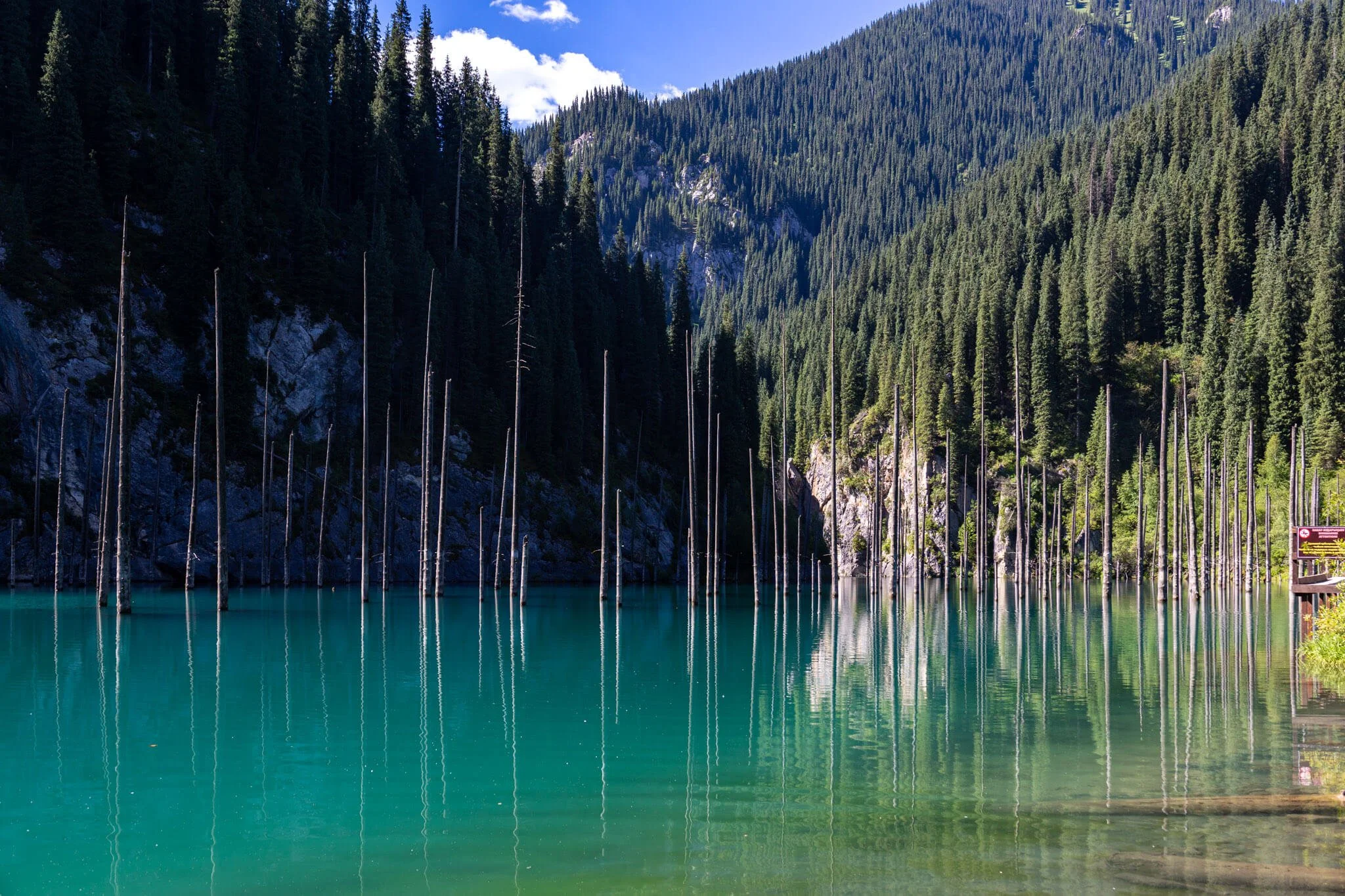
If you've ever seen photos of Kazakhstan on social media, there's a good chance you've already seen this lake without realizing it. The impossibly turquoise water, filled with the ghostly trunks of long-dead spruce trees reaching toward the sky, almost doesn't look real.
If there's one piece of advice I can give you for visiting Kaindy Lake, it's this: get there as early as possible.
We arrived before the majority of the tour buses, and the difference was incredible. The lake was almost perfectly still, the morning light reflected beautifully across the water, and the entire area felt peaceful and untouched. By the time we started making our way back, more visitors were beginning to arrive.
Horseback Riding to Kaindy Lake
From the parking area, you have two options. You can hike to the lake... Or you can ride a horse. Have you sensed a theme here? 😂
Absolutely choose the horse. Riding makes the entire experience feel more adventurous and authentic, like you’re truly a nomad exploring the v vastness of Kazakhstan. Winding through the forest on horseback before emerging to that breathtaking view of Kaindy Lake felt like something straight out of a fantasy novel, and I know a thing or two about those.
As we climbed higher along the trail, sweeping mountain views opened up around us, with wildflowers carpeting the hillsides in every direction. Visiting in June meant everything was brilliantly green and in full bloom. And then you arrive at the lake. The water is an almost unbelievable shade of blue—like someone poured Gatorade into the mountains. Rising from beneath the surface are the bare trunks of spruce trees that have remained standing since an earthquake over a century ago caused the valley to flood.
We spent quite a while simply walking around, taking photos, and soaking it all in before reluctantly heading back toward the trailhead.
Cost was 35000 KZT for us and our guide (three people) and you need cash.
Scenic Drive to the Border
Leaving Kaindy Lake behind, we began the drive toward the Kyrgyzstan border. Even though we were technically spending much of the day in the car, I didn't mind one bit. The scenery throughout this region is absolutely spectacular. Every time I thought I could finally stop taking photos out the window, another mountain valley or winding river would appear around the next bend.
Oh, and sheep traffic jams are a real thing 😂 by the end of the trip, we had running jokes with Sanzhar about them. And it’s not just sheep—cows, horses, goats, none of the GAF and will block the road. Many people still live a nomadic way of life, and you’ll see them on horseback, guiding their flocks to the next grazing spot.
Crossing from Kazakhstan into Kyrgyzstan
Crossing the border ended up being one of the most interesting parts of the trip. We’d only crossed a physical land border once before, from Croatia into Bosnia for a day trip, and all they did was come on board our bus and look at our passports. Here, though was an entirely different experience.
Our driver dropped us off before the checkpoint while he continued with the vehicle separately. We first entered the Kazakh border building, where our luggage was scanned and our passports were stamped as we exited the country. From there, we walked across the actual border into Kyrgyzstan before going through a second passport control building to officially enter the country. Once we cleared immigration, we met our driver on the other side and continued toward Karakol.
The entire process was surprisingly straightforward (probably because we were the only ones at this tiny border crossing) and didn’t take very long. Obviously, if it’s busy it could take longer. This one also closes at 5PM because, well, there’s just not enough traffic to justify it being open any longer.
It was definitely part of the adventure!
Where We Stayed: Matsunoki Hotel (Karakol)
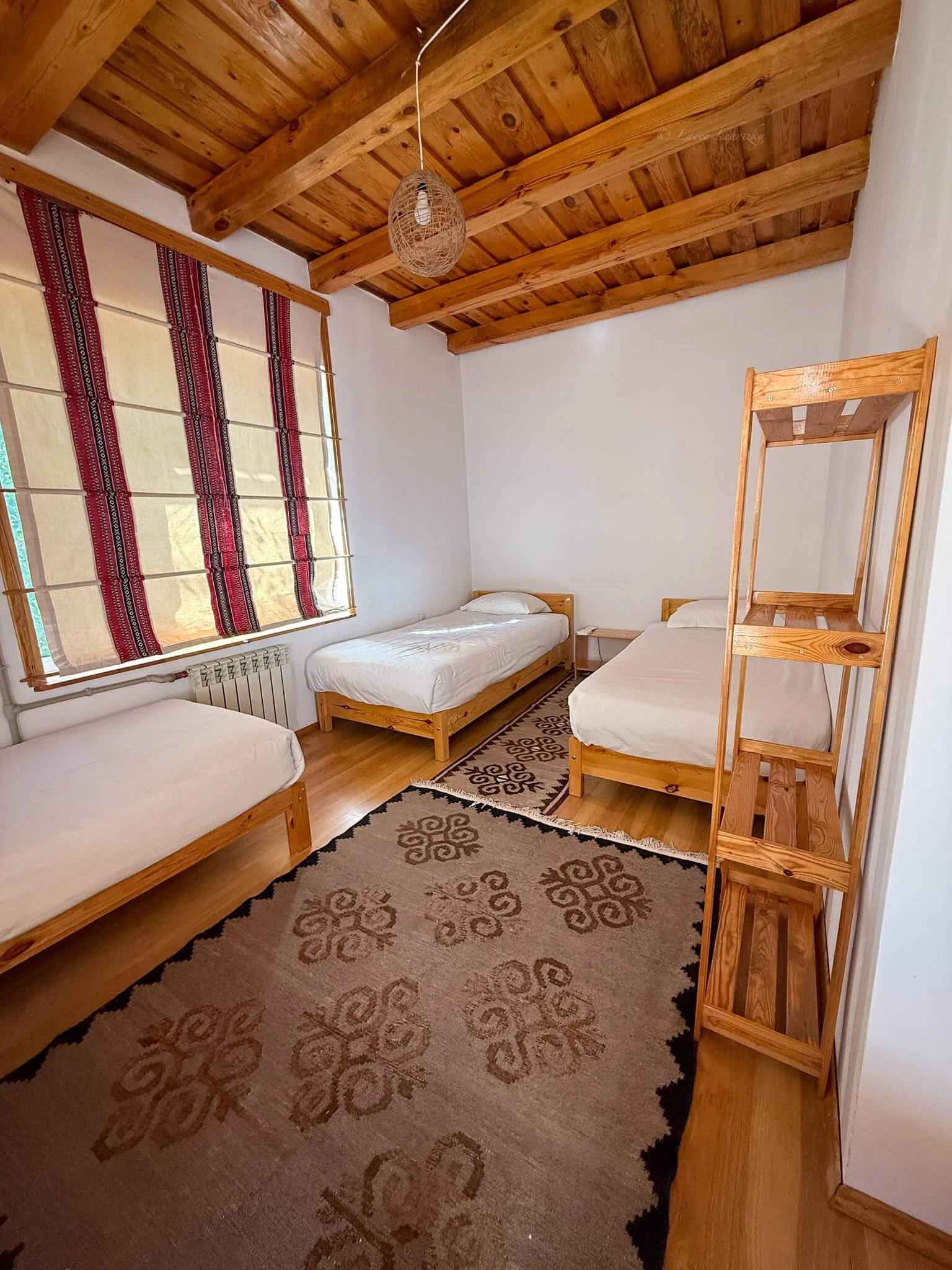
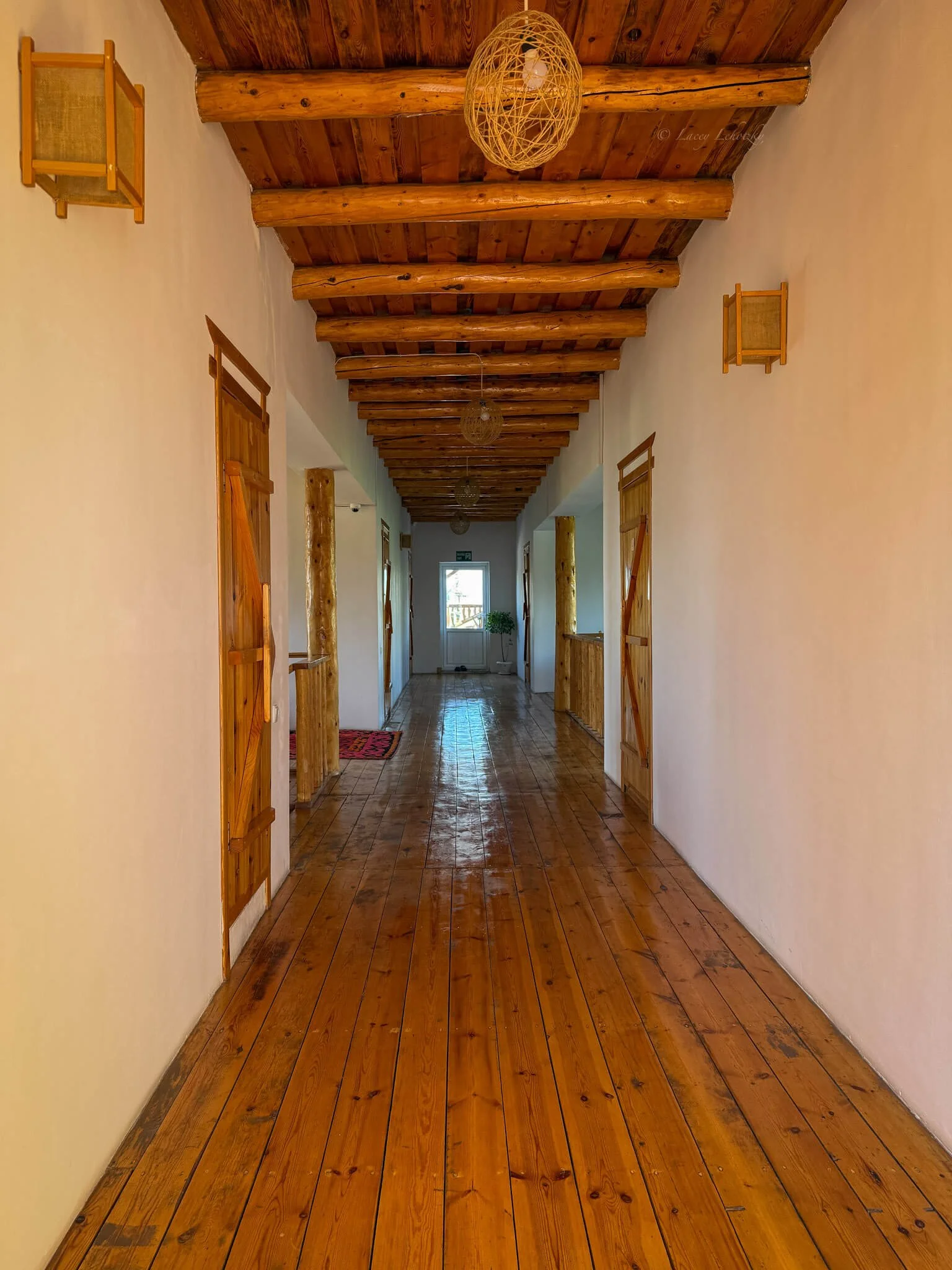
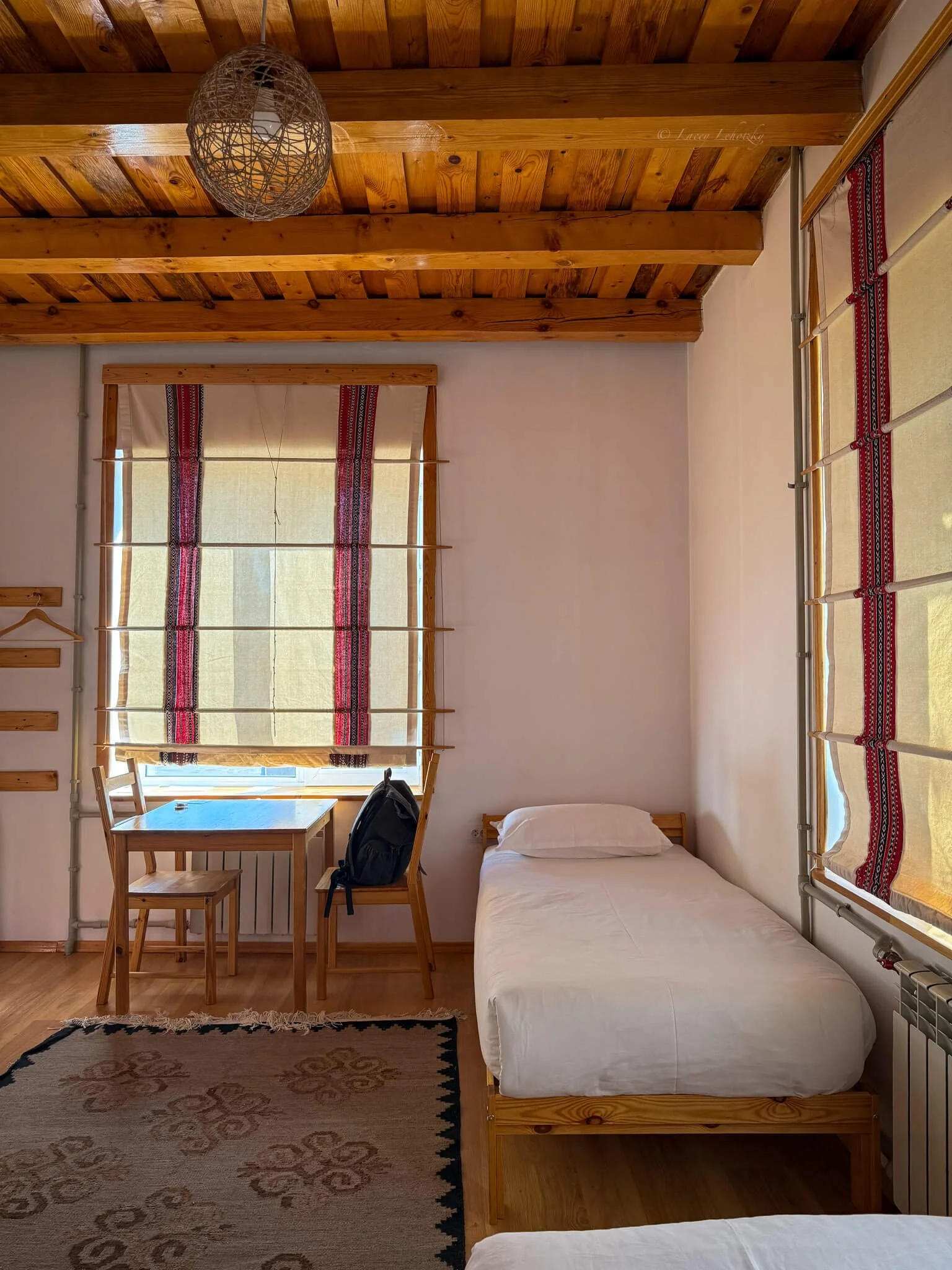
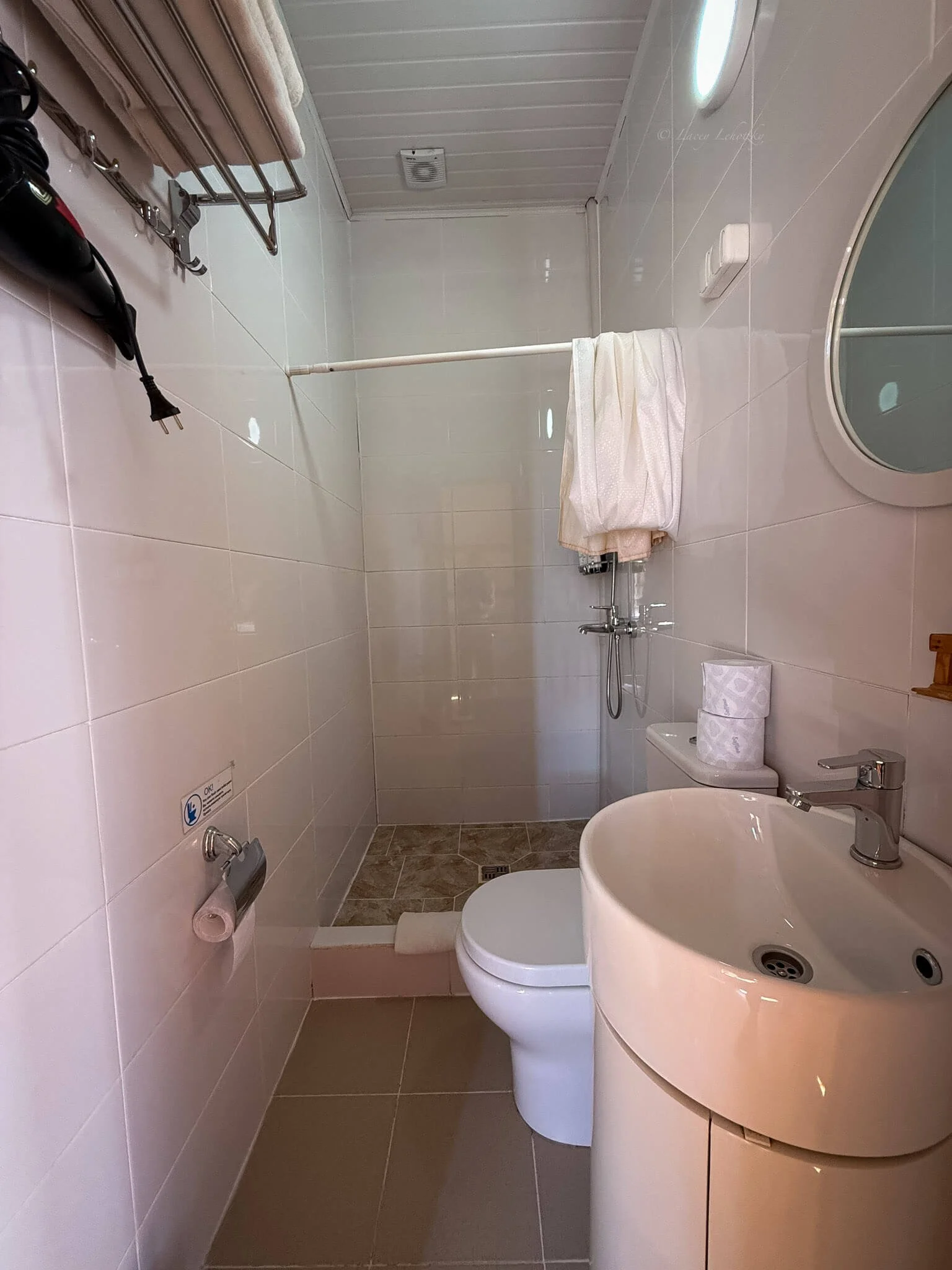
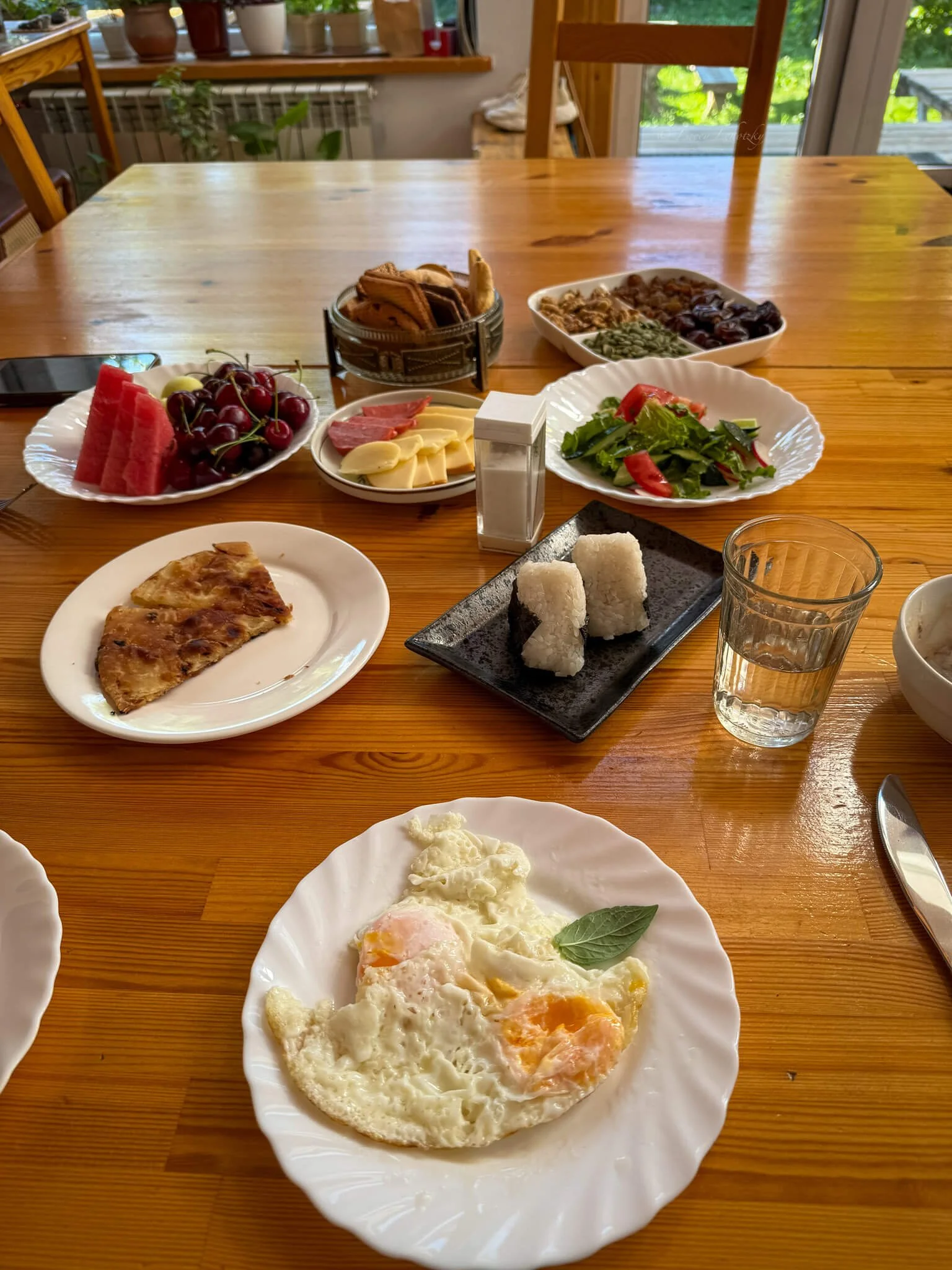
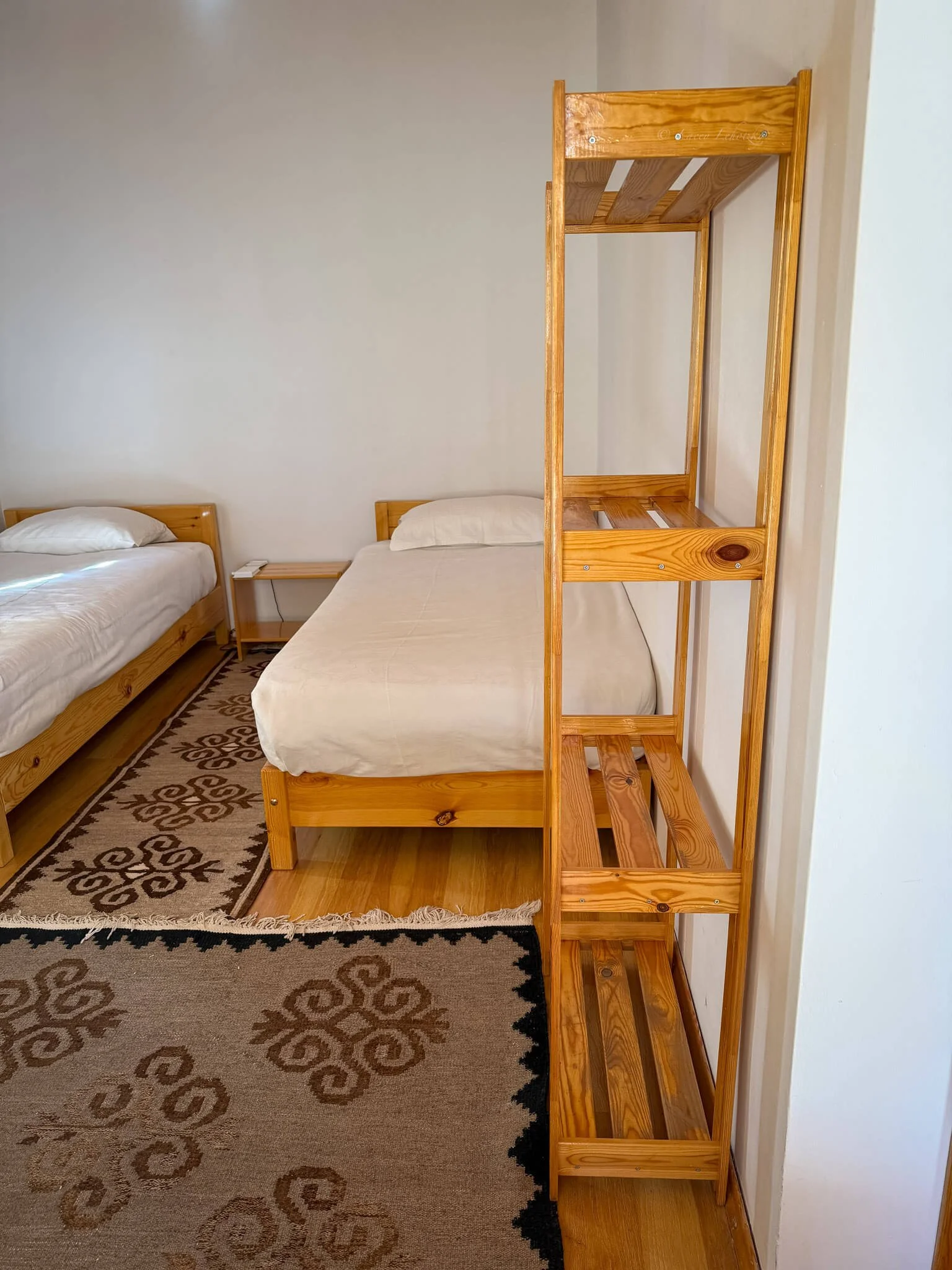
That evening, we checked into Matsunoki Hotel in Karakol. This was one of the most charming accommodations of the trip.
Owned by a Japanese couple, the hotel has a cozy, minimalist feel that immediately makes you want to slow down and relax. We booked a triple room, which gave us a little extra space, and, more importantly, extra pillows. By this point in the trip, our pillow obsession had become a running joke (yes we still brought in the four extra pillows from our car too).
The beds were comfortable, though they were all twin beds, and everything felt exceptionally clean. There isn't any air conditioning, but thanks to the cooler mountain temperatures, we simply opened the windows. The only downside was that mornings could get a little noisy outside, so if you're a light sleeper, I'd recommend closing the windows before 4 AM or bringing earplugs.
One thing I would absolutely pack for this hotel is an eye mask. There aren't blackout curtains, and the sun rises incredibly early during the summer months. Between the early sunrise and the mountain birds greeting the day, sleeping past 5 AM wasn't exactly an option.
Breakfast the next morning was one of the best we had during the entire trip. There was a generous buffet alongside made-to-order eggs, plus tea and coffee available throughout the day. The rooftop sitting area also offers beautiful views of the surrounding mountains.
It was the perfect place to settle in before beginning our adventures in Kyrgyzstan.
First Impressions of Kyrgyzstan
Even though Kazakhstan and Kyrgyzstan share many similarities, crossing the border felt like entering a different world. The mountains somehow seemed even closer, villages became smaller, and life slowed down noticeably. It immediately felt more rural and more connected to the country's nomadic traditions.
Day 6: Hiking Above Karakol & Relaxing in the Hot Springs
After several long driving days through Kazakhstan, it felt good to spend a full day exploring one area instead of constantly packing up and moving.
Karakol sits on the eastern edge of Kyrgyzstan near Lake Issyk-Kul, surrounded by towering mountains that make it a paradise for hikers in both the summer and winter. During ski season, people flock here to hit the slopes. In the summer, those same mountains become a playground of wildflower-covered meadows, alpine trails, and panoramic viewpoints.
Karakol Ski Base Hike
I was exhausted, so Andrew and Sanzhar left me to rest while they drove to the Karakol Ski Base to hike. One thing they didn't realize beforehand was that the ski lift actually runs during the summer as well. If hiking isn't your thing, you can still take the lift up and enjoy incredible mountain views with much less effort.
But of course, one must hike when the scenery is so beautiful! The trail itself is roughly four miles out and back, though theirs ended up being a little longer after taking a wrong turn. Instead of following the proper route, they accidentally climbed straight up through a mountain meadow, but Andrew wasn’t mad about it because the detour turned out to be gorgeous, with rolling green hills dotted with wildflowers and incredible views in every direction.
Once they found their way back to the main route, the climb continued steadily upward until they reached the viewpoint at the top with panoramic views of snow-capped mountains and Lake Issyk-Kul shimmering in the distance.
Before they started their hike, they picked up an…unexpected buddy. At the base, a group of friendly dogs just wanted to be pet, and after obliging them, one decided to accompany Andrew and Sanzhar up to the top. He happily trotted alongside them all the way to the summit, patiently waited while they admired the view and took photos, and then escorted them all the way back down to the parking lot like it was his full-time job.
Karakol Hot Springs
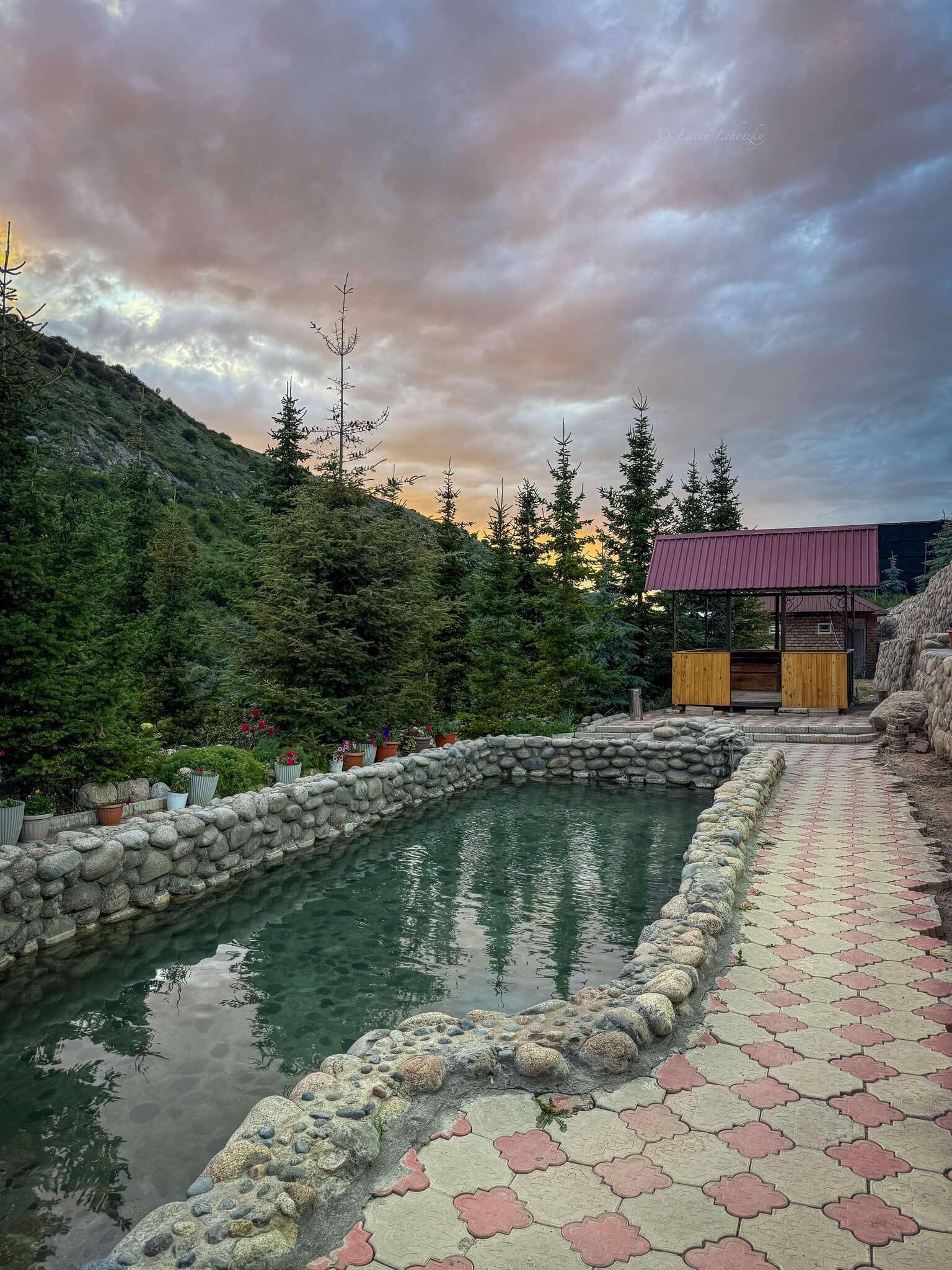
After spending the morning on the mountain, there was no better way to recover than soaking in the nearby hot springs. Unlike the thermal pools we visited near Almaty, these were absolutely worth the stop. The complex has multiple pools set at different temperatures, so whether you like your water warm or almost unbearably hot, you'll find one that suits you. The springs sit right alongside the river, creating a peaceful setting surrounded by forest and mountains.
If you're brave enough, you can even cool off by stepping into the shallow river. The absolutely freezing shallow river that I squealed about the entire time I plunged myself into the war. Which was about three seconds 😂
Admission was around 400 som per person, making it an affordable way to spend a relaxing afternoon after hiking.
One practical tip: you have to bring flip-flops or slides. You'll be walking between the different pools, and having easy shoes to slip on and off makes everything much more comfortable. At the market in town, you can purchase some cheap ones if you didn’t bring any along on your trip.
Back to Matsunoki Hotel
That evening, we returned to Matsunoki Hotel, and I was genuinely happy we'd be spending another night there. We are not fast paced travel people, as much as we want to be 😅 So it was nice knowing we'd come back to comfortable beds, fluffy pillows, and another incredible breakfast waiting for us the next morning.
It's easy to get caught up chasing the next destination on a road trip, but Karakol is one of those places where I think it's worth slowing down for a day or two. Between the hiking, skiing, hot springs, and easy access to Lake Issyk-Kul, there's plenty here to keep outdoor lovers busy. This was one of the most relaxing days of our entire Kazakhstan and Kyrgyzstan road trip itinerary because it was one of the few where we weren't racing from one attraction to the next.
Day 7: Seven Bulls, Barskoon Gorge, & Fairy Tale Canyon
Every single day of our Kazakhstan and Kyrgyzstan road trip itinerary seemed to introduce us to another completely different landscape, and the drive from Karakol to Bokonbayvo was no different.
Seven Bulls Rocks (Jeti-Ögüz)
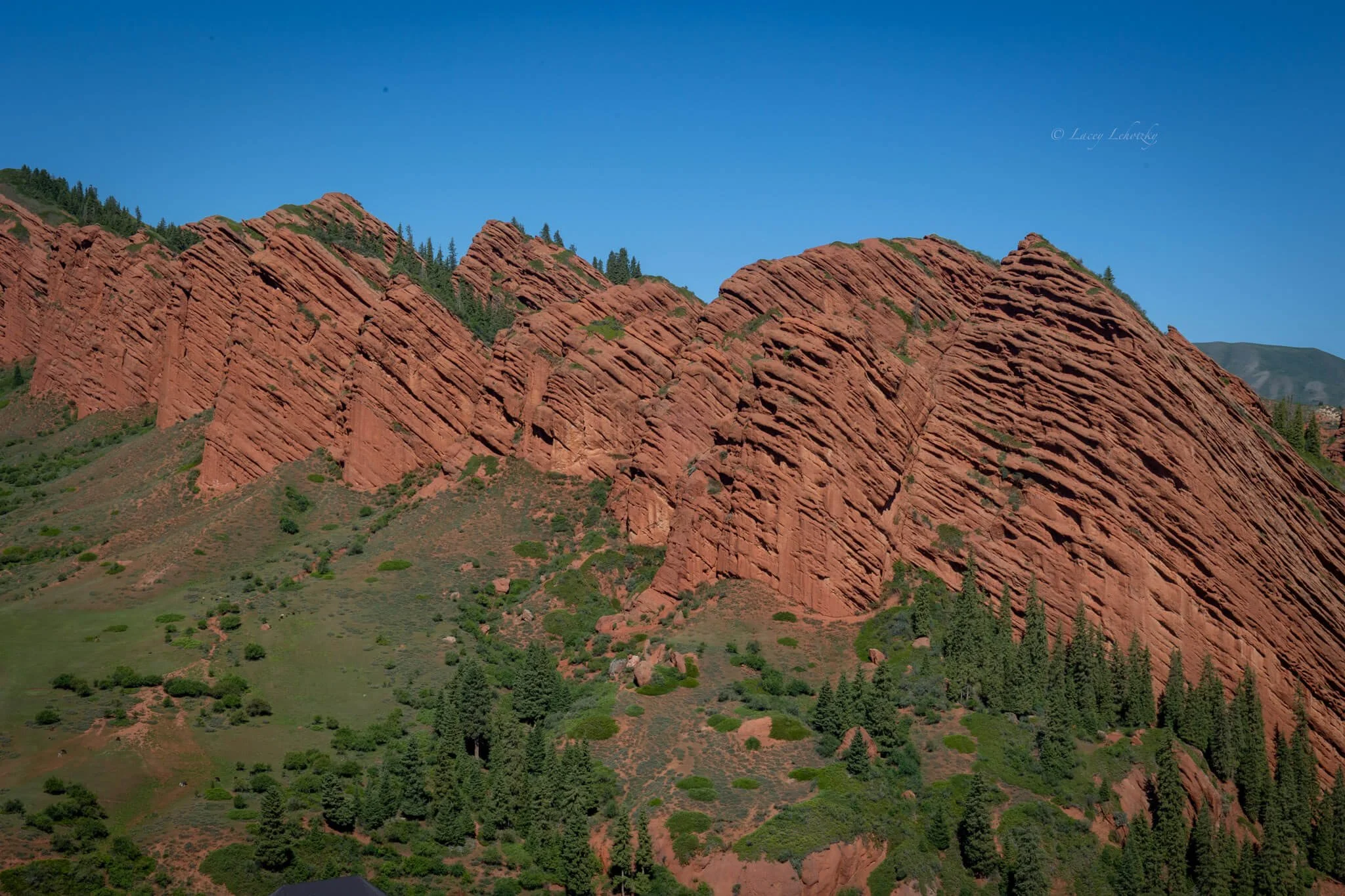
Our first stop was Seven Bulls Rocks, one of Kyrgyzstan's most famous natural landmarks. The drive out there is...rough. Very rough.
Once again, this was one of those roads where I was incredibly happy someone else was driving. But after bouncing our way there, the reward comes almost immediately. Unlike many viewpoints throughout the trip, there's essentially no hike required here. You simply park the car and walk a short distance to admire the enormous red sandstone cliffs rising dramatically above the valley floor.
According to local legend, the rock formation resembles seven bulls standing side by side, giving the area its name. The surrounding valley is just as beautiful as the rocks themselves, with lush green hills contrasting against the deep red cliffs.
And perhaps most importantly...
There was an actual Western-style bathroom! Cue the tears of joy. After several days of road trips through remote Central Asia, I considered this attraction worthy of five stars all by itself.
Barskoon Gorge
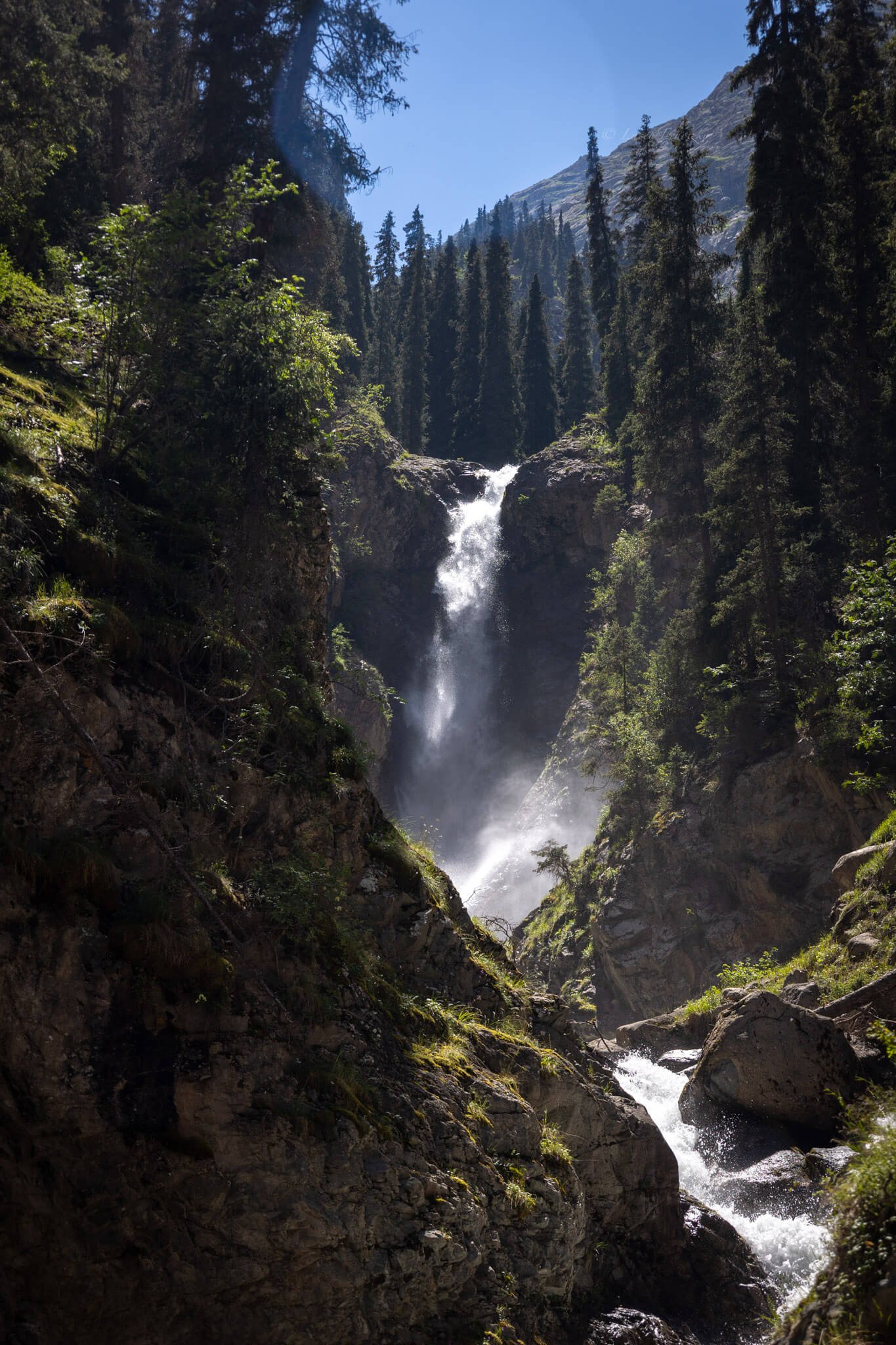
Next, we continued to Barskoon Gorge. The drive follows a peaceful river through a beautiful mountain valley before arriving at several waterfalls scattered throughout the gorge.
There are three main waterfalls you can visit. The first two require relatively short—but fairly steep—walks uphill. They're definitely enough to get your heart rate up, but they're well worth the effort.
A third waterfall sits farther up the valley and requires roughly an hour-long hike. Unfortunately, we didn't have enough time in our schedule to make the longer trek (and if you’d seen the steepness you’d have also been like no thanks), but if you're spending extra time in the area and enjoy hiking, it would absolutely be worth considering.
One thing I loved about Barskoon Gorge is that every viewpoint revealed another postcard-worthy scene. Snow-capped mountains tower over the valley while rushing waterfalls tumble through dense forests below. It's peaceful, incredibly photogenic, and somehow still doesn't feel overrun with tourists, despite the fact that for the first time we saw multiple groups of Americans here.
Randomly near the entrance, there’s a statue honoring Yuri Gagarin, the first human to travel into space. Apparently he vacationed here several times during the Soviet era, which is not something I expected to learn while standing in the mountains of Kyrgyzstan.
Fairy Tale Canyon
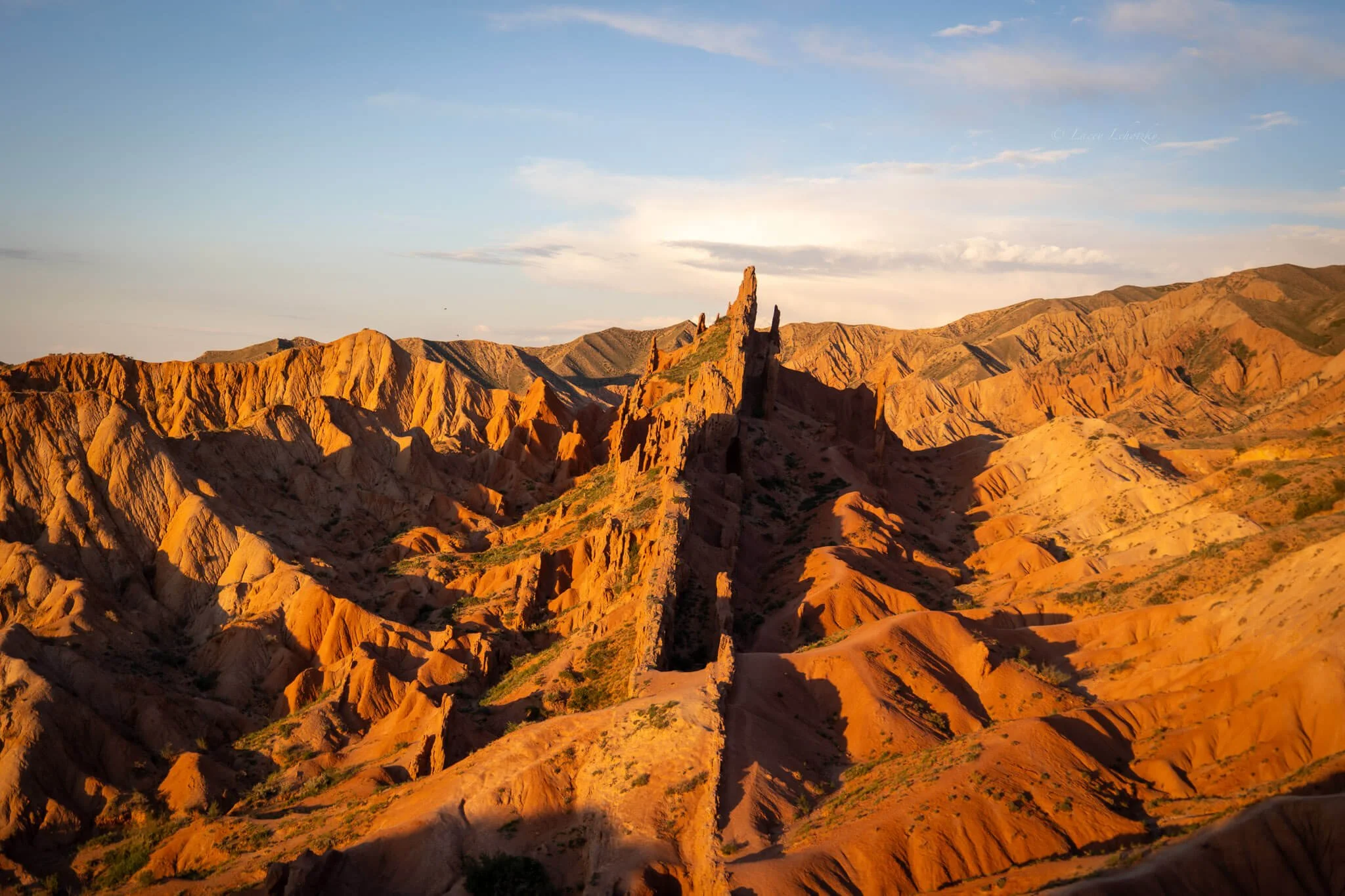
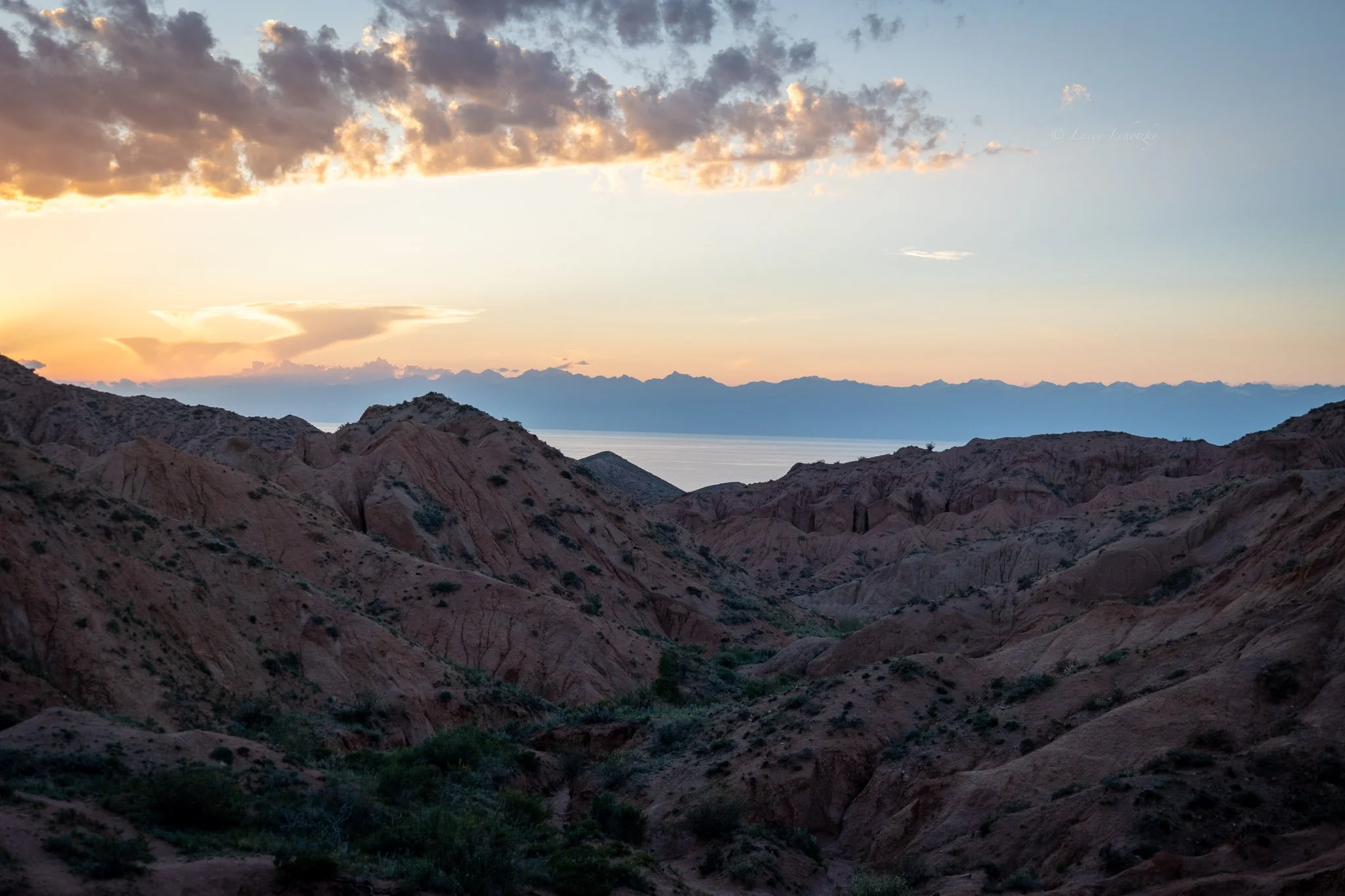
My biggest recommendation for Fairytale Canyon is to go at sunset. Which meant we drove past and checked into our hotel first before heading back out to catch the rocks in all their soft light glory.
As the sun drops lower in the sky, the colorful sandstone formations begin glowing shades of orange, red, and gold, making the entire canyon look almost unreal. Unlike many canyons where you're following one designated trail, Fairy Tale Canyon feels much more like a giant natural playground (for now). You can wander through the formations, climb small ridges, and explore countless little paths at your own pace.
As you walk around, you'll start noticing why it earned its whimsical name. Different rock formations resemble castles, giant walls, penguins, dinosaurs, and all sorts of other shapes depending on your imagination. Every few minutes we'd stop, point at another formation, and debate what it looked like. Once you reach the higher points, you can also look toward the lake and capture it and the distant snow capped mountains against the stunning red rocks for an epic photo.
Admission was inexpensive (around 150 som when we visited), making it one of the best-value stops of the trip.
Where We Stayed: Guest House Amirhan
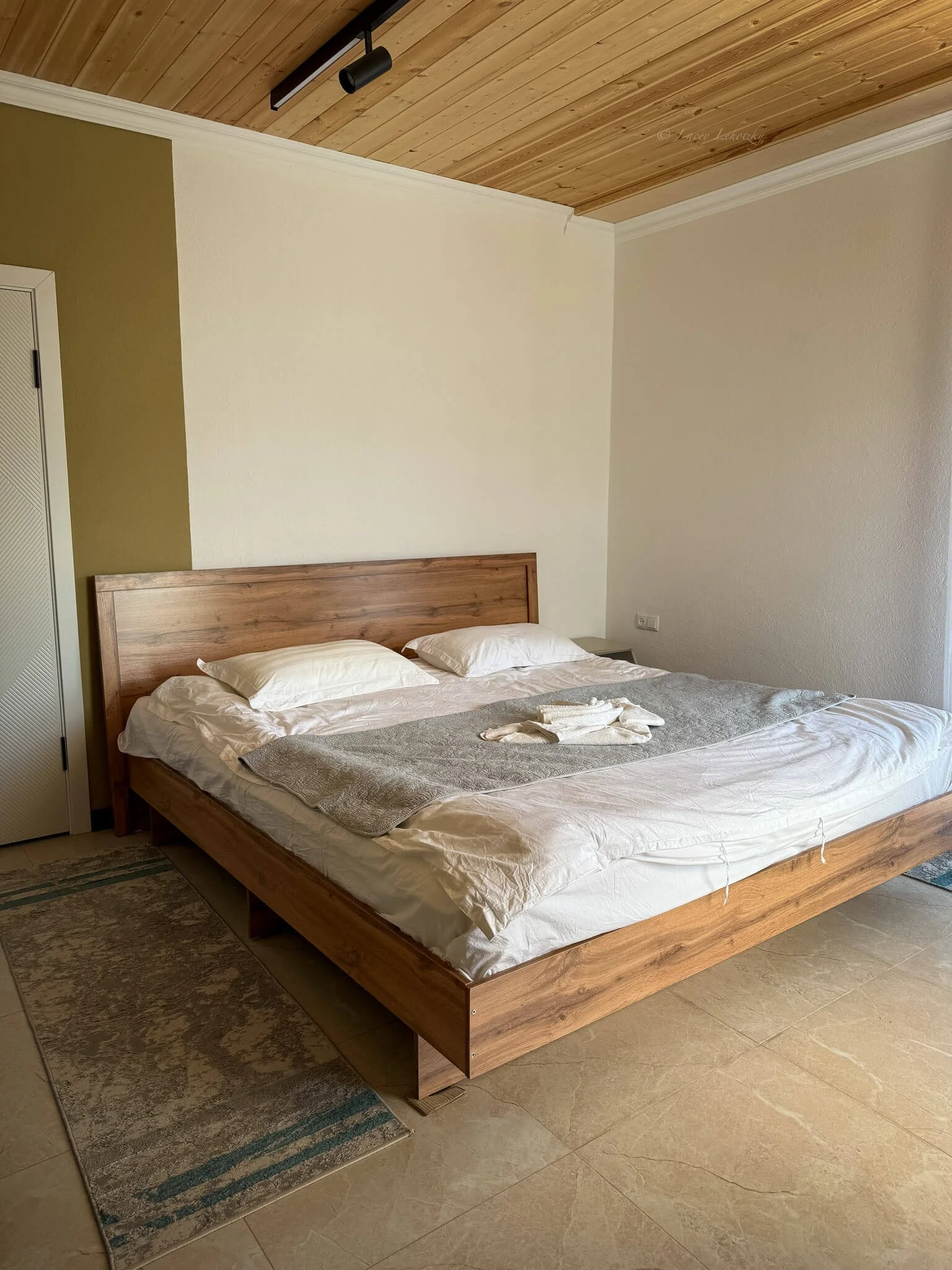
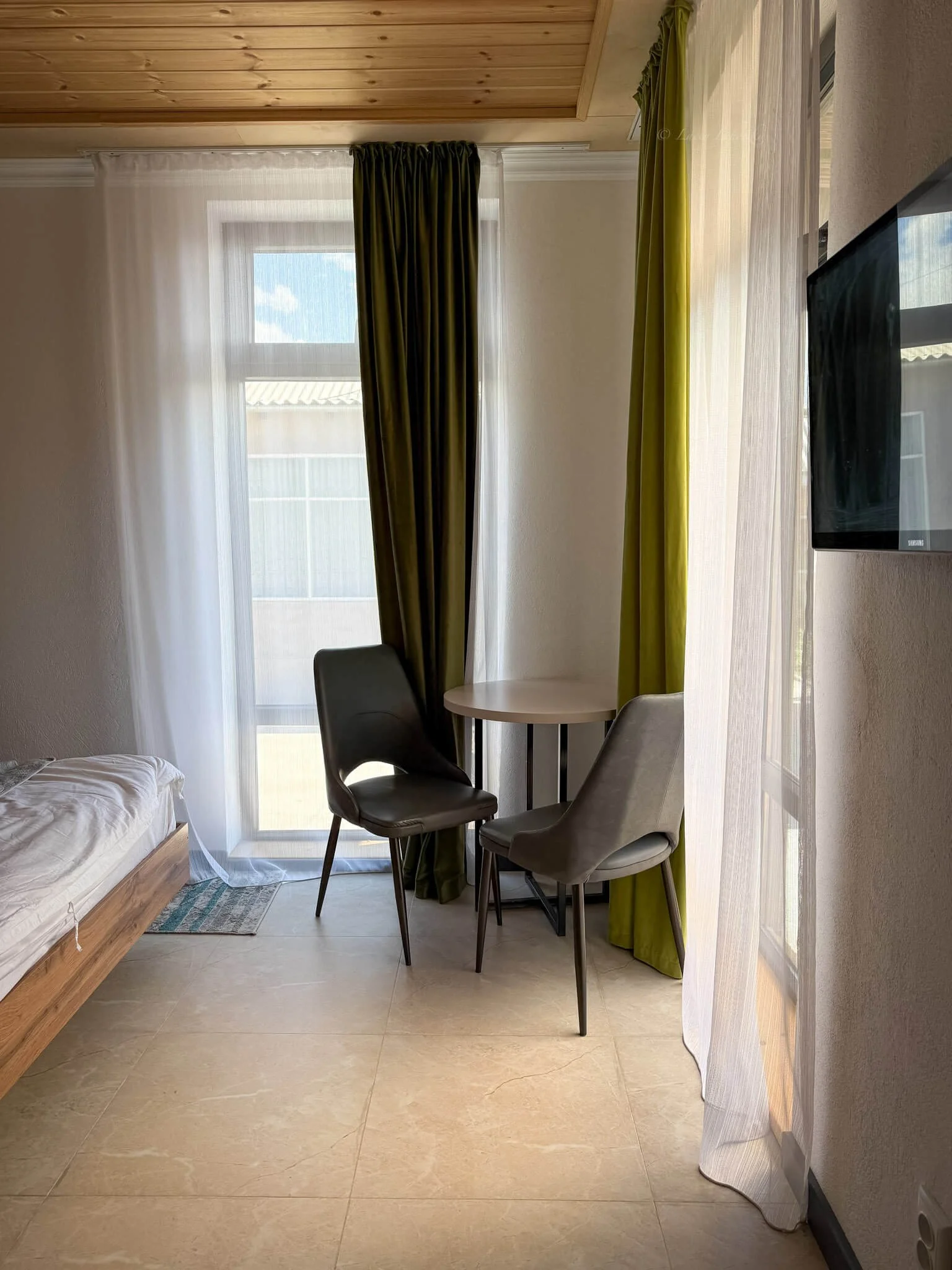
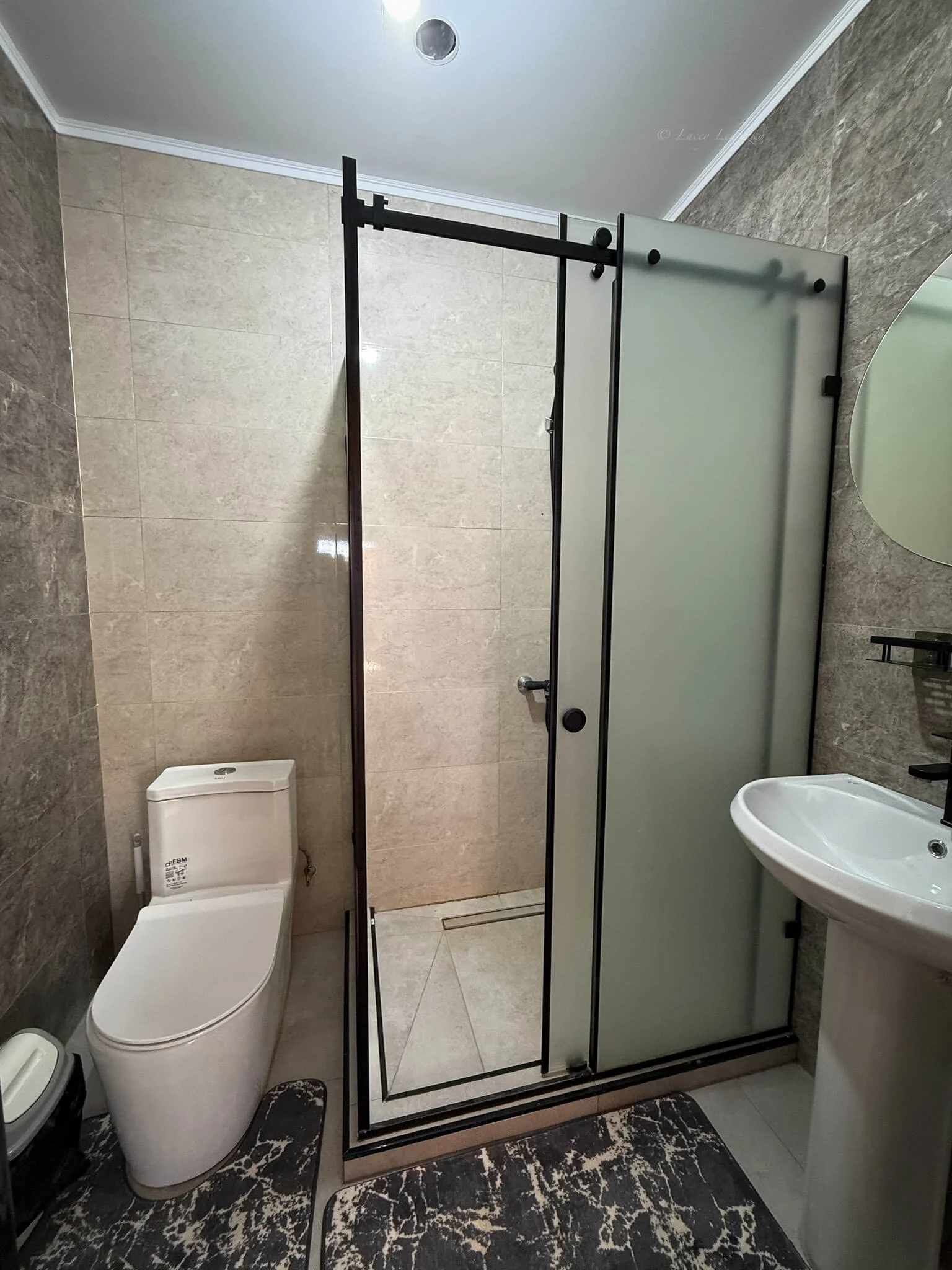
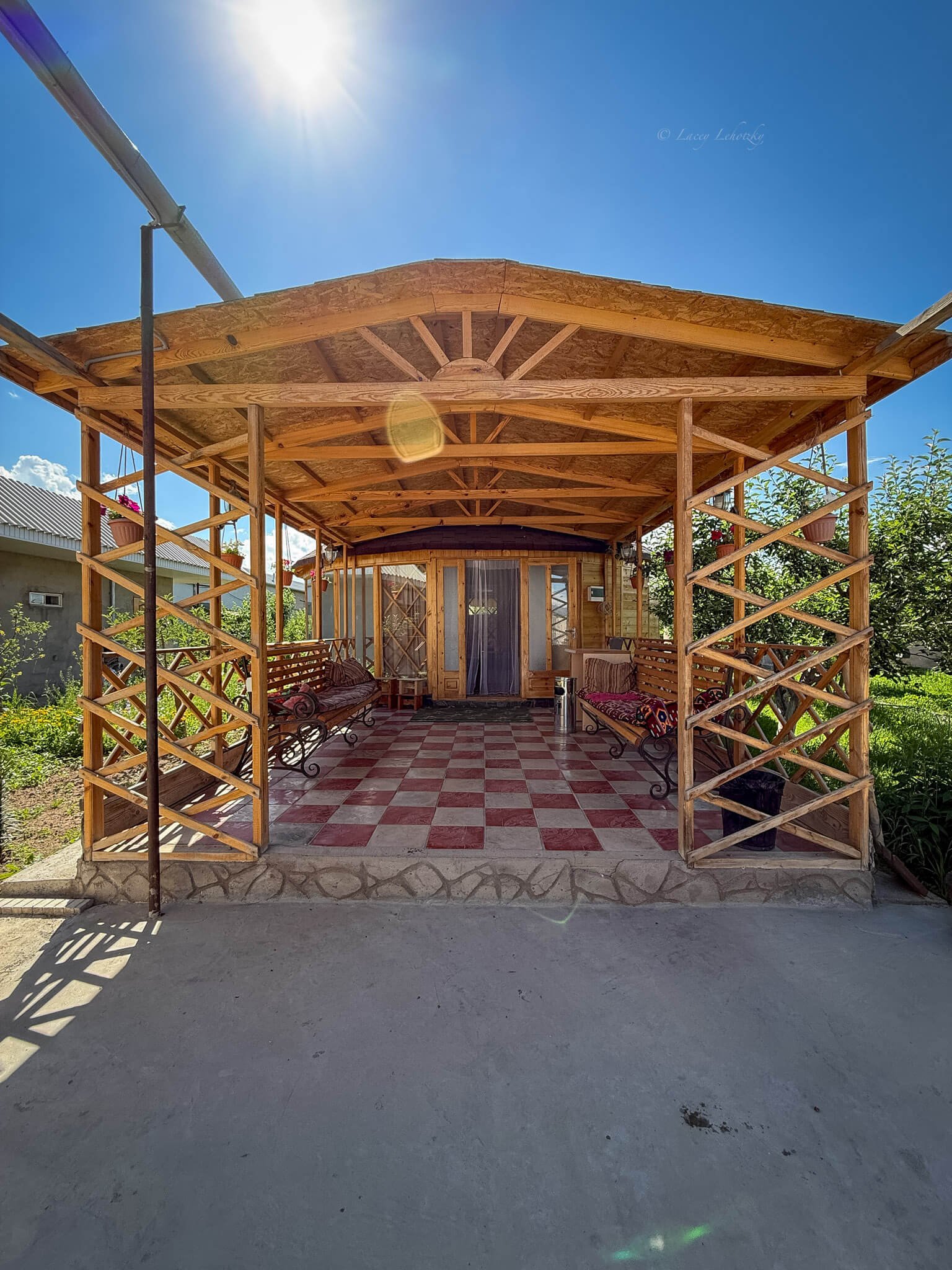
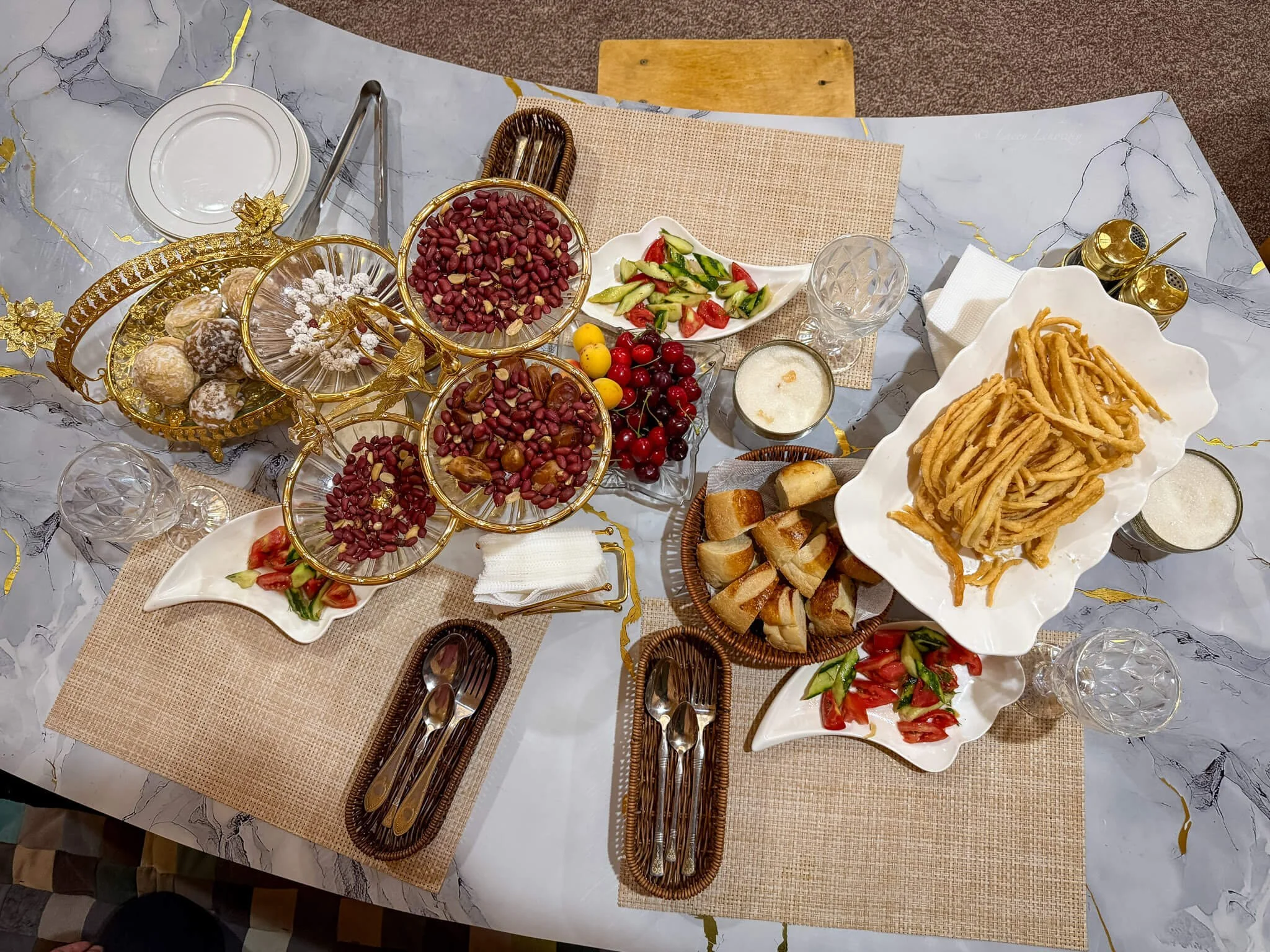
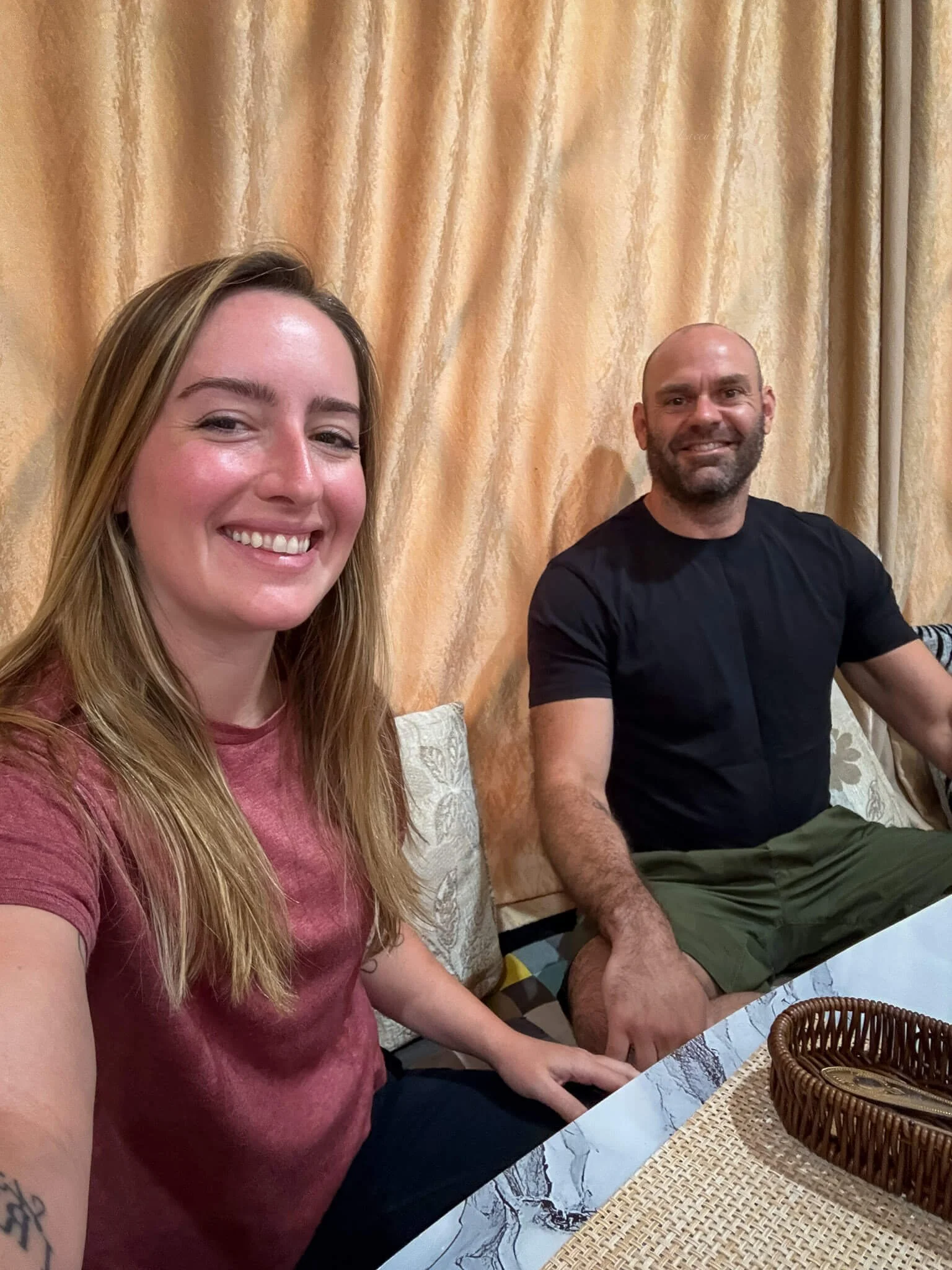
We checked into Guest House Amirhan, a charming family run guesthouse that felt very different from the more modern hotels we'd stayed in earlier in the trip.
The atmosphere here was much more traditional, giving us a little glimpse into everyday life in rural Kyrgyzstan.
Dinner was absolutely massive, and we sat in a yurt style room on the floor with low tables and pillows surrounding us. The hosts served an authentic home-style meal, and once again they were incredibly accommodating of my food allergies, even serving the exact same chicken and rice dish to all the other guests to ensure there was no cross contamination with red meat, which made my chest loosen in relief. The hospitality continued to impress me throughout both Kazakhstan and Kyrgyzstan.
The rooms themselves were clean and comfortable, although the beds were definitely on the firmer side. There wasn't any air conditioning, but by this point we'd learned that the cooler mountain evenings usually made it bearable—at least in June.
It wasn't the fanciest accommodation of the trip, but it was warm and welcoming and clean with a western style toilet, which put my anxious mind at ease.
Day 8: Eagle Hunting, Sleeping in a Yurt, & Song Kul Lake
Not gonna lie, this was the portion of our Kazakhstan and Kyrgyzstan road trip itinerary that I was most nervous about. I was also exhausted from the constant pick up and go we’d done so far. But I wanted to experience Kyrgyzstan's nomadic culture by sleeping in a traditional yurt and waking up surrounded by wild horses and endless mountains, away from all modern life.
Eagle Hunting Demonstration
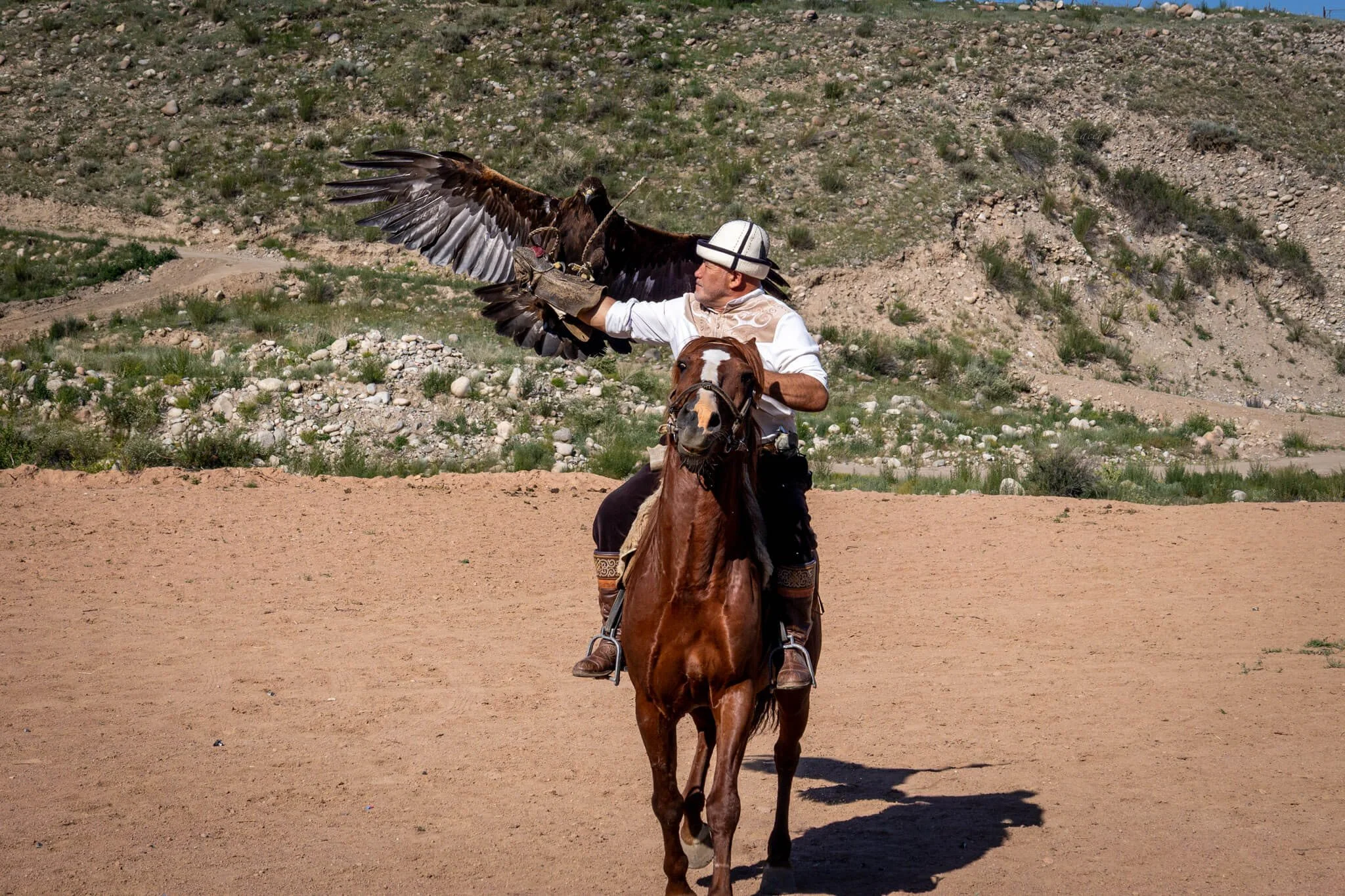
Our morning began with an eagle hunting demonstration before we left Bokonbaeyvo, one of Kyrgyzstan's most well-known cultural experiences. Traditionally, golden eagles were trained to hunt foxes, hares, and other small game during the winter months. Unfortunately, we were visiting in June, well outside hunting season (which typically runs from October through February), so what we saw focused primarily on training demonstrations rather than actual hunting.
While it was still fascinating to learn about the history and importance of eagle hunting in Kyrgyz culture, I actually preferred the bird demonstration we had seen back in Kazakhstan. The Kazakhstan show featured a wider variety of birds and much more flying, whereas this experience leaned more heavily into the cultural history behind the tradition.
That being said, one thing this demonstration did have that Kazakhstan didn't...We got to handle and pet the eagle!
Holding one of these incredible birds on your arm really drives home just how massive and powerful they are. Their talons alone are enough to make you very aware of how much trust the handlers have built with them. There was even a friendly yak wandering around the property, which somehow felt perfectly fitting for the day. If you're visiting during hunting season, I imagine this experience becomes much more impressive. Outside of those months, I'd still recommend it if you're interested in the cultural aspect, but I wouldn't necessarily make it the centerpiece of your day.
Cost was 5000 som total (for us and our guide) and you need cash.
The Drive to Song Kul Lake
From there, we began the drive toward Song Kul Lake, one of the most iconic destinations in Kyrgyzstan. And Google Maps is a filthy liar that I cursed every time we hit a bump in the road with my full bladder that needed release an hour ago. It says that the road from Keng Suu (the last “town” on the map) to our yurt was around an hour.
It’s really about two and a half hours. The road itself isn't particularly difficult, but it's slow, steep, winding, and climbs steadily into the mountains. Fortunately, the scenery is so spectacular that nobody in the car seemed to mind other than my bladder.
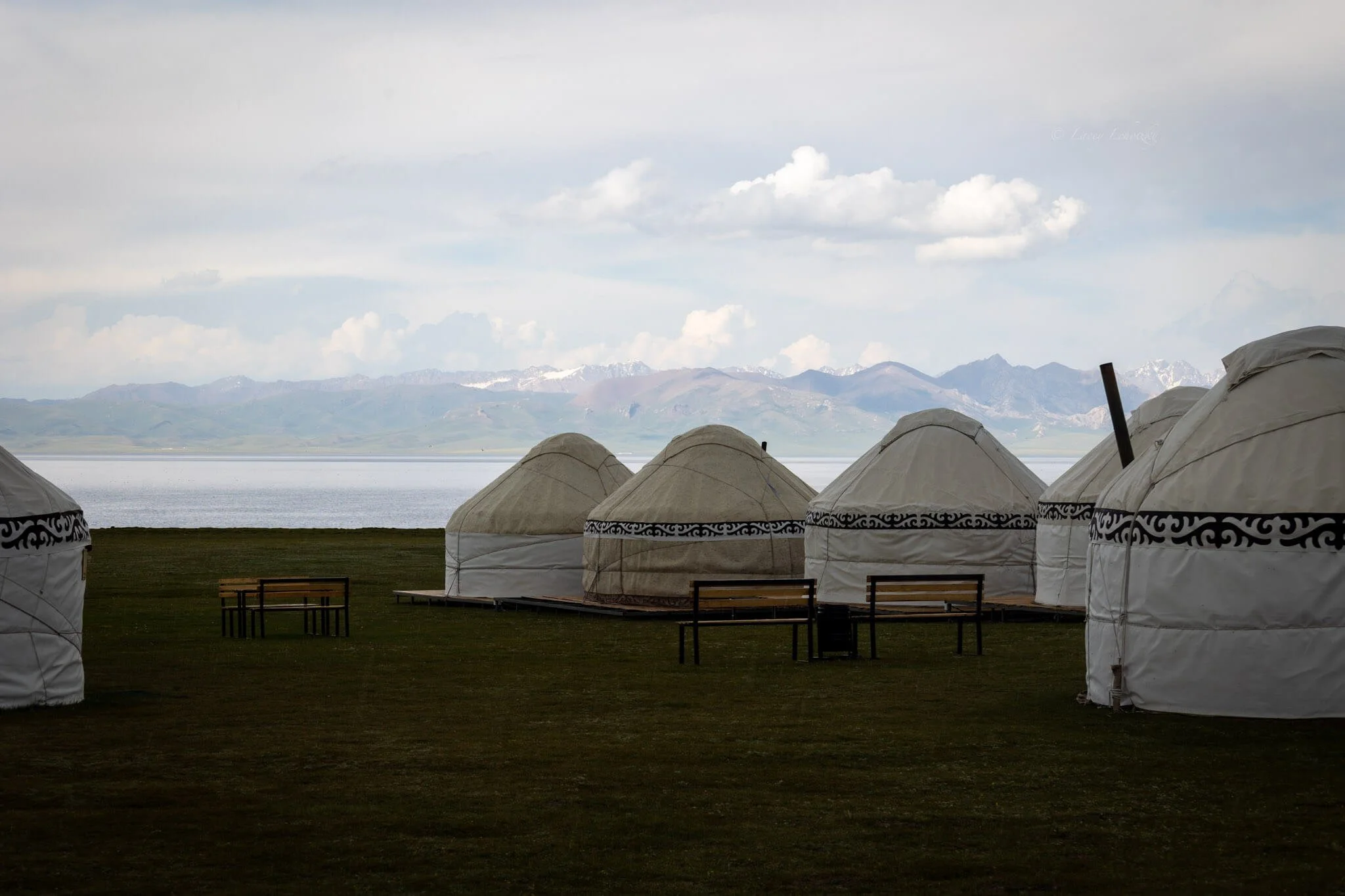
Rolling green hills stretched in every direction, dotted with grazing horses and occasional yurts that looked tiny against the vast landscape. Wildflowers bloomed in abundance. There was even a herd of yak on the hillside!
Staying in a Traditional Yurt
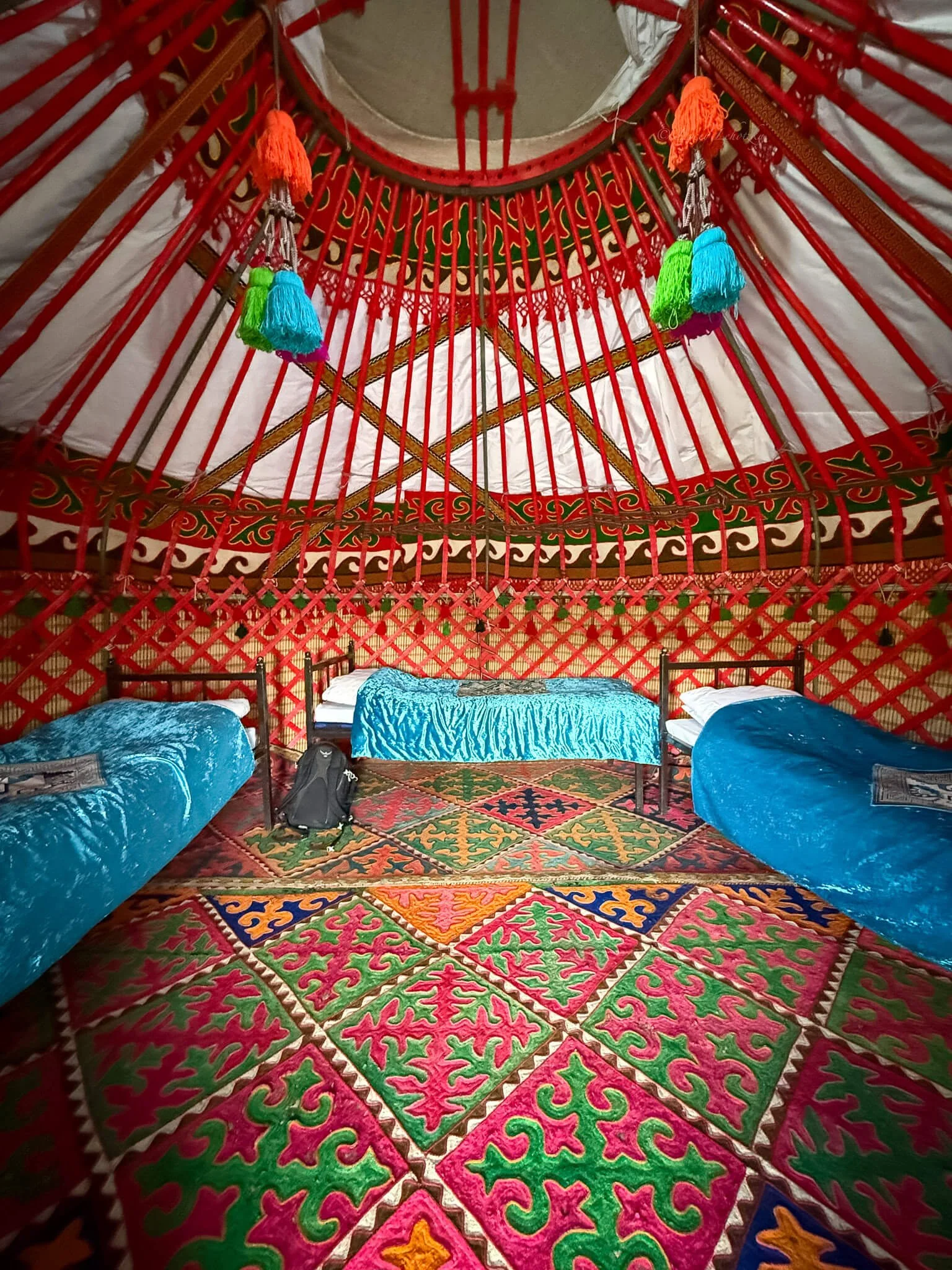
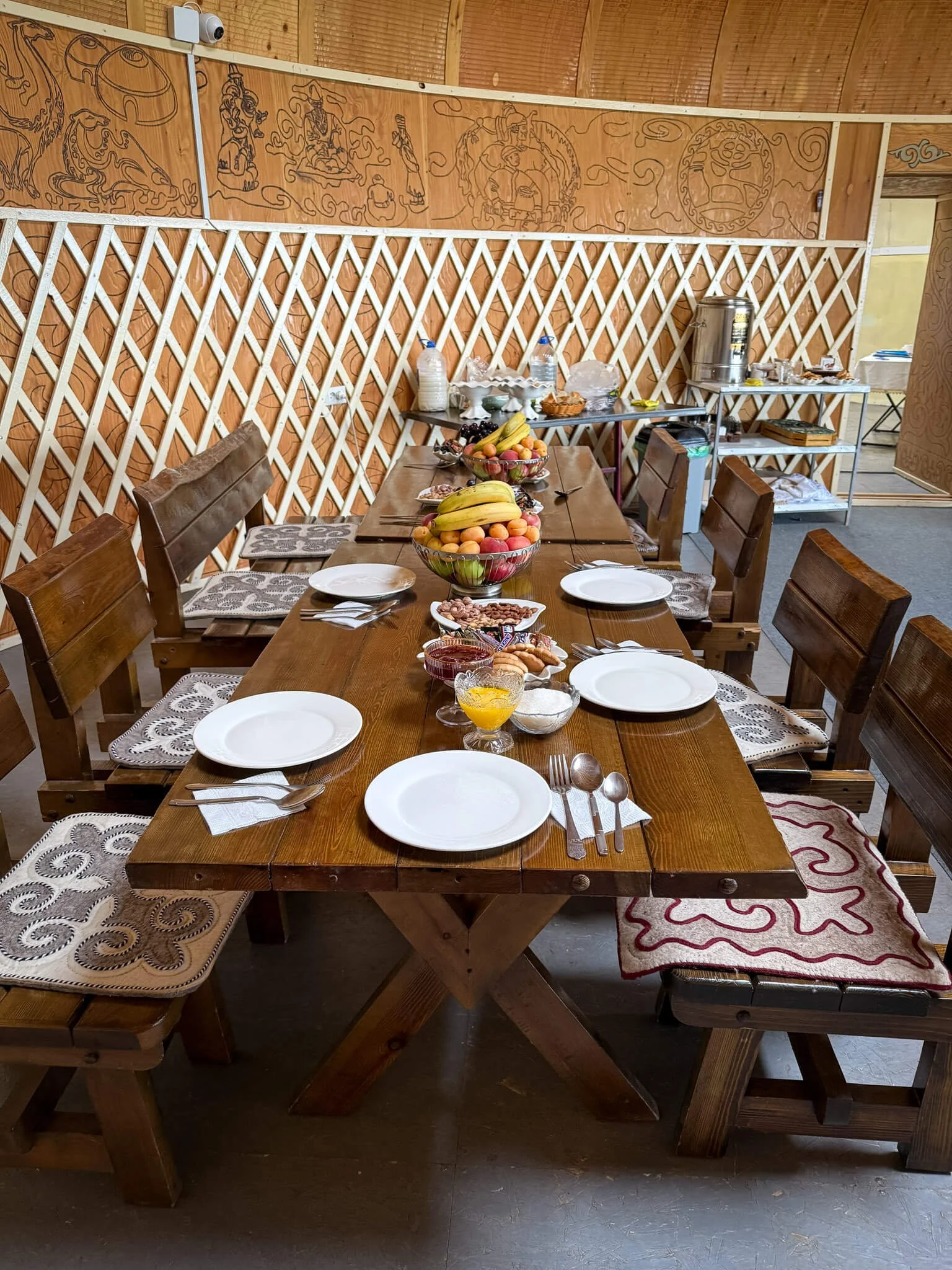
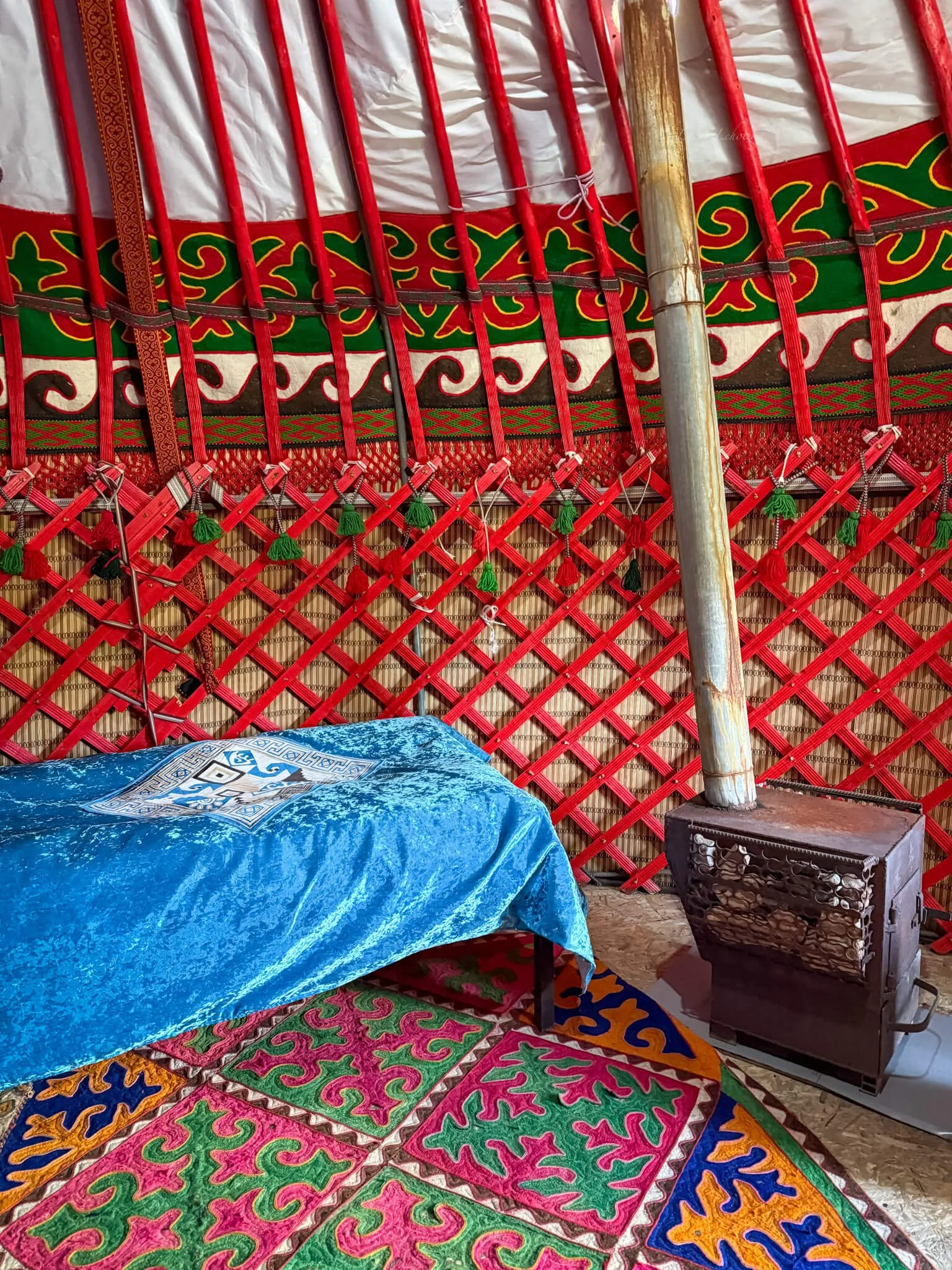
That evening, we arrived at Sary Bulun Yurt Camp, and it was honestly better than I was expecting it to be. First off, western style bathrooms, huzzah! They’re in a shared building, but there are four toilets and three showers, so you shouldn’t have to wait long to use anything. They’re also super clean, which was another relief.
If you've never stayed in a yurt before, prepare to adjust your expectations. These aren't luxury glamping tents (much to my dismay when we were booking them). Yurts are tent-like, authentic mobile homes that have been used by Central Asian nomads for centuries. Inside, our yurt was simple but surprisingly cozy. There isn't any air conditioning, but at nearly 10,000 feet above sea level, you definitely won't need it. In fact, temperatures dropped enough after sunset that the staff came into each yurt to light the small wood-burning stove before bed.
Few things feel cozier than crawling into bed while rain taps against the canvas roof and a fire quietly warms the room.
Meals are served in the communal dining yurt with windows overlooking the lake. The meal was expansive, however this was where I struggled the most with eating. For dinner, they did make me fish and plain rice which was good, but there wasn’t much else in the spread I could eat. For breakfast, I had to request they make me eggs because the default option was porridge (oats + milk = the two things I literally cannot have lol). But generally, they had no trouble accomodating my food allergies.
There is Wi-Fi available. Technically. In reality, it's incredibly slow, and cell service is spotty at best. But this isn’t a place you want to be scrolling Instagram. There is too much beauty to soak in to let a screen distract you anyway 🖤
Expect the Unexpected
Mountain weather changes incredibly quickly around Song Kul. Shortly after we arrived, dark clouds rolled over the surrounding peaks, temperatures dropped, and a hailstorm swept across the camp. Within an hour, the storm had passed, leaving everything fresh, green, and peaceful again. That's just life in the mountains.
Pack layers, even during the summer, because you'll likely experience several seasons in a single day.
Is Staying in a Yurt Worth It?
Without question, especially if you want to experience authentic nomad culture.
Could you visit Song Kul Lake as a day trip? Yes, that’s exactly what we did. However, if you aren’t a super princess like me, you should stay for more than a day. Andrew kept saying we should have spent three days there, and I wish you could have seen the face I gave him for that suggestion. But he loves that rustic, authentic, away from it all life and doesn’t mind shared showers.
In fact, when he learned only one person typically stays behind in the winter after they take the camp down, he looked eager to volunteer to be that person (we are very different people in that regard, clearly).
Waking up in the middle of the mountains, hearing horses running outside your yurt, and watching storms roll across the grasslands, is the magic we have left in this world. Disconnecting from the constant notifications and distractions of everyday life is a luxury.
And I’m so grateful we got to experience it.
Day 9: Horseback Riding at Song Kul Lake, Burana Tower, & Bishkek
If Day 8 was all about slowing down and disconnecting, Day 9 gave us one last chance to soak in the beauty of Song Kul Lake before making our way back toward civilization.
Horseback Riding Around Song Kul Lake
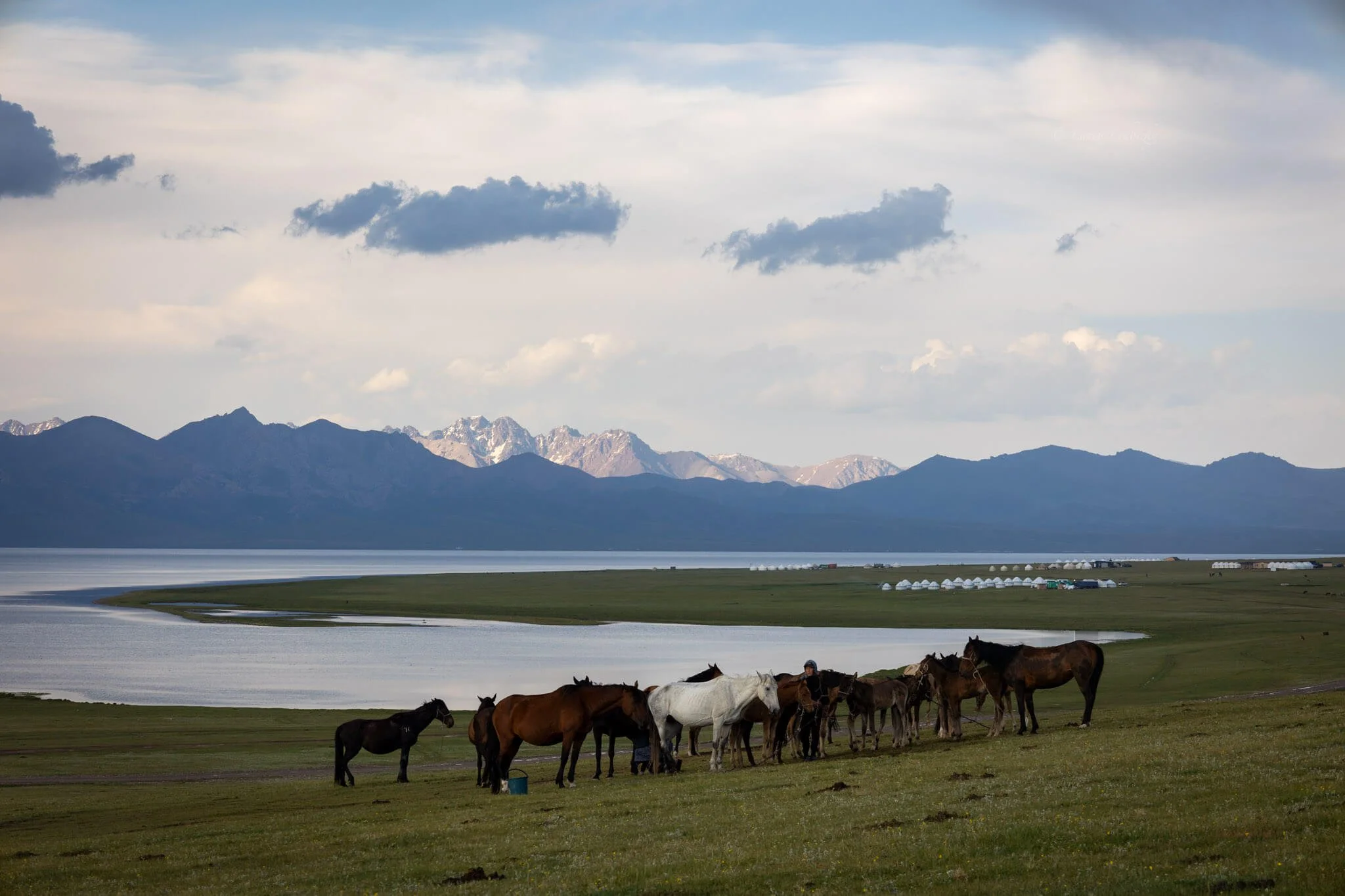
After breakfast, we saddled up for what would become one of my favorite horseback rides I've ever done. One of the great things about Song Kul is that you're not locked into a specific tour length. You can ride for as little or as long as you'd like. We chose a two-hour ride, which felt like the perfect amount of time to explore the surrounding landscape.
Our guide led us first up into the rolling hills overlooking the lake before descending back toward the shoreline. Every turn seemed to reveal another incredible view. The higher we climbed, the more the lake spread out beneath us like a giant sheet of blue glass, framed by endless green meadows and distant snow-capped mountains.
As we rode along one of the ridges, an entire herd of horses came galloping across the hillside. Watching them thunder across the mountains with absolutely nothing around except open wilderness brought tears to my eyes. There’s something so beautiful about it that I simply cannot put into words but feel deeply in my soul.
Even if you’re not the most comfortable on horseback, I can't recommend this ride enough. It was peaceful, exciting, and one of the most memorable experiences of our entire Central Asia adventure.
The cost was 6400 som for two hours for two people.
Drive to Bishkek
Eventually, it was time to leave Song Kul behind and begin the long drive toward Bishkek. As beautiful as the mountains had been, I found myself spending much of the drive simply staring out the window, trying to soak up every last bit of the scenery before it disappeared behind us. We decided to stop for a picnic lunch lower in the pass simply to linger in that stolen peace. I will never forget that lunch, even though it was only a protein bar and a bag of chips.
Once your two and a half hour trek down the mountain is complete, you’re back on paved roads all the way to the capital. I think our total drive time this day was more than 6 hours, so settle in for a journey.
Burana Tower
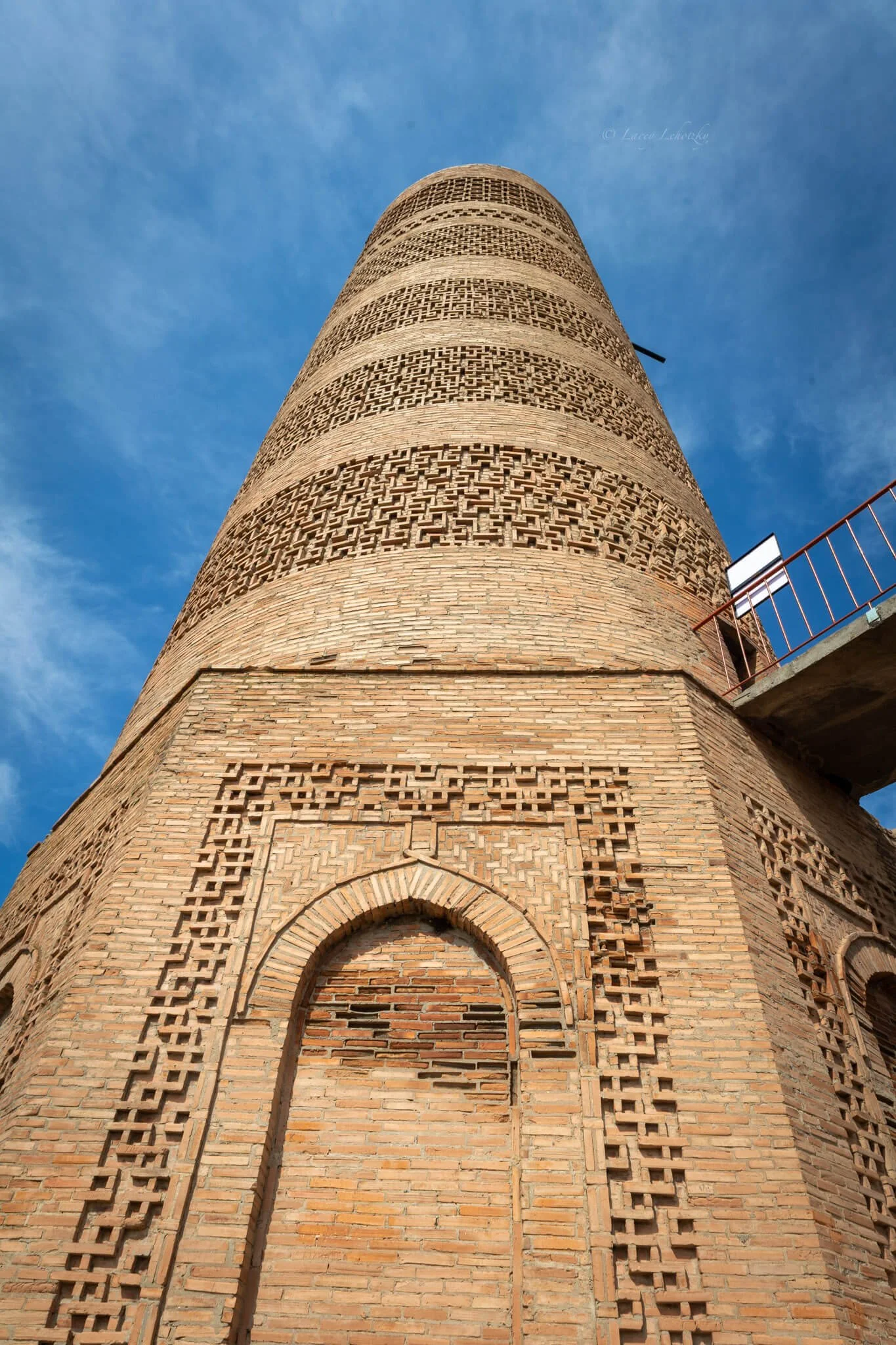
Before reaching Bishkek, we made one final historical stop at Burana Tower (and boy did I need a break from the car by that point). Dating back to the 9th century, the tower is one of the few remaining structures from the ancient Silk Road city of Balasagun. It's a relatively quick stop, but one that's well worth making if you're already passing through the area (it’s about 90 minutes outside of of Biskek).
Visitors can actually climb to the top of the tower, though be prepared for a very narrow staircase. And when I say narrow, I mean really narrow. The stone steps spiral upward through a dark interior, and there were definitely a few moments where I was grateful no one was trying to come down while we were heading up.
From the top, you're rewarded with beautiful views across the surrounding countryside. Nearby, you'll also find an archaeological site with ancient carved stone monuments known as balbals, offering another fascinating glimpse into the region's long history.
Where We Stayed: Crown Hotel Bishkek
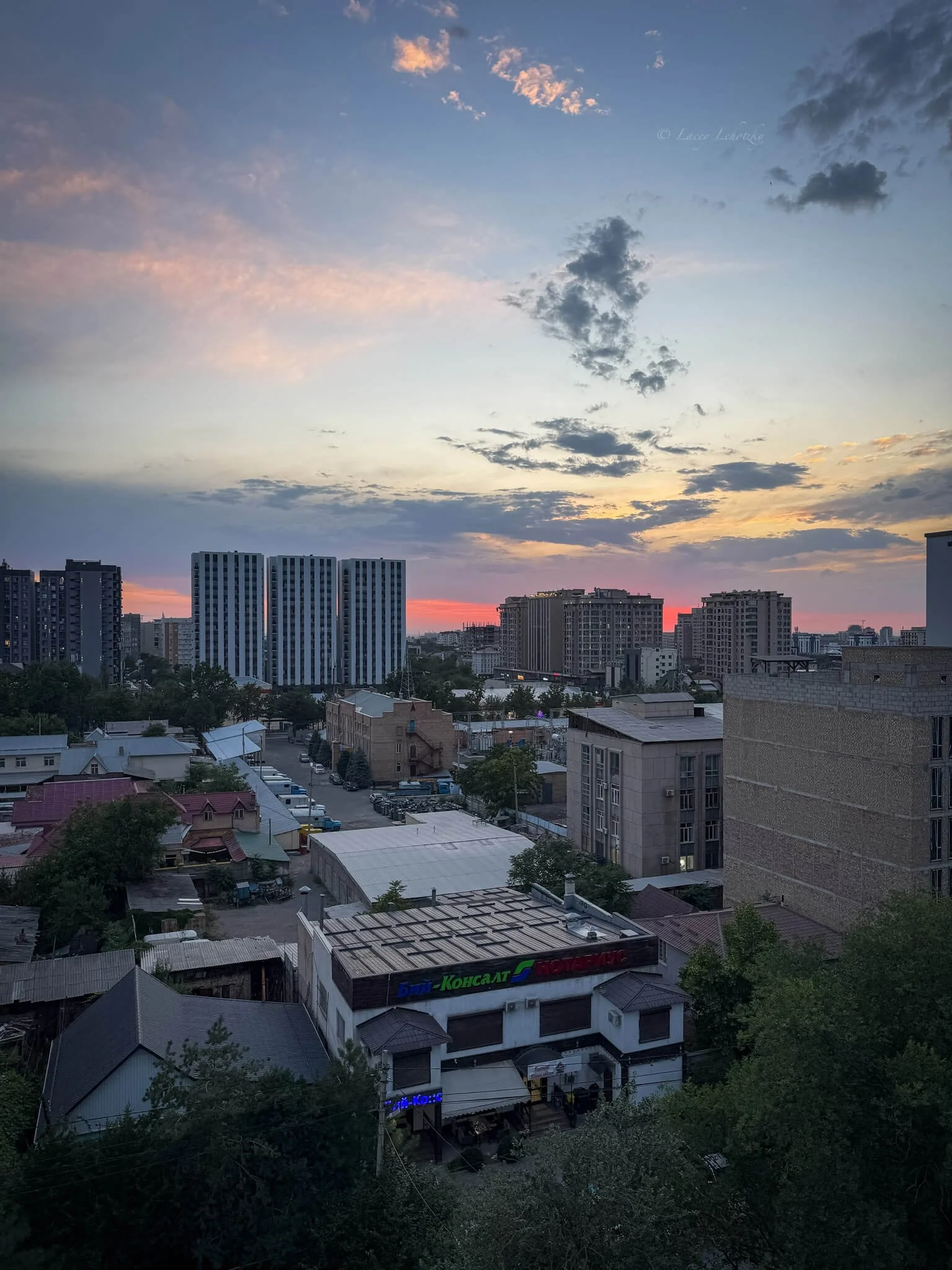
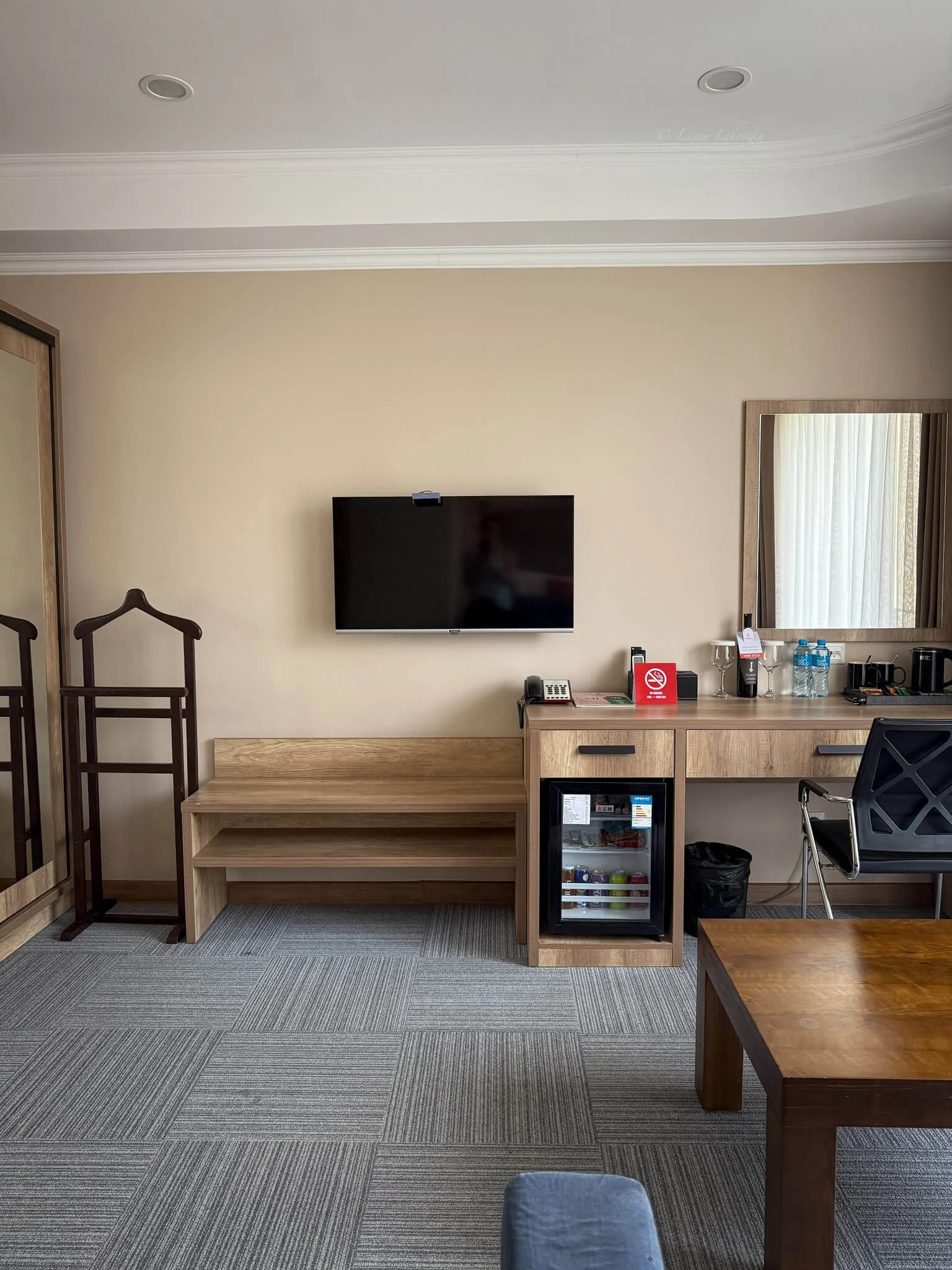
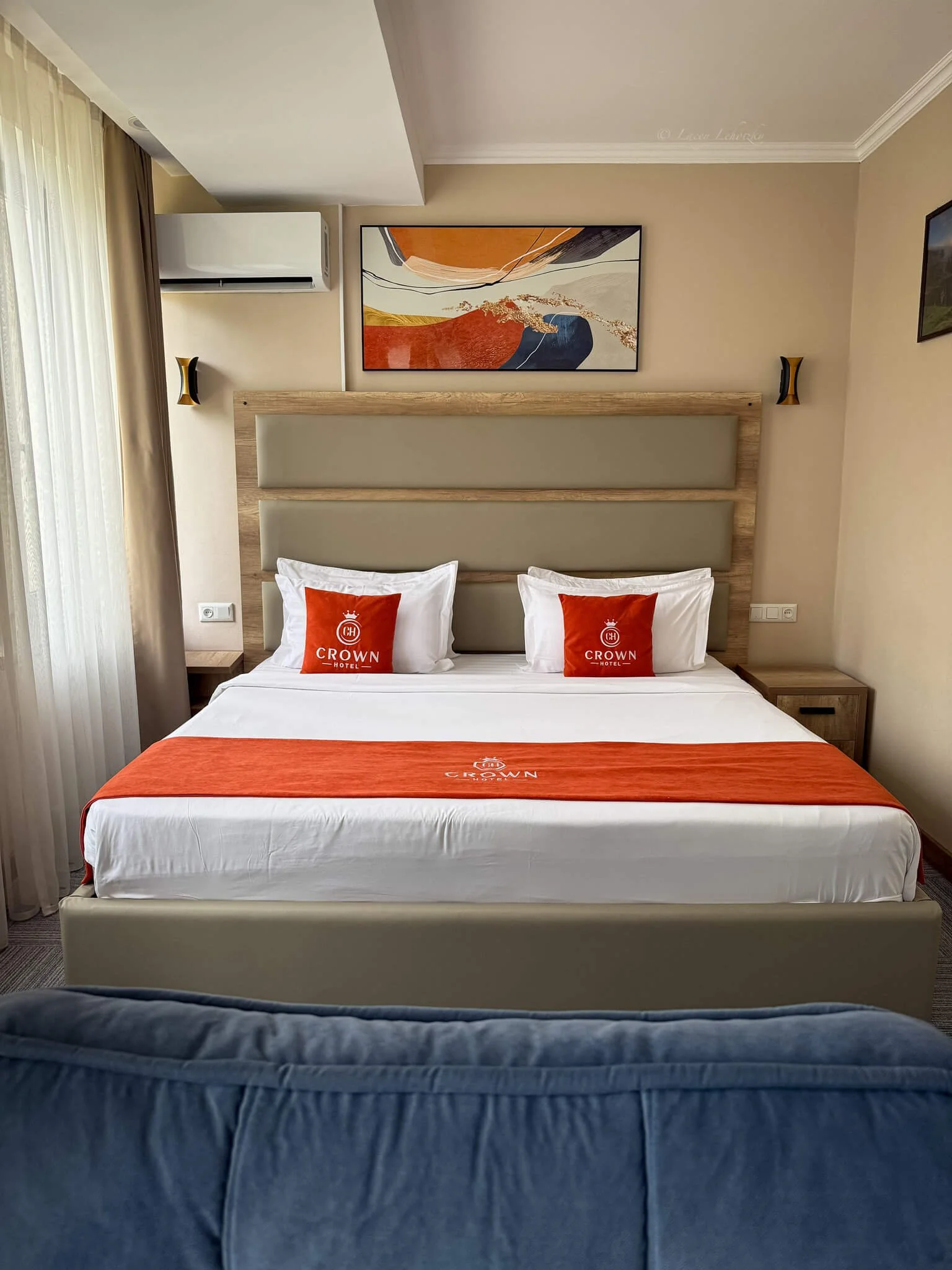
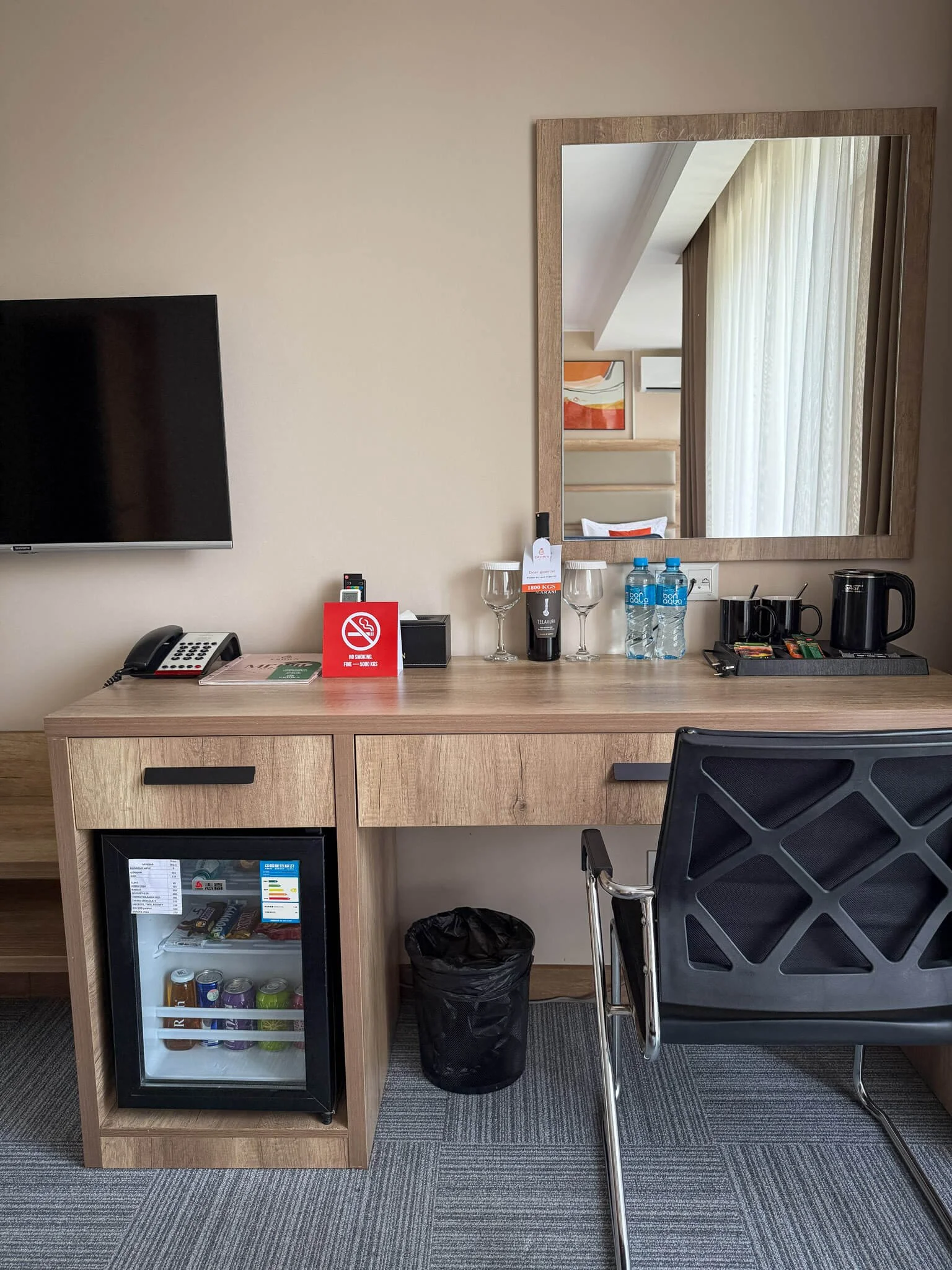
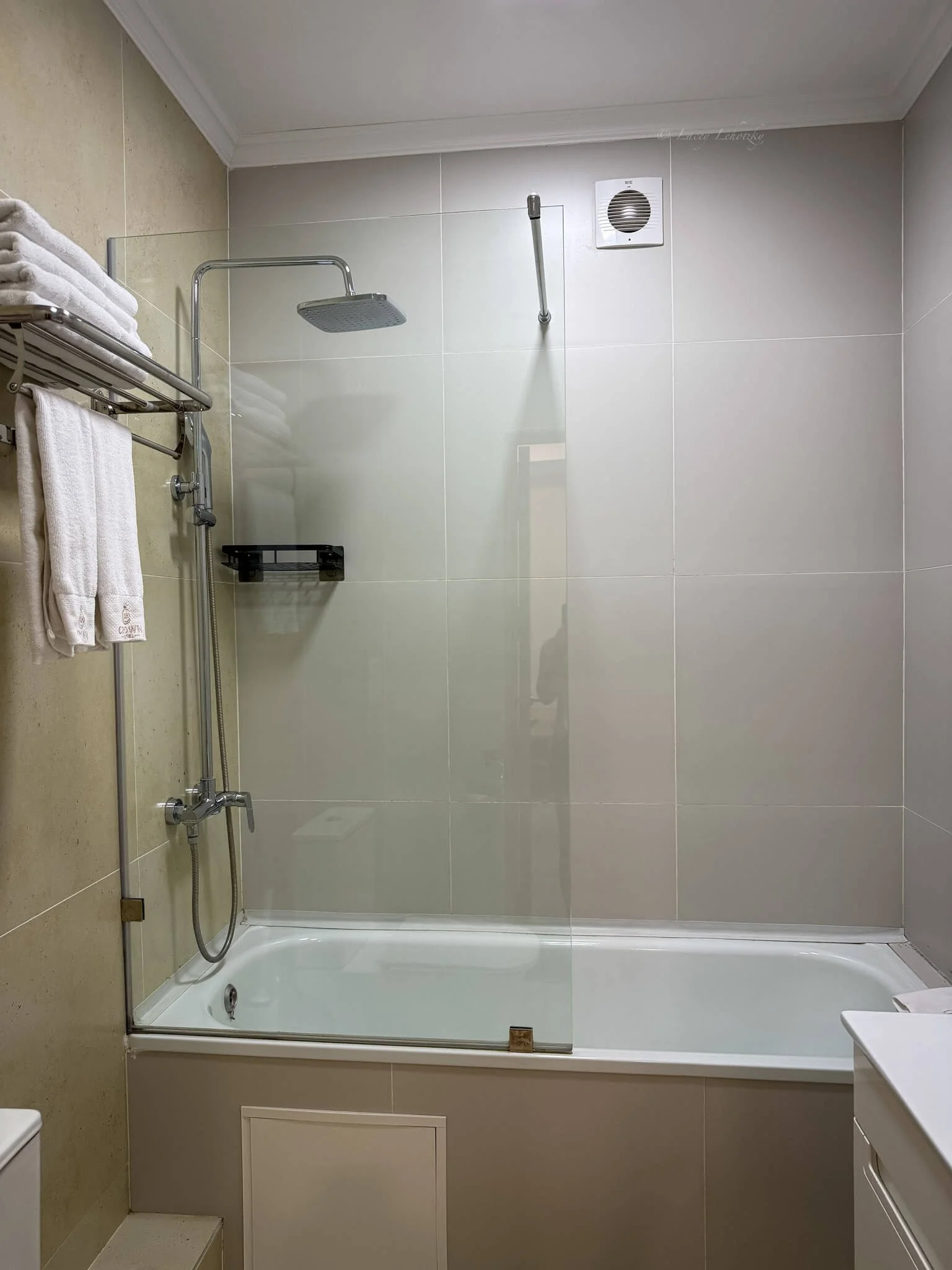
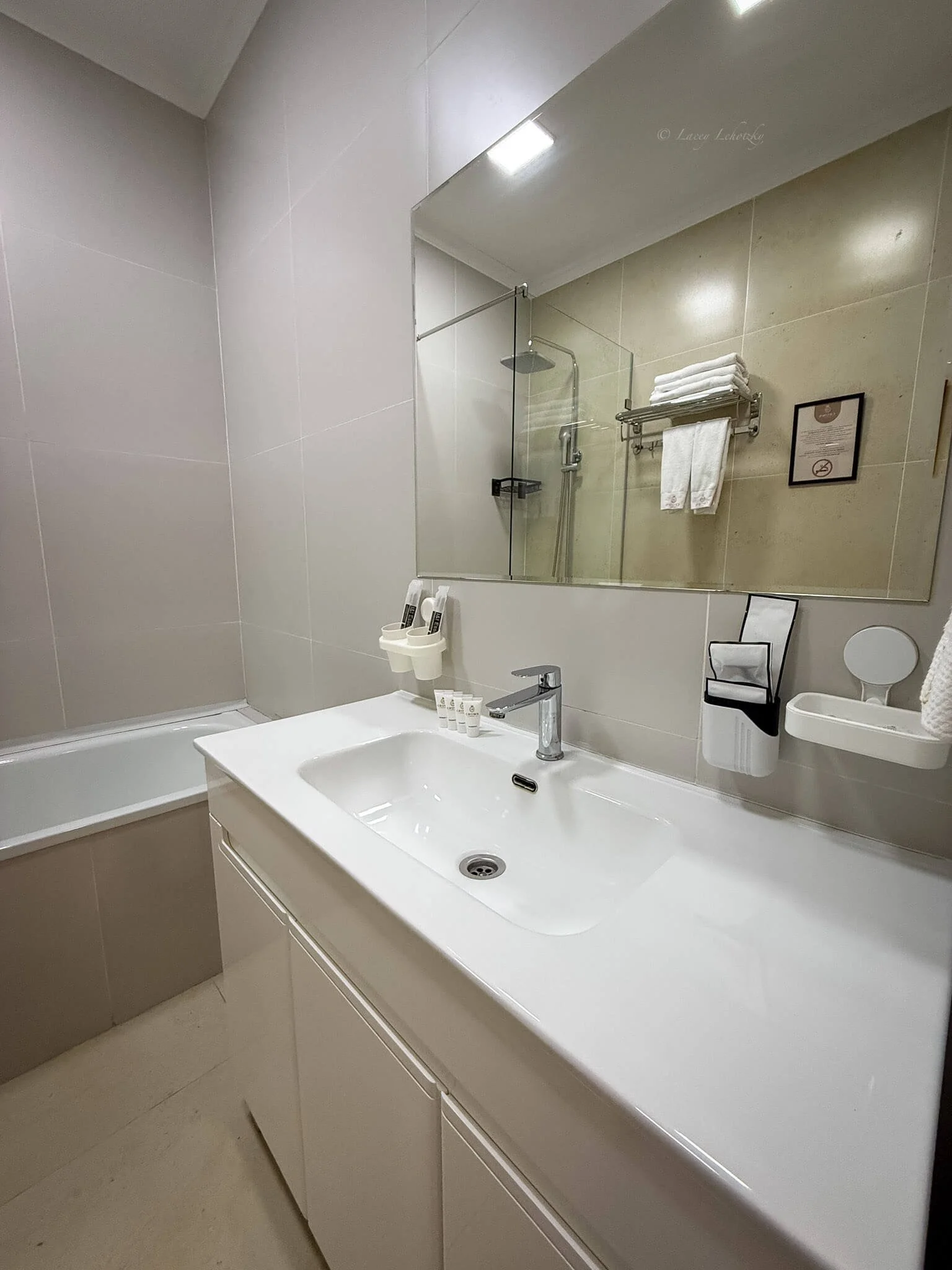
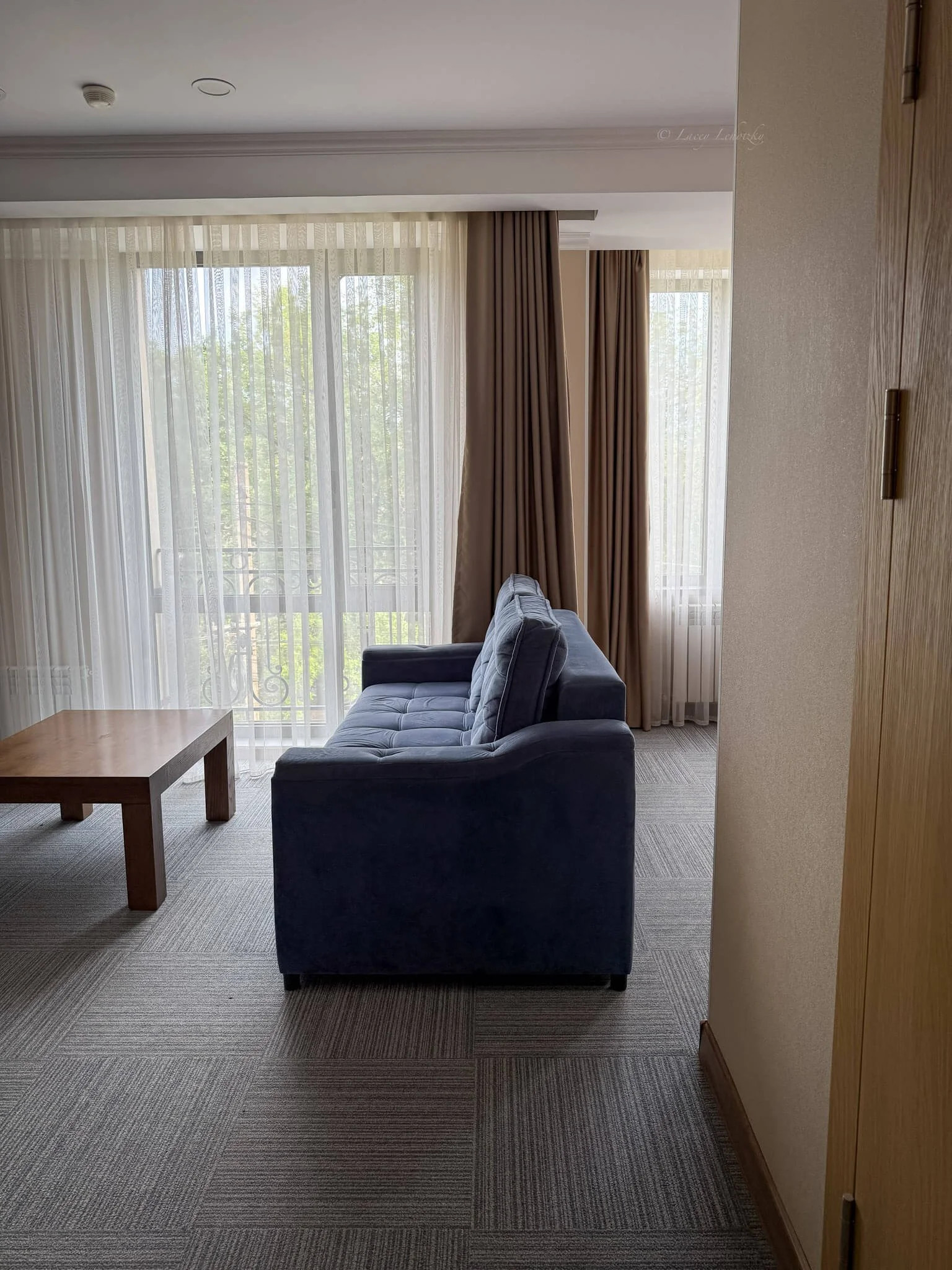
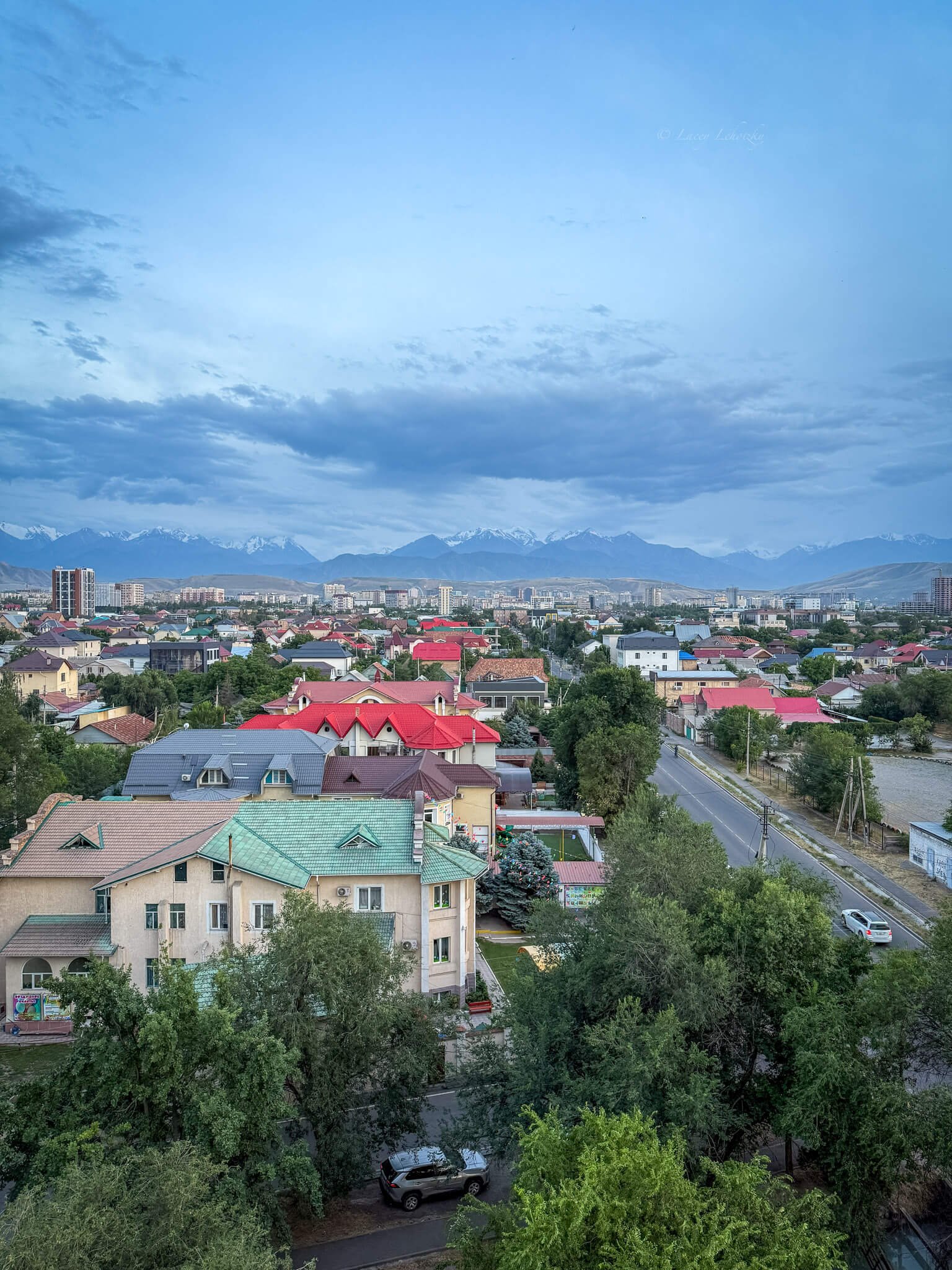
That evening, we checked into Crown Hotel Bishkek, our final hotel of the trip.
After several nights in small villages and mountain camps, it felt nice returning to a larger city hotel. Our room was spacious with a wonderfully soft bed and—my favorite feature by this point in the trip—lots of pillows. There was also air conditioning, which always earns bonus points from me after long summer travel days. The hotel sits slightly away from Bishkek's busiest streets, making it noticeably quieter at night while still being close enough to restaurants and shops that getting around was easy.
One unexpected feature was the rooftop terrace. There wasn't any furniture up there yet during our visit, but once it's finished, I think it'll be a fantastic place to relax with views across the city.
Breakfast the following morning wasn't quite as impressive as some of the other hotels we'd stayed in, but there were enough options to get the day started.
Overall, I'd happily recommend it as a comfortable base for exploring Bishkek.
Day 10: Exploring Bishkek, Crossing Back into Kazakhstan & One Last Sunset in Almaty
The last day of a trip always brings a mix of sadness and relief. Part of me is excited to sleep in my own bed again (with more than two pillows), but another part of me is already mourning the adventure coming to an end. We had one final day to explore Kyrgyzstan's capital before crossing back into Kazakhstan for our flight home, and it was the perfect way to wrap up an unforgettable ten days.
Ala-Too Square
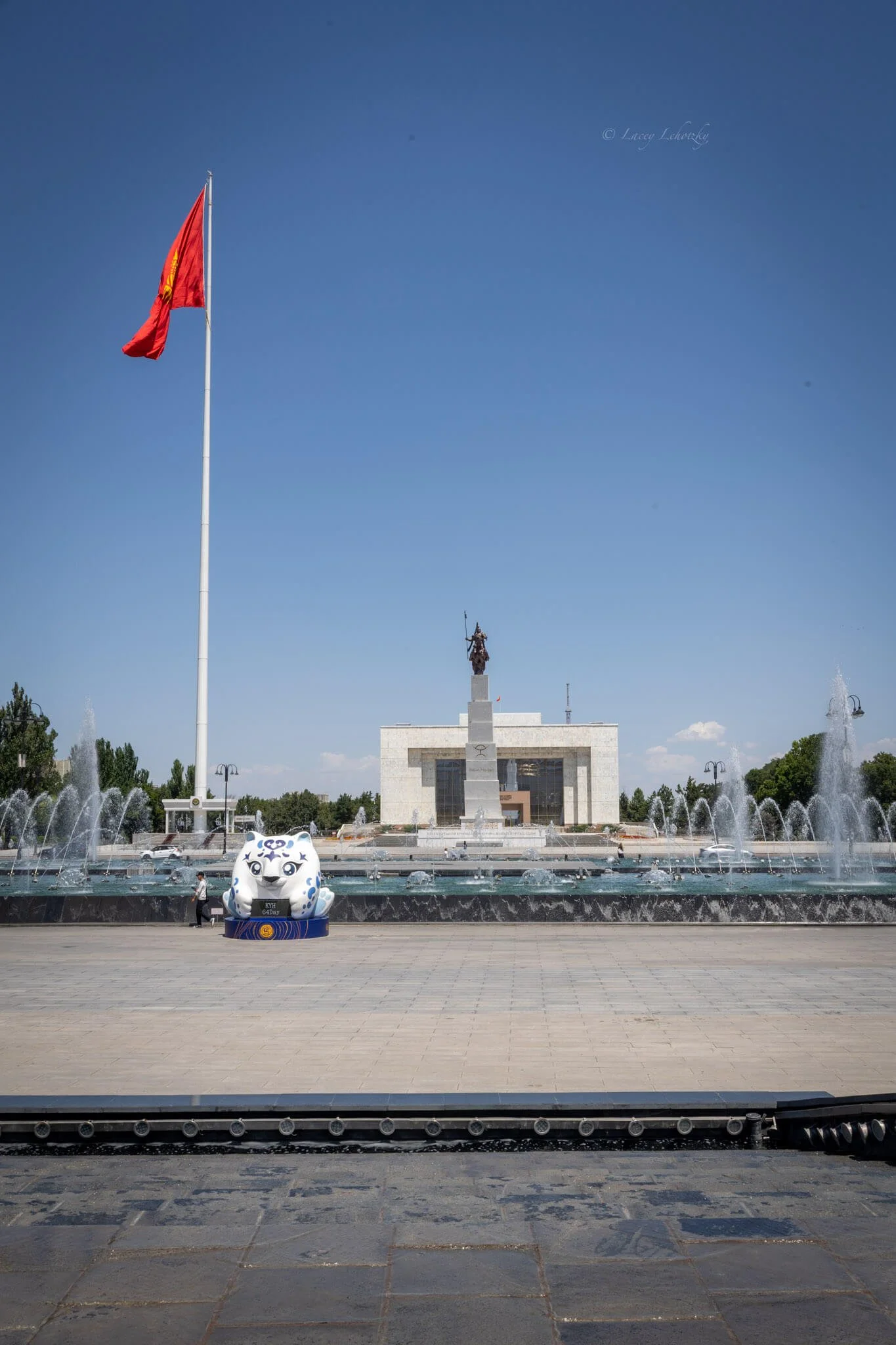
Our first stop was Ala-Too Square, Bishkek's central gathering place and the heart of the city. The massive Kyrgyz flag waves above the square, surrounded by fountains, monuments, and government buildings. You'll also find the History Museum, several impressive statues, and what locals simply refer to as the White House, the country's government building.
Compared to Almaty, Bishkek feels a little quieter and less polished. Both are lived in and not built specifically for tourists, which I love. Though I do thing that is changing.
It's worth wandering around for an hour or so—if you can stand the heat—before continuing on your way.
Bishkek Central Mosque
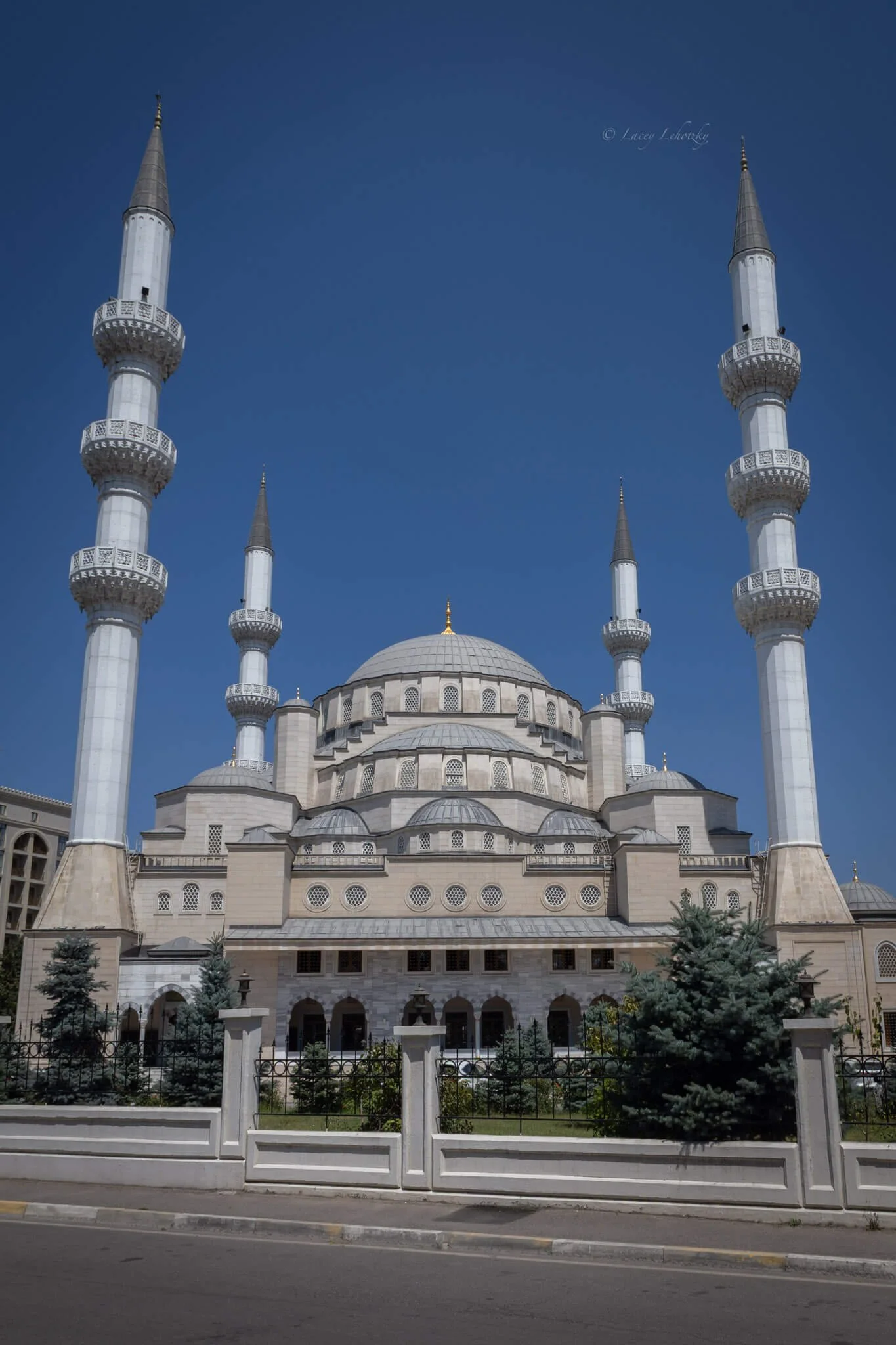
Next, we visited the Bishkek Central Mosque, one of the largest mosques in Kyrgyzstan. Even if you're not planning to go inside, it's worth stopping to admire the beautiful architecture. The bright white marble, intricate detailing, and soaring domes make it one of the city's most recognizable landmarks.
If you'd like to enter, remember to dress respectfully. Both men and women should wear clothing that covers their shoulders and legs, and women will also need to cover their hair with a headscarf. Since roughly 90% of Kyrgyzstan's population is Muslim, you'll quickly notice how much Islamic culture has influenced both the architecture and daily life throughout the country.
Crossing Back into Kazakhstan
Eventually it was time to say goodbye to Kyrgyzstan and make our way back across the border into Kazakhstan.
This crossing was very similar to the one we'd experienced a few days earlier, but at a much, much larger scale. Our driver dropped us off before immigration while he drove the vehicle through separately. We walked through passport control, exited Kyrgyzstan, crossed the border on foot, and then completed Kazakhstan's immigration before meeting our driver again on the other side.
The entire process took around an hour, though wait times will naturally vary depending on traffic and the time of day. Honestly, I kind of enjoyed these border crossings. They felt like little adventures of their own and were a reminder of just how accessible it is to visit multiple Central Asian countries in a single trip.
D. Kunaev Central Mosque
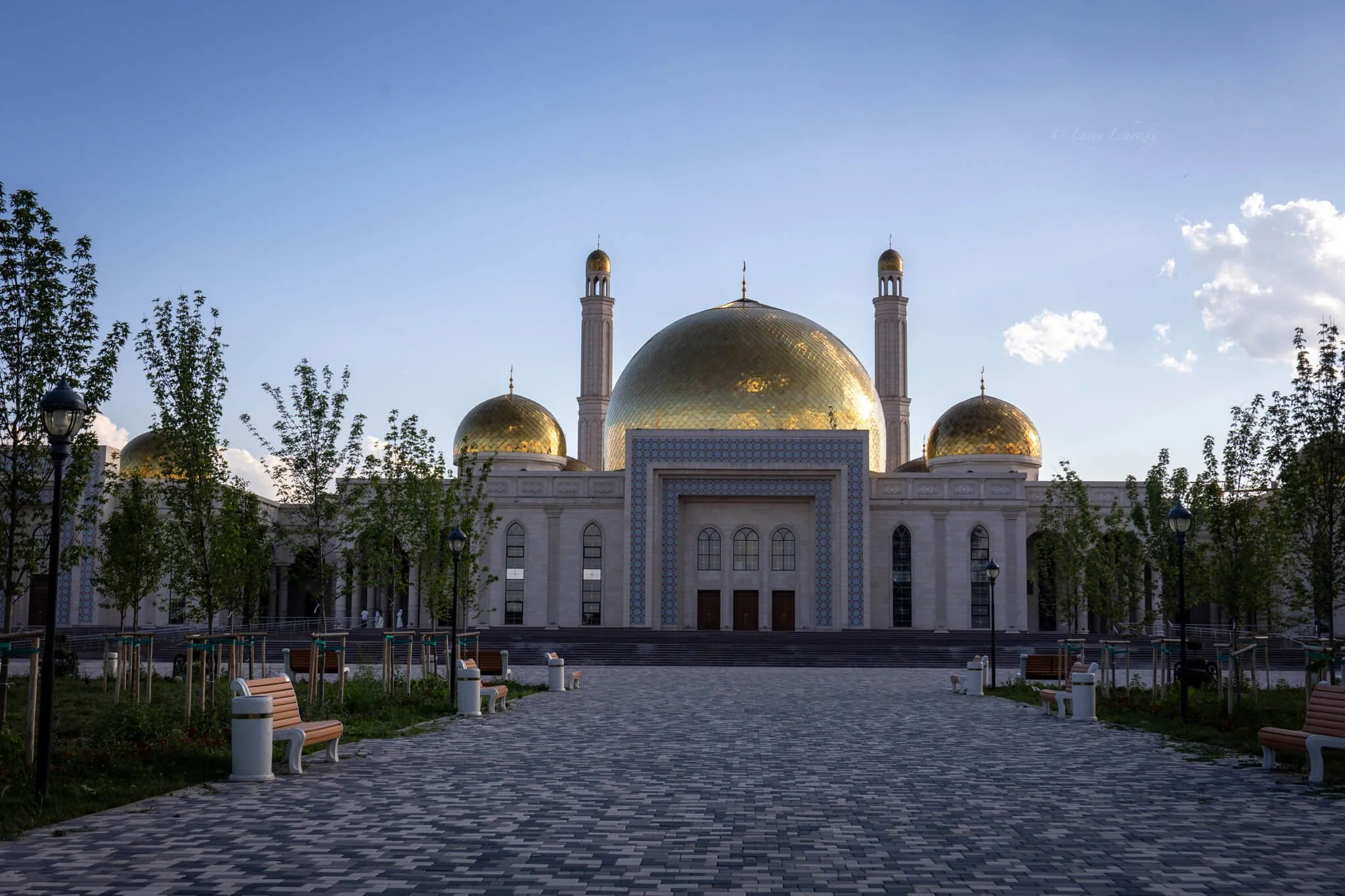
Back in Kazakhstan, we made one final sightseeing stop before heading to the airport: the D. Kunaev Central Mosque. If possible, I highly recommend timing your visit for sunset. As the evening light catches the mosque's golden domes, the entire building seems to glow against the fading sky. It was one of my favorite architectural moments of the trip and a beautiful way to end our time in Central Asia.
Like the mosque in Bishkek, visitors are welcome inside as long as they dress modestly. Shoulders and legs should be covered, and women will need to wear a headscarf before entering. However, Sanzhar said it has been closed to the public for some time and he wasn’t sure why, so double check that before going. Or go to the Almaty Central Mosque closer to the heart of the city. It isn’t as big, but it is gorgous too.
While Kazakhstan is generally less religious than Kyrgyzstan, with roughly 75% of the population identifying as Muslim, you'll still find beautiful mosques scattered throughout the country.
What We Would Do Differently on a 10 Day Kazakhstan and Kyrgyzstan Road Trip
Honestly, when we returned to South Korea, I crashed and hard, sleeping 11 hours a day for a few days from the sheer exhaustion of our Kazakhstan and Kyrgyzstan road trip itinerary. If we had to do it again, we’d definitely slow down the pace and focus on a few specific areas: Kolsoi Lakes in Kazakhstan (stay in Saty Village for 3-4 days), one night in Bokonbayvo to break up the drive, and 2 days at a yurt camp on Song Kul Lake in addition to stops in Almaty and Bishkek.
Final Thoughts on 10 Day Kazakhstan and Kyrgyzstan Road Trip Itinerary
Kazakhstan and Kyrgyzstan are going to become more and more popular in the coming years, and both countries are building new infrastructure to support it. I hope it doesn’t lose it’s authentic charm, but if you want to ensure you get the best experience, start planning your Kazakhstan and Kyrgyzstan road trip itinerary ASAP!
I still can’t believe we got to spend 10 days exploring Kazakhstan and Kyrgyzstan, riding horses through the mountains, visiting unspoiled nature, glassy lakes, massive waterfalls, ancient rock formations, and experiencing traditional nomadic culture. It’s a trip I’ll remember for years to come and a place I’ll be recommending to all my friends.